
Key messages
Why is it important?
Safe, functional housing is vital for health and wellbeing. Inadequate housing, overcrowding, poor infrastructure, and energy insecurity contribute to preventable physical and wellbeing issues and limit social and economic participation. Many Aboriginal and Torres Strait Islander (First Nations) people face barriers to affordable, appropriate, and sustainable living conditions. Essential infrastructure – such as toilets, showers, kitchen facilities, and safe electrical systems – is often inadequate, particularly in remote areas, compromising healthy living practices and exposing residents to hazards and disease. Around 70% of health hardware failures stem from insufficient maintenance, highlighting the need for regular upkeep. First Nations communities, in both urban and remote areas, face persistent challenges including structural damage, dampness, vermin, insecure tenure, and environmental risks, with children especially vulnerable to the health impacts. Remote communities are also disproportionately affected by extreme weather, heat-related illness and frequent electricity disconnections due to poor housing quality and reliance on prepayment systems. Addressing these issues is critical to achieving Closing the Gap Outcome 9 related targets by 2031, which aim for 88% of First Nations people to live in appropriately sized housing (target 9a) and for all First Nations households to have access to essential services that meet or exceed jurisdictional standards (target 9b).
Data findings
- The proportion of First Nations households living in houses of an acceptable standard was similar across 2014–15 (82%), 2018–19 (80%) and 2022–23 (82%). In 2022–23, the highest proportion of people living in houses of an acceptable standard was in Tasmania (85%), and the lowest was in the Northern Territory (69%).
- Major structural problems were present in almost one third of First Nations households (31%, 148,600) in 2022–23, similar to the proportion in 2018–19 (33%). Major structural problems include issues like sinking foundations, wood rot, roof defects, and electrical and plumbing problems.
- In 2022–23, dwellings in remote areas were 1.7 times as likely to have major structural problems as those in non-remote areas (49% or 24,300 households, and 29% or 123,600 households, respectively).
- In 2022–23, among First Nations households, 92% (441,500 households) reported having facilities for storing/preparing food, and 96% (459,700 households) reported having facilities for washing clothing and bedding. The Northern Territory had the lowest proportions out of all jurisdictions for these facilities that support healthy living practices (80% and 87% respectively). Remote areas had lower access to these facilities compared with non-remote areas.
Research and evaluation findings
- Access to safe, functional housing with reliable utilities remains a critical determinant of health and wellbeing for First Nations communities, yet overcrowding, poor structural conditions, and unreliable access to electricity, water, and sanitation persist in remote areas.
- Community-led programs like Housing for Health and Our Place demonstrate that repairing and maintaining essential health hardware through locally driven approaches delivers measurable health benefits, including reductions in hospital admissions for infectious diseases.
- Energy insecurity is a major issue, with 91% of remote Northern Territory households experiencing electricity disconnections in 2018–19, often multiple times, compromising refrigeration, lighting, and medical equipment, and these risks are expected to increase with climate change.
- Evaluations confirm that preventive maintenance and community-led housing assessments improve functionality and sustainability, but such improvements can be undermined by poor program implementation such as bureaucratic hindrances, short-term maintenance contracts which creates uncertainty, and insufficient inspections.
- Community-led housing programs, such as the Wreck Bay Home Ownership Program, show that co-designed housing upgrades and culturally responsive planning improve housing conditions and support aspirations for home ownership.
Implications
Closing the gap in housing outcomes for First Nations communities requires long-term, community-led housing solutions that deliver reliable utilities and safe, culturally appropriate design, co-developed with First Nations communities to reflect local needs, values, and aspirations. Short-term, top-down approaches often fail to address systemic issues, while sustained investment, strong First Nations leadership, and integrated housing-health strategies are essential to improving wellbeing and reducing disease risk. Programs like Housing for Health should be expanded and embedded into broader social housing repair and maintenance strategies. Reliable data is also critical to track progress in access to essential services such as safe drinking water, electricity, sanitation, and the internet. The 2025 State of the Housing System report highlighted that current funding models do not adequately account for the complexity of housing delivery in First Nations contexts, underscoring the need for reform and support for First Nations organisations and businesses.
Why is it important?
Access to safe, stable, and adequate housing is essential for health and wellbeing. Many Aboriginal and Torres Strait Islander (First Nations) people face barriers to affordable, appropriate, and sustainable living conditions. Stable housing enables healthy living practices, such as maintaining hygiene, preparing food safely, and managing environmental risks, which are critical for preventing disease and reducing health inequalities (AIHW 2019; NACCHO 2021; WHO 2018).
All Australians have the right to an adequate standard of living, including access to clean water, functional sewerage, electricity, and housing that meets acceptable standards (Attorney-General’s Department n.d.). Poor-quality housing increases the risk of physical and mental health issues and can limit social and economic participation (Productivity Commission 2022). For health to be maintained, housing must support healthy living practices. These practices are compromised when homes lack functioning infrastructure like toilets, showers, taps, kitchen facilities, temperature control, and safe electrical systems (Foster and Hall 2021). Such deficiencies expose residents to physical hazards, harmful substances, and infectious agents. For example, without functioning kitchen facilities, safe food storage and hygiene is more challenging which in turn impacts food security. Notably, around 70% of health hardware failures are due to a lack of routine maintenance, underscoring the importance of regular upkeep (Lea and Torzillo 2016).
It is impossible to maintain recommended health and hygiene practices in inappropriate housing. For First Nations people in both urban and remote settings, residents often contend with structural damage, dampness, vermin infestations, insecure tenure, and environmental hazards such as dust and contaminated water. The consequences are particularly severe for children, whose health and development are more vulnerable to poor living environments (Lowell et al 2018). Overcrowding and inadequate infrastructure contribute to elevated rates of infectious, respiratory, and cardiovascular diseases, as well as skin infections, otitis media, trachoma, and acute rheumatic fever (Ali et al. 2018; Chakraborty et al. 2022; Clifford et al. 2015; Jervis-Bardy et al. 2014; Lorentzen et al. 2022; NSW Department of Health 2010) (see measures 1.15 Ear Health, 1.16 Eye health, 1.06 Acute rheumatic fever and rheumatic heart disease, and 2.01 Housing).
Climate-related impacts, particularly extreme heat, are compounding these risks. Without access to habitable, energy-efficient housing, many remote First Nations communities face increased vulnerability to heat-related illness and energy insecurity. Poor housing quality and reliance on prepayment electricity systems contribute to frequent disconnections during temperature extremes, undermining access to essential items such as refrigeration, lighting, and medical equipment (Longden et al. 2022).
The National Agreement on Closing the Gap (the National Agreement) was developed in partnership between all levels of Australian governments and the Coalition of Aboriginal and Torres Strait Islander Peak Organisations. It is built around four Priority Reforms, directly informed by First Nations people, which aim to transform how governments engage with communities – through genuine partnerships, strengthening the Aboriginal community-controlled sector, reforming government institutions, and improving access to data to support informed decision-making. Outcome 9 aims to ensure First Nations people have access to appropriate, affordable housing that reflects their needs, values, and priorities.
Targets under Outcome 9 include:
- Target 9a: By 2031, increase the proportion of Aboriginal and Torres Strait Islander people living in appropriately sized (not overcrowded) housing to 88 per cent.
- Target 9b: By 2031, all Aboriginal and Torres Strait Islander households:
– in discrete communities receive essential services that meet or exceed relevant jurisdictional standards
– in or near towns receive services equivalent to those available to the general population, including in town camps or reserves.
To monitor progress, supporting indicators include:
- Measure 1: Proportion of households living in housing of an acceptable standard.
- Measure 2: Proportion of households living in dwellings with no major structural problems.
- Measure 3: Proportion of households with access to working facilities (e.g., kitchen, bathroom, laundry).
For the latest data on the Closing the Gap targets, see the Closing the Gap Information Repository.
The National Aboriginal and Torres Strait Islander Health Plan 2021–2031 (The Health Plan) identifies housing as a fundamental determinant of health. Priority 7 of the Health Plan has the desired outcome that following capacity building and development, First Nations people will have access to safe and healthy environments with sustainable housing, sanitation, water security, and food security; and communities are prepared and have the necessary infrastructure to respond to natural and other disasters. Objective 7.2 aims to support community driven housing and infrastructure solutions.
Data findings
The 2022–23 National Aboriginal and Torres Strait Islander Health Survey (NATSIHS) collected data on household facilities and structural problems. In 2022–23, 82% (or around 392,000) of First Nations households were living in houses of an acceptable standard. The remaining 18% (87,900) of households were not of an acceptable standard (see Box 2.02.1) (Table D2.02.1, Table D2.02.6).
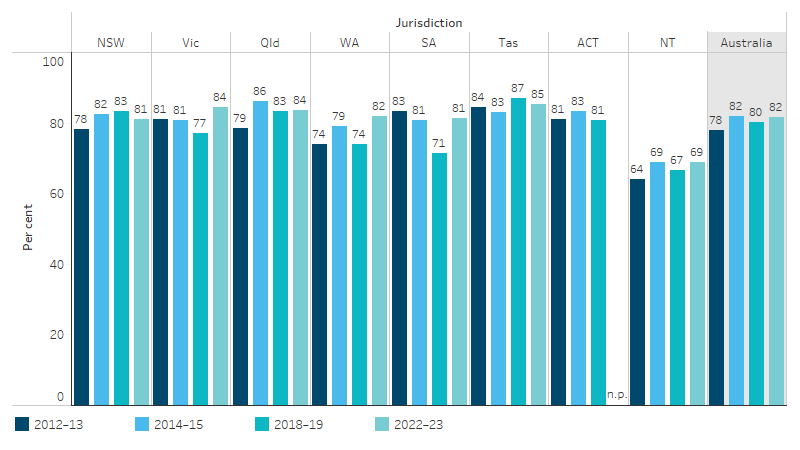
The proportion of First Nations households living in houses of an acceptable standard was similar across the three periods: in 2014–15 (82%), 2018–19 (80%) and 2022–23 (82%). In 2022–23, the highest proportion of people living in houses of an acceptable standard was in Tasmania (85%), and the lowest was in the Northern Territory (69%) (Table D2.02.6, Figure 2.02.1).
Figure 2.02.1: Proportion of First Nations households living in houses of an acceptable standard, by state/territory, 2012–13, 2014–15, 2018–19 and 2022–23
Note: Care should be taken when comparing estimates from the 2022–23 NATSIHS with previous surveys, see Box 2.02.1.
Source: Table D2.02.6. AIHW and ABS analysis of Australia Aboriginal and Torres Strait Islander Health Survey 2012–13 (2012–13 NATSIHS component); National Aboriginal and Torres Strait Islander Social Survey 2014–15; National Aboriginal and Torres Strait Islander Health Survey 2018–19; and National Aboriginal and Torres Strait Islander Health Survey 2022–23.
In 2022–23, 31% of First Nations households (148,600 households) were living in dwellings with major structural problems (including problems such as sinking/moving foundations, sagging floors, wood rot/termite damage, roof defects and major electrical and plumbing problems) (Table D2.02.1). This was similar to the proportion in 2018–19 (33%) (Table D2.02.5).
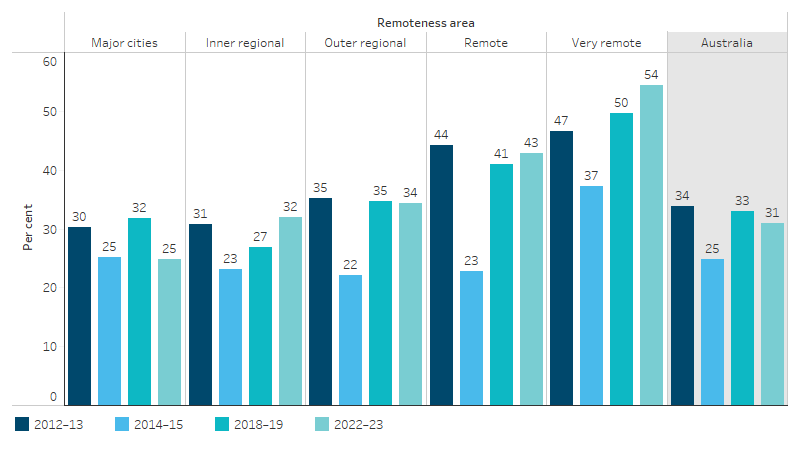
In 2022–23, in Very remote areas, 54% (14,100) of First Nations households were living in dwellings with major structural problems, significantly higher when compared with 25% (53,000) of households in Major cities (Table D2.02.2, Figure 2.02.2).
Figure 2.02.2: Proportion of First Nations households in dwellings with major structural problems by remoteness, 2012–13, 2014–15, 2018–19 and 2022–23
Note: Care should be taken when comparing estimates from the 2022–23 NATSIHS with previous surveys, see Box 2.02.1.
Source: Table D2.02.5. AIHW and ABS analysis of Australian Aboriginal and Torres Strait Islander Health Survey 2012–13 (2012–13 NATSIHS component); National Aboriginal and Torres Strait Islander Social Survey 2014–15; National Aboriginal and Torres Strait Islander Health Survey 2018–19; and National Aboriginal and Torres Strait Islander Health Survey 2022–23.
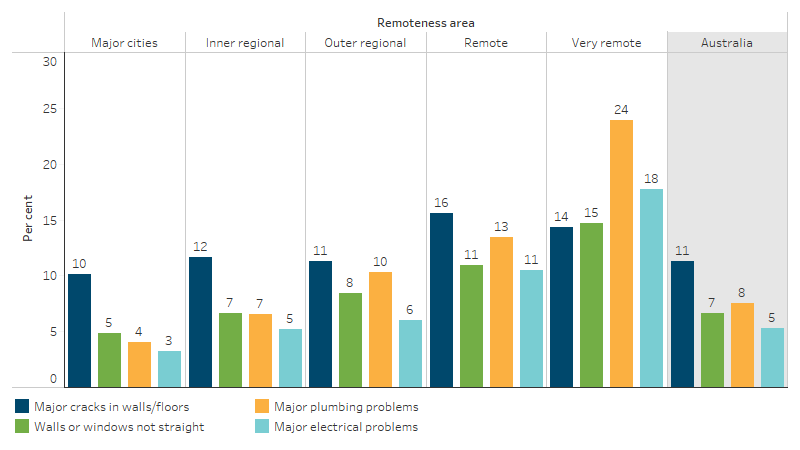
In 2022–23, just over 1 in 10 First Nations households (11%, or 54,000) were living in dwellings with major cracks in walls/floors. This was the most common structural problem for First Nations households in non-remote areas (11%, or 46,600), while major plumbing problems were the most common problem in remote areas (19%, or 9,500). In Very remote areas, dwellings with major plumbing problems (24%, or 6,200), major electrical problems (18%, or 4,600) and walls or windows not straight (15%, or 3,800) were the most common problems. Overall, dwellings in remote areas were 1.7 times as likely to have major structural problems as those in non-remote areas (49% or 24,300 households, and 29% or 123,600 households, respectively) (Table D2.02.2, Figure 2.02.3).
Figure 2.02.3: Proportion of First Nations households in dwellings with major structural problems, by selected problems and remoteness, 2022–23
Source: Table D2.02.2. AIHW and ABS analysis of National Aboriginal and Torres Strait Islander Health Survey 2022–23.
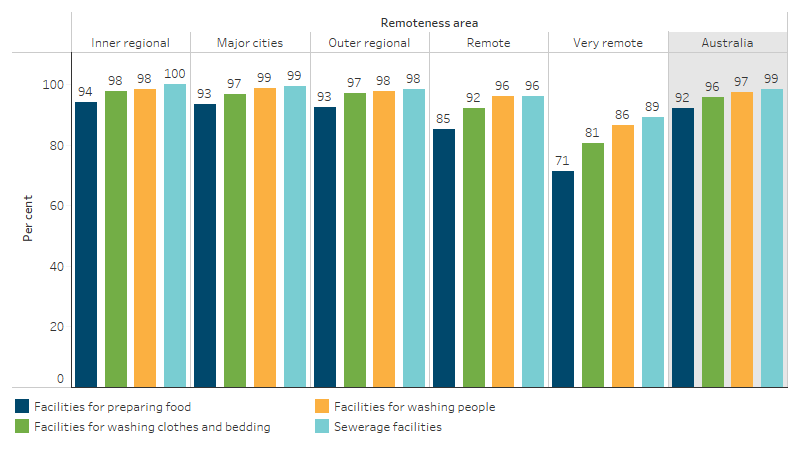
Facilities that support healthy living practices include sewerage, washing (people and clothes/bedding) and food preparation/storage.
In 2022–23, among First Nations households:
- 92% (441,500 households) reported having working facilities for storing/preparing food
- 96% (459,700 households) reported having working facilities for washing clothes/bedding
- 97% (467,900 households) reported having working facilities for washing people
- 99% (472,700 households) reported having working sewerage facilities (Table D2.02.2, Table D2.02.7, Figure 2.02.4).
Significant differences were found between remote and non-remote areas. In remote areas, 78% (38,900) of First Nations households reported having working facilities for preparing food, compared with 94% (402,900) in non-remote areas. Of First Nations households in remote areas, 86% (42,800) reported having working facilities for washing clothes and bedding, compared with 97% of households in non-remote areas (416,200) (Table D2.02.2, Table D2.02.7).
Figure 2.02.4: Proportion of First Nations households reporting working facilities for healthy living practices, by remoteness, 2022–23
Source: Table D2.02.7. AIHW and ABS analysis of National Aboriginal and Torres Strait Islander Health Survey 2022–23.
In 2022-23, the Northern Territory was the jurisdiction with the lowest proportion of households reporting working food preparation facilities (80%, 19,600 households), working washing facilities for clothes/bedding (87%, 21,300 households), working facilities for washing people (94%, 22,900 households) and working sewerage facilities (94%, 23,000 households) (Table D2.02.1, Table D2.02.8).
Research and evaluation findings
Access to safe, functional housing with reliable utilities remains a critical determinant of health and wellbeing for Aboriginal and Torres Strait Islander (First Nations) communities. Despite progress in housing programs, many households, particularly in remote areas, continue to face challenges such as overcrowding, poor structural conditions, and unreliable access to essential services like electricity, clean water, and sanitation (AIHW 2023).
Inadequate infrastructure, especially in remote areas, can lead to overcrowding and poor hygiene, increasing the risk of preventable diseases such as skin infections, scabies, trachoma and rheumatic heart disease. Functional housing supports health by enabling sanitation and hygiene practices through working plumbing, taps, showers, and appliances like refrigerators and washing machines (Australian Indigenous HealthInfoNet 2024; White et al. 2021; WHO 2023).
Energy insecurity is a growing concern. In remote Northern Territory communities, 91% of households experienced electricity disconnection during the 2018–19 financial year, with 74% disconnected more than 10 times, often during extreme heat. These disruptions compromise access to refrigeration, lighting, and medical equipment, and are expected to worsen with climate change (Longden et al. 2022).
Children who live in a dwelling that is badly deteriorated have been found to have poorer physical health outcomes and social and emotional wellbeing compared with those growing up in a dwelling in excellent condition (Baker et al. 2013). Comparisons between First Nations and non-Indigenous children in the Longitudinal Study of Australian Children show that improvements in housing can be expected to translate into gains for First Nations children’s health, social, and learning outcomes (Dockery et al. 2013).
For over four decades, the Housing for Health (HFH) program, developed by Healthabitat in partnership with First Nations communities, focuses on repairing and maintaining health hardware. The program demonstrates the critical role of functional housing in improving health outcomes. It applies a rigorous methodology focused on assessing and repairing health hardware to support nine Healthy Living Practices, the essential daily activities that housing must enable to protect health. These practices are: washing people; washing clothes; removing wastewater safely; improving nutrition (ability to store, prepare and cook food); reduce the negative impacts of crowding; reducing the negative impacts of animals, insects and vermin; reducing the health impacts of dust; temperature control; reducing hazards and the cause of trauma (Healthabitat. n.d.; Lea and Torzillo 2016). While Commonwealth funding for HFH has ceased, the program continues to operate in New South Wales through NSW Health, which has implemented over 150 projects across the state, demonstrating significant health benefits including a 40% reduction in hospital admissions for infectious diseases (NSW Ministry of Health 2024).
The AHURI Final Report No. 368, Sustainable Indigenous housing in regional and remote Australia, investigated housing conditions and found maintenance and timely repair of essential health hardware, such as sanitation, washing, and food preparation facilities, can significantly improve health outcomes and reduce environmental health risks. The report highlighted the effectiveness of community-led housing assessments and responsive maintenance systems, reinforcing the core principles of the HFH methodology (Lea et al. 2021; Memmott 2022).
Evaluations have affirmed the HFH program’s effectiveness across a variety of locations around Australia. The results of a HFH project in a remote First Nations community in South Australia found that carrying out minor repairs and maintenance was associated with decreased rates of eye and skin infections in people of all ages (DoHA 2007). In New South Wales an evaluation of the HFH program found that communities receiving the intervention had a 40% lower rate of hospital separations for infectious diseases compared with the broader rural First Nations population without the intervention (NSW Department of Health 2010, 2019). A 20-year follow-up evaluation found even greater improvements in house function among the HFH project homes, though First Nations social housing remained below standard due to poor maintenance and design. The HFH methodology consistently delivered sustainable improvements prompting recommendations to expand the program and embed its principles into wider housing strategies (Standen et al. 2020).
The Northern Territory Government’s Healthy Homes program for remote housing repairs and maintenance, built on the HFH program. The program includes working with Healthhabitat to deliver its proven HFH model in 3-4 remote communities and town camps per annum until 2026-27. More broadly the program is incorporating healthy living practices and preventive maintenance approaches into remote property and tenancy management across all leased remote communities and Alice Springs town camps. An evaluation highlighted that HFH works well to improve the function of housing projects – in the areas where it is delivered. However, HFH sites represented a small fraction of remote housing in the Northern Territory. The broader Healthy Homes program faced significant drawbacks in implementing preventive maintenance, undermined by bureaucratic hindrances, short-term contracts with maintenance providers (which impeded work on housing improvement), problems with the housing condition assessment and inspection process, and a failure to conduct enough housing condition assessments. An achievement of the program was the awarding of contracts to First Nations businesses (Grealy et al. 2023). The evaluation found that significant lessons could be learned from the approach taken in the Anangu Pitjantjatjara Yankunytjatjara (APY) Lands in South Australia which uses a preventive maintenance approach to social housing and has yielded benefits from an annual planned maintenance program in combination with an environmental health program run by the Nganampa Health Council (community-controlled). The program exemplifies a holistic view of householder health and wellbeing beyond a typical maintenance program (Grealy et al. 2022).
A recent evaluation of the Homelands Housing and Infrastructure Program (HHIP) in the Northern Territory, provides further evidence of the health benefits of functional housing and essential services. The evaluation covered the initial two-year funding period (2022–24) and ongoing works into 2025, focusing on housing upgrades, water supply, sanitation, and electrical safety across Northern Territory homelands. The program delivered 38 projects across 318 homelands, including major upgrades at 58 homelands (298 houses) and also Territory-wide subprograms for fire/electrical safety, water testing, and sanitation. Key findings show that refurbishments improved safety, reduced crowding, and enhanced household capacity to enact ‘Healthy Living Practices’, with residents reporting better living conditions and reduced health risks. However, systemic challenges remain with severe overcrowding, poor thermal performance, and ageing infrastructure that continue to undermine health outcomes. Community feedback emphasised the need for new and replacement housing, preventive maintenance cycles, and culturally informed design. Recommendations included embedding preventive maintenance, improving transparency in project selection, and prioritising Aboriginal Community Controlled Organisations for delivery. Long-term funding certainty and integrated planning were identified as critical to sustaining health gains achieved through housing interventions (Grealy 2025).
The Australian Government published the findings of the Remote Housing Review: A review of the National Partnership Agreement on Remote Indigenous Housing (NPARIH) and the Remote Housing Strategy (2008-2018) in 2017 (Federal Financial Relations 2024; Housing Australia 2024; Ministers’ Media Centre 2024). The review noted that by 2018, the strategy would have delivered over 11,500 more liveable homes in remote Australia – around 4,000 new builds and 7,500 refurbishments – which was estimated to have significantly reduced the proportion of overcrowded households. The NPARIH had an increased emphasis on systematic property and tenancy management with outcome payments to jurisdictions for more regular property inspections, improved maintenance plans, and the completion of repairs within agreed timeframes (PM&C 2017). NPARIH was a $5.4 billion initiative aimed at reducing overcrowding and improving housing conditions in remote First Nations communities. However, Australian Government funding for NPARIH ceased in 2018. Since then, remote housing investment has transitioned to new mechanisms, including the Housing Australia Future Fund Facility and National Housing Accord Facility, which aim to deliver 30,000 new social and affordable homes nationally over five years. Additionally, in 2024, the Australian Government and Northern Territory Government announced a landmark $4 billion joint investment to improve remote housing in the NT, including ongoing support for repairs and maintenance. These newer initiatives reflect a shift toward long-term, place-based partnerships and align with Closing the Gap targets (Federal Financial Relations 2024; Housing Australia 2025; Ministers’ Media Centre 2024).
Between 2001 and 2016, the average household size for First Nations people in the Northern Territory decreased from 4.6 to 4.0 people, alongside a 13-percentage point reduction in overcrowding. In 13 Northern Territory communities that received at least 10 new houses under NPARIH – ranging from 10 in Ali Curung to 110 in Maningrida – the average number of people per household fell by 24%, highlighting how increased housing supply helped reduce overcrowding. Nationally, NPARIH delivered 4,020 new houses and 7,557 refurbishments nationally, including 1,504 new houses and 2,929 refurbishments in the Northern Territory. Despite this, 50% of First Nations households in the Northern Territory did not receive maintenance or repairs in the previous year, and 21% of town camp houses were rated in poor or very poor condition, with deferred maintenance costs estimated at $78 million. Functioning health hardware, such as facilities for washing clothes and preparing food, remained lowest in the Northern Territory. Infectious disease trends were mixed: trachoma and helminth (parasitic worms) infections declined following mass treatment campaigns, while rates of shigellosis and acute rheumatic fever remained high. The study found no consistent link between housing improvements and health outcomes, suggesting that infrastructure alone may have limited impact unless accompanied by adequate support for healthy living conditions (Foster and Hall 2021).
More recently, the Review of the National Partnership for Remote Housing Northern Territory-June 2023 report highlights the transformative impact of sustained investment in functional housing with reliable utilities for remote First Nations communities. Through the construction of over 1,000 new bedrooms and the refurbishment of many more, the program has improved access to safe, liveable homes equipped with essential services such as water, power, and sanitation. These improvements are foundational to better health, reduced overcrowding, and enhanced community wellbeing. The review affirms that when housing is designed and maintained in partnership with communities, guided by local decision-making and cultural relevance, it becomes a powerful enabler of equity, resilience, and opportunity for First Nations families (NIAA 2023).
The Wreck Bay Home Ownership Program, evaluated by The Indigenous Infrastructure & Sustainable Housing Alliance (TIISHA), found that community-led housing upgrades and planning significantly improved housing conditions and supported aspirations for home ownership. Part 1 of the evaluation highlighted the importance of culturally responsive design, lease arrangements, and infrastructure upgrades tailored to community needs. It also identified barriers to maintenance and tenure security. Part 2 of the evaluation proposed three strategic options for staged housing replacement and upgrades, based on socio-technical analysis and participatory action research. The evaluation emphasised that co-designed housing solutions – grounded in local priorities – can enhance health, safety, and long-term sustainability in First Nations communities (Drake et al. 2021a; Drake et al. 2021b). In one recent example, in response to communication gaps between Aboriginal social housing tenants and providers in La Perouse, New South Wales, tenants co-designed the development of Bundi: A housing tool for mob, a set of plain-language resources to clarify housing processes and maintenance pathways to support tenants in accessing functional housing and essential utilities (Anderst 2025).
Implications
Programs and interventions aimed at improving housing quality can lead to positive health outcomes. Regular maintenance of health hardware is essential to ensure housing remains functional and to reduce housing-related health risks. Programs that manage preventive maintenance for remote housing can deliver significant benefits if the program is well thought through with appropriate maintenance contracting arrangements, in partnership with communities and in tandem with other environmental health promotion, such as in the Anangu Pitjantjatjara Yankunytjatjara (APY) Lands. Such programs can also offer significant opportunities for First Nations businesses.
Increasing access to essential utilities, such as safe drinking water, electricity, waste management, and sanitation facilities, remains a significant challenge, particularly in remote areas and for First Nations communities. These challenges stem from complex factors including historical inequalities, diverse community needs, and geographic isolation (Lea et al. 2021).
In addition to recognising the direct impact of basic housing conditions on health, interventions must also recognise the features of housing that indirectly influence health and wellbeing. These include location, affordability, housing tenure, access to employment networks, and empowerment through education can indirectly impact the health and wellbeing of occupants (Dockery et al. 2013). Culturally safe housing policy, program design, and implementation must be responsive to this broader context to effectively support First Nations community wellbeing.
The Australian Government has introduced several new housing policies to support access to housing for First Nations people. The National Agreement on Social Housing and Homelessness (NASHH) is a 5-year agreement providing $9.3 billion in funding to states and territories to combat homelessness, provide crisis support and build and repair social housing. This funding includes a doubling of Commonwealth homelessness funding to $400 million every year, which is matched by the states and territories. First Nations people are the only priority homelessness cohort specified in the NASHH, which aims to address the disproportionate housing inequality that continues to affect First Nations people. The NASHH requires all decisions that predominately affect First Nations people be decided by Partnership bodies for each jurisdiction, made up of appropriate representation from First Nations communities and the jurisdictional government. Beyond funding, the NASHH aims to improve service delivery flexibility, strengthen data and evidence sharing, and enhance transparency and accountability in public spending. Progress is monitored through the National Outcomes Framework (Department of Social Services 2024).
Funding of $200 million over five years from 2024–2025 is being provided from the returns of the Housing Australia Future Fund for the repair, maintenance and improvements of housing in remote First Nations communities in Western Australia, South Australia, Queensland and the Northern Territory. As part of this initiative, jurisdictions are expected to work towards achieving the ‘acceptable standard of housing’ as defined in the National Aboriginal and Torres Strait Islander Social Survey. This standard requires that homes have functioning facilities for washing people, washing clothes or bedding, preparing food, and sewerage. Jurisdictions are prioritising funding for First Nations organisations where possible, place-based approaches, and working with communities to ensure their needs are met. Jurisdictions will report through partnership bodies made up of First Nations representatives and the jurisdictional government, for transparency and accountability.
The Australian Government is providing $11.4 million over 4 years (2025–26 to 2028–29) to establish, upgrade, maintain and operate co-designed and place-based remote community laundry facilities in central and northern Australia. Access to working laundry facilities with reliable clean running water and power supply will support remote First Nations communities impacted by overcrowding and a lack of access to health hardware to wash clothing and bedding, helping to reduce infectious diseases and allergens.
The National Aboriginal and Torres Strait Islander Housing Association (NATSIHA) is the first national peak body for First Nations housing. They advocate for culturally appropriate, community-controlled housing solutions for First Nations people. Its core role is to close the housing gap by empowering First Nations-led decision-making, strengthening the capacity of First Nations housing providers, and influencing national policy to ensure safe, secure, and culturally responsive housing outcomes. The Housing Policy Partnership (HPP) involves governments, the Coalition of Peaks, and First Nations representatives to develop First Nations housing policy. The Australian Government has committed $9.2 million starting from 2022–23, to establish the HPP. This includes resources to support NATSIHA as co-chair and secretariat. One key output of the HPP is to make recommendations to the Joint Council about improving housing outcomes for First Nations people. Objectives of the HPP include establishing joined-up approaches between all governments and community representatives to address and improve housing outcomes, identifying reforms needed to achieve that end, and identifying opportunities to work more effectively across governments, housing organisations and the community-controlled sector. A key principle in this work is implementing the Priority Reforms of the National Agreement on Closing the Gap in how housing related objectives, and the broader Closing the Gap outcomes are pursued.
The highest levels of overcrowding in Australia are found in remote areas of the Northern Territory. In response, the Australian and Northern Territory governments have launched the Northern Territory Remote Housing Package – a $4 billion joint investment over ten years aimed at improving housing conditions in remote communities and Homelands. The NT Remote Housing Federation Funding Agreement (FFA) will deliver up to 2,700 new homes and aims to halve overcrowding in 73 communities and 27 Town Camps. A key component of the package is a comprehensive repairs and maintenance program, including cyclical and preventative maintenance. Through the Restoring funding for NT Homelands FFA, the Australian Government has committed $120 million over three years from 2024–25, building upon the $100 million that was committed in 2022–23. This funding will support immediate upgrades to existing houses and essential infrastructure on Northern Territory Homelands while a longer-term strategy is developed in partnership with First Nations communities and other key stakeholders. The Australian Government is providing a further $1 million to Aboriginal Housing Northern Territory (AHNT) over 2 years (from 2024–25 to 2025–26) to support AHNT to develop a plan for a transition to a Community-Controlled Northern Territory Housing Model.
The 2025 State of the Housing System report identified persistent housing challenges for First Nations people, including a shortage of suitable housing and overrepresentation in unstable or marginal areas of the housing system. A high proportion of First Nations people experience homelessness, most commonly due to overcrowding; home ownership (although improving) is substantially lower than for non-Indigenous Australians; and housing is often substandard, particularly in remote areas. In 2022–23, 36% of First Nations households in remote areas lived in dwellings that did not meet acceptable standards, defined as lacking basic facilities or having two or more major structural problems. The report also noted that many homes in these areas are not built to withstand extreme temperatures or natural hazards, and that fragmented housing policy, funding, and data collection continue to limit coordinated responses. These challenges are compounded by cultural and geographic factors, and current funding models may not be appropriate to deliver the housing that First Nations people require, particularly given the lack of consultation and collaboration in housing design and delivery in the past (ABS 2021, 2024; National Housing Supply and Affordability Council 2025a).
The National Health and Climate Strategy is Australia’s first comprehensive plan to address the health impacts of climate change and guide the transition to a sustainable, climate-resilient health system. It outlines a whole-of-government approach to reduce emissions, strengthen health system resilience, and promote healthier, more equitable communities, centring First Nations leadership, knowledge, and cultural safety. The National Health and Climate Strategy Implementation Plan 2024–2028, includes 49 actions over five years. A key focus is improving housing and energy security for First Nations communities. The 2024 Implementation Progress Report included active engagement with the Housing Policy Partnership to align First Nations housing priorities with health outcomes, and collaboration with the Department of Climate Change, Energy, the Environment and Water to embed health perspectives into the First Nations Clean Energy Strategy.
Target 9b of the National Agreement on Closing the Gap aims to ensure all First Nations households in discrete communities have access to essential services that meet or exceed jurisdictional standards. However, progress is difficult to assess due to inconsistent data on service delivery, particularly in remote and town camp settings. This lack of reliable data limits the ability to monitor improvements in access to safe drinking water, electricity, sanitation, and internet services, utilities that are critical to health, education, and employment outcomes (National Housing Supply and Affordability Council 2025b).
References
-
ABS (Australian Bureau of Statistics) (2021) Housing Statistics for Aboriginal and Torres Strait Islander Peoples, Australian Government.
-
ABS (2022) Housing statistics for Aboriginal and Torres Strait Islander peoples, ABS, Australian Government, accessed April 2023.
-
ABS (2024) National Aboriginal and Torres Strait Islander Health Survey 2022–23, ABS website.
-
AIHW (Australian Institute of Health and Welfare) (2019) Aboriginal and Torres Strait Islander people: a focus report on housing and homelessness, AIHW, doi:10.25816/5ebc9fccfa7db.
-
AIHW (2023) Housing Circumstances of First Nations people, Australian Government.
-
Ali SH, Foster T and Hall NL (2018) 'The Relationship between Infectious Diseases and Housing Maintenance in Indigenous Australian Households', International journal of environmental research and public health, 15(12), doi:10.3390/ijerph15122827. <Go to ISI>://WOS:000456527000218
-
Anderst L (2025) Housing, home and health: Social housing and Aboriginal and Torres Strait Islander people in urban New South Wales, UNSW.
-
Attorney-General’s Department (n.d.) Right to an adequate standard of living (including food, water and housing) , accessed 19 May 2025.
-
Australian Indigenous HealthInfoNet (2024) Environmental health, Edith Cowan University website.
-
Baker E, Lester L, Beer A, Mason K and Bentley R (2013) 'Acknowledging the health effects of poor quality housing: Australia’s Hidden Fraction', Urban and Regional Planning, the University of Adelaide.
-
Chakraborty A, Cargo M, Oguoma VM, Coffee NT, Chong A and Daniel M (2022) 'Built Environment Features and Cardiometabolic Mortality and Morbidity in Remote Indigenous Communities in the Northern Territory, Australia', Int J Environ Res Public Health, 19(15), doi:10.3390/ijerph19159435.
-
Clifford H, Pearson G, Franklin P, Walker R and Zosky G (2015) 'Environmental health challenges in remote Aboriginal Australian communities: clean air, clean water and safe housing', Australian Indigenous Health Bulletin, 15(2):1–13.
-
Department of Social Services (2024) National Agreement on Social Housing and Homelessness, Australian Government.
-
Dockery AM, Ong R, Colquhoun S, Li J and Kendall G (2013) Housing and children’s development and wellbeing: evidence from Australian data, AHURI Final Report, Australian Housing and Urban Research Institute.
-
DoHA (Department of Health and Aged Care) (2007) Evidence of Effective Interventions to Improve the Social and Environmental Factors Impacting on Health - Informing the development of Indigenous Community Agreements, Australian Government Department of Health website, accessed 20 August 2020.
-
Drake C, Evans J, Loosemore M, Poiner H and Holmgren E (2021a) Wreck Bay Home Ownership Program _ Part 2 _ An evaluation by The Indigenous Infrastructure and Sustainable Housing Alliance, UTS TIISHA The Indigenous Infrastructure & Sustainable Housing Alliance, accessed 10 November 2025.
-
Drake C, Evans J, Loosemore M, Wilkinson S, Poiner H and Holmgren E (2021b) Wreck Bay Home Ownership Program _ Part 1_ An Evaluation by The Indigenous Infrastructure and Sustainable Housing Alliance, UTS TIISHA The Indigenous Infrastructure & Sustainable Housing Alliance, accessed 10 November 2025.
-
Federal Financial Relations (2024) Housing Australia Future Fund – Acute Housing Measure.
-
Foster T and Hall NL (2021) 'Housing conditions and health in Indigenous Australian communities: current status and recent trends. International Journal of Environmental Health Research, 31(3), 325–343. ', Journal of Environmental Health Research,, 31(3):325–343.
-
Grealy L (2025) Homelands Housing and Infrastructure Program Monitoring and Evaluation Project – Final Report, Menzies School of Health Research.
-
Grealy L, Lea T, Moskos M, Benedict R, Habibis D and King S (2022) 'Sustaining housing through planned maintenance in remote Central Australia', Housing Studies, 39(3):789–811.
-
Grealy L, Su J-Y and Thomas D (2023) Healthy Homes Monitoring and Evaluation Project: Final Report.
- Healthabitat. (n.d.) Safety and the 9 Healthy Living Practices, Healthabitat. website, accessed 19 August 2025.
-
Housing Australia (2024) Housing Australia Future Fund Facility and National Housing Accord Facility.
-
Housing Australia (2025) Financing under the Housing Australia Future Fund, Housing Australia website.
-
Jervis-Bardy J, Sanchez L and Carney AS (2014) 'Otitis media in Indigenous Australian children: review of epidemiology and risk factors', Journal of Laryngology and Otology, 128 Suppl 1:S16–27, doi:10.1017/s0022215113003083.
-
Lea T, Grealy L, Moskos M, Brambilla A, King S, Habibis D, Benedict R, Phibbs P, Sun C and Torzillo P (2021) Sustainable Indigenous housing in regional and remote Australia, AHURI Final Report No. 368, Australian Housing and Urban Research Institute, doi:doi: 10.18408/ahuri7323701.
-
Lea T and Torzillo P (2016) 'The cunning of data in Indigenous housing and health', Journal of Prevention & Intervention in the Community, 44(4):272–282, doi:10.1080/10852352.2016.1197723. <Go to ISI>://WOS:000399089700006
-
Longden T, Quilty S, Riley B, White L, Klerck M, Davis V and Jupurrurla N (2022) 'Energy insecurity during temperature extremes in remote Australia. ', Nature Energy, 7:43–54.
-
Lorentzen JC, Johanson G, Björk F and Stensson S (2022) 'Overcrowding and Hazardous Dwelling Condition Characteristics: A Systematic Search and Scoping Review of Relevance for Health', Int J Environ Res Public Health, 19(23), doi:10.3390/ijerph192315542.
-
Memmott P (2022) 'Aboriginal Social Housing in Remote Australia: Crowded, Unrepaired and Raising the Risk of Infectious Diseases', Global Discourse, doi:10.1332/204378921X16315375796362.
-
Ministers’ Media Centre (2024) Federal and Territory Labor governments sign historic 10-year remote housing partnership agreement, Deprtment of the Prime Minister and Cabinet website.
-
NACCHO (2021) NACCHO Policy Position Paper: Aboriginal Housing for Aboriginal Health, National Aboriginal Community Controlled Health Organisation.
-
National Housing Supply and Affordability Council (2025a) Chapter 6 First Nations housing, State of the Housing System 2025, Australian Government.
-
National Housing Supply and Affordability Council (2025b) State of the housing system 2025.
-
NIAA (National Indigenous Australians Agency) (2023) Review of the National Partnership for Remote Housing Northern Territory - June 2023, NIAA.
-
NSW Department of Health (2010) Closing the Gap: 10 Years of Housing for Health in NSW - An evaluation of a healthy housing intervention, DoH-NSW.
-
NSW Department of Health (2019) Housing for Health, accessed 20/08/2019 2019.
-
NSW Ministry of Health (2024) Housing for Health, Environmental Health Branch. website.
-
PM&C (Department of the Prime Minister and Cabinet) (2017) Remote Housing Review: A review of the National Partnership Agreement on Remote Indigenous Housing and the Remote Housing Strategy (2008-2018).
-
Productivity Commission (2022) In need of repair: The National Housing and Homelessness Agreement – Study report, Australian Government.
-
Standen JC, Morgan GG, Sowerbutts T, Blazek K, Gugusheff J, Puntsag O, Wollan M and Torzillo P (Date) 'Prioritising Housing Maintenance to Improve Health in Indigenous Communities in NSW over 20 years', International Journal of Environmental Research and Public Health, 17(16), doi: 10.3390/ijerph17165946.
-
White MA, Spry M, Whiley H and Ross KE (2021) 'The 1999 National Environmental Health Strategy and Closing the Gap: lessons learnt, and hope for the future', Australian and New Zealand Journal of Public Health,, 45(3):200–202, doi:10.1111/1753-6405.13101.
-
WHO (World Health Organisation) (2018) WHO Housing and Health Guidelines, World Health Organization.
- WHO (2023) Guidance on WASH and health, Compendium of WHO and other UN guidance on health and environment.