
Key messages
Why is it important?
Having a regular primary health care provider, such as a usual general practitioner (GP) or clinic, is associated with a range of benefits for individuals and the broader health system. Continuity of care fosters trust, strong communication and lasting therapeutic relationships between patients and providers, which are key elements that support adherence to treatment, patient satisfaction, and overall wellbeing. For Aboriginal and Torres Strait Islander (First Nations) communities, trust in health care is particularly important given the ongoing impacts of racism and discrimination, which can lead to disengagement from care. First Nations peoples’ holistic view of health encompasses physical, social, emotional and cultural wellbeing, deeply rooted in connection to land, culture, spirituality and ancestry. Aboriginal Community Controlled Health Services (ACCHSs) play a vital role in delivering culturally safe, community-led comprehensive primary health care. This role has been affirmed by national strategies such as the National Agreement on Closing the Gap (with particular reference to Priority Reform 2: building the community-controlled sector), the National Aboriginal and Torres Strait Islander Health Plan 2021–2031, and the National Aboriginal and Torres Strait Islander Health Workforce Strategic Framework and Implementation Plan 2021–2031.
Data findings
- In 2022–23, 99% of First Nations people had a primary health care service within a 1-hour drive, not considering other access factors such as travel and cultural acceptability.
- In 2022–23, 64% of First Nations people living in Very remote areas had to travel over 1 hour to access a mainstream GP. This decreased to 17% when considering Indigenous Australians’ Health Programme-funded services.
- Service gap areas (Indigenous Areas where 200 or more First Nations people live more than a 1-hour drive to any type of primary care service) were concentrated in Very remote areas (13), with 1 in an Outer regional area. There were also additional 92 service gap areas where 200 or more First Nations people lived more than a 1-hour drive to an ACCHO.
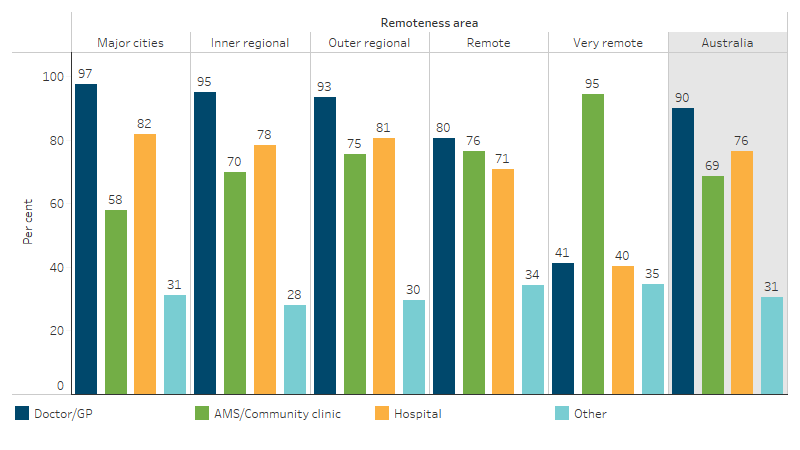
- In 2022–23, 82% of First Nations people living in Major cities had access to a hospital in their local area, compared with 40% of those living in Very remote areas.
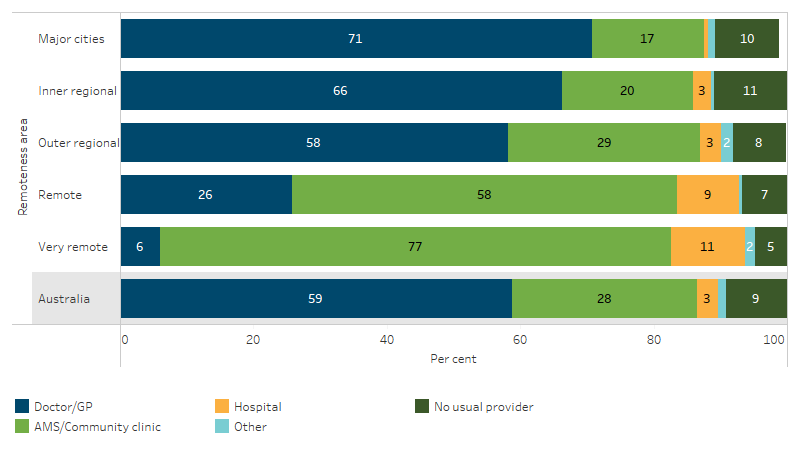
- The use of AMSs and community clinics increased with increasing remoteness – 17% of First Nations people living in Major cities used these services, compared with 77% in Very remote areas in 2022–23.
- In 2022–23, about 19% (80,900) of First Nations people who wanted to use an Aboriginal Medical Service (AMS) did not have one available locally. Most of these people lived in non-remote areas, where 23% (73,900) reported they would like to use AMS services, but could not, due to lack of availability. In Remote and very remote areas, only 7% (7,300) faced this issue.
- In 2022–23, 89% of First Nations people aged 15 and over reported that doctors listened to them, 86% reported that doctors spent enough time with them and 91% showed respect for what they had to say.
- In 2022–23, 25% (144,000) of First Nations people aged 15 and over reported they had been treated unfairly in the previous 12 months because they are Indigenous. Just over 2% (12,200) of First Nations people avoided seeking care from medical staff at hospitals or doctor’s surgeries because of previous unfair treatment.
Research and evaluation findings
- Culture is the foundational element of First Nations primary health care models, underpinning 7 core characteristics including accessible services, community participation, continuous quality improvement, a skilled and culturally appropriate workforce, flexible care, holistic health, and self-determination.
- An independent, co-designed evaluation found the Indigenous Australians’ Health Programme (IAHP) provides critical investment in primary health care for First Nations people – particularly through ACCHSs – but noted funding is too low for ACCHSs to consistently deliver care aligned with community values.
- Despite most First Nations people living in cities or regional areas, many face barriers accessing mainstream services; ACCHSs help bridge this gap by providing culturally safe, community-led care, but may still be geographically distant or overbooked, particularly in urban areas.
- Trusting, culturally safe relationships are critical for long-term engagement in care for First Nations people. This requires health providers to offer holistic, community-involved care that acknowledges the importance of flexible, respectful, and trust-building approaches.
- Continuity of care with a regular, trusted GP improves health outcomes and reduces emergency visits; for First Nations people, this should include culturally responsive, person-centred approaches that respect family and community.
- Communication (‘talk’) is central to providing culturally safe care, fostering trust and engagement with patients through meaningful conversations, longer consultations, and having genuine interest in patients’ lives beyond clinical needs.
Implications
The Australian Government is expanding ACCHSs into areas of unmet need through IAHP reforms, including 4-year rolling funding, a co-designed needs-based model, and strengthened data governance aligned with Indigenous Data Sovereignty. The National Aboriginal and Torres Strait Islander Health Workforce Strategic Framework and Implementation Plan 2021–2031 aims to increase First Nations representation in the national health workforce to 3.43% across roles, and is supported by professional bodies such as the National Association of Aboriginal and Torres Strait Islander Health Workers and Practitioners (NAATSIHWP), Australian Indigenous Doctors’ Association (AIDA), Congress of Aboriginal and Torres Strait Islander Nurses and Midwives (CATSINaM), Indigenous Allied Health Australia (IAHA), and the Leaders in Indigenous Medical Education Network (LIME Network). The Cultural Respect Framework 2016–2026 and related monitoring frameworks aim to embed cultural safety across health services, addressing First Nations preferences for culturally safe care and the limitations of mainstream services, supported by programs that train GPs to deliver respectful, responsive care.
Why is it important?
Having a regular primary health care provider, such as a usual general practitioner (GP) or clinic, is associated with a range of benefits for individuals and the broader health system. Patients who consistently see the same provider are more likely to develop strong communication, trust, and a therapeutic relationship with their doctor. This continuity of care supports higher patient satisfaction, better adherence to treatment plans, and improved health outcomes (Jackson and Ball 2018). The development of trust in health care providers is particularly important for Aboriginal and Torres Strait Islander (First Nations) people (Nolan-Isles et al. 2021).
General practice forms the foundation of the primary health care system in Australia. In addition to GPs, primary care includes services provided by nurses, allied health professionals, midwives, pharmacists, dentists and Aboriginal Health Workers and Practitioners (DoH 2018). Every year, almost 9 in 10 Australians visited a GP for their essential health care, highlighting the central role of general practice in preventive and ongoing care (RACGP 2024). In 2022–23, 91% of First Nations people had a usual source of health care, and 83% always used the same source, supporting trust, treatment adherence and improved outcomes (AIHW 2025).
Strong and trusting relationships between First Nations people and health care providers are essential for sustained engagement with health services. However, in the year (October 2023 to October 2024) following the Referendum on the Voice to Parliament, more than half of First Nations adults reported experiences of health care discrimination (53%), an increase of 13 percentage points since 2018–21. When relationships are damaged, such as through experiences of racism or discrimination, people may disengage from care, resulting in interruptions to patient-provider relationships. Rebuilding trust can take significant time and effort, and in some cases, people may walk away from necessary care altogether (Davy et al. 2016; Thurber et al. 2024).
First Nations people view health holistically. Health is not only the physical wellbeing of an individual but also includes the social, emotional, and cultural wellbeing of the whole community. This perspective recognises the importance of connection to land, culture, spirituality, and ancestry as fundamental to health and wellbeing (Commonwealth of Australia 2017; Dudgeon et al. 2025).
Aboriginal Community Controlled Health Organisations (ACCHOs) were established in response to systemic exclusion and racism in mainstream health systems and the significant financial, cultural and social barriers to accessing health care (Anderson 2006). Governed by local Aboriginal communities, ACCHOs deliver culturally safe care aligned with the holistic concept of health, encompassing physical, social, emotional and cultural wellbeing. ACCHOs provide comprehensive primary health care, improve access and continuity of care, reduce barriers such as racism, and achieve strong outcomes in chronic disease management, maternal and child health, and preventive care. They also strengthen self-determination through community governance, workforce development, and culturally appropriate service models (AH&MRC 2015; Campbell et al. 2018; Panaretto et al. 2014; Pearson et al. 2020).
An important benefit of having a usual source of primary health care is having continuity of care particularly for managing complex or chronic health conditions that need a multidisciplinary approach. Within ACCHOs, Aboriginal Health Practitioners (AHPs) and Aboriginal Health Workers (AHWs) work alongside nurses and GPs to coordinate care. Recent initiatives, such as South Australia’s Continuity of Care Protocols Program, have strengthened coordination and cultural safety through co-designed protocols with ACCHOs and Local Health Networks (Productivity Commission n.d.). Evaluations highlight ACCHOs’ role in delivering accessible, culturally safe, and comprehensive primary health care, including chronic disease management and multidisciplinary care models (Williams and Ragg 2023).
However, the reach and capacity of the ACCHO sector to meet the needs of First Nations people is limited, which means that mainstream health services are still relied upon, despite often not being sufficiently equipped to deliver culturally safe comprehensive health care (Bainbridge et al. 2015).
The National Agreement on Closing the Gap (the National Agreement) was developed in partnership between Australian governments and the Coalition of Aboriginal and Torres Strait Islander Peak Organisations. It is grounded in 4 Priority Reforms that elevate First Nations voices and leadership. These reforms focus on working in partnership and sharing decision-making, building the Aboriginal community-controlled sector, transforming government organisations, and improving and sharing access to data and information. Priority Reform 2, Building the community-controlled sector, reinforces the crucial role the sector plays in meeting the needs of First Nations people and also recognises that reliable funding, capacity building, workforce and leadership are important elements that need strengthening and support in order for the sector to meet those community needs.
The third priority reform, Transforming government organisations, is particularly focused on ensuring that government services are culturally safe and responsive to the needs of First Nations people. A key target under this reform is to reduce the proportion of First Nations people who experience racism.
The National Aboriginal and Torres Strait Islander Health Plan 2021–2031 (the Health Plan) is an Australian policy representing the Government’s ongoing commitment to improving health outcomes for First Nations people. Its vision is for First Nations people to enjoy long, healthy lives centred in culture, with access to services that are prevention-focused, culturally safe and responsive, equitable and free of racism. The Health Plan identifies priorities and objectives on improving access for First Nations people to person-centred and family-centred care.
The National Aboriginal and Torres Strait Islander Health Workforce Strategic Framework and Implementation Plan 2021–2031 (the Workforce Plan) has an ambitious target. It aims for First Nations people to represent 3.43% of the national health workforce by 2031. It also aims to strengthen the cultural safety of the health system more broadly to eliminate racism from workplaces and in the provision of health care.
Together, these priorities promote a health system that is culturally safe, free of racism, and accountable to First Nations people. They affirm the importance of high-quality, holistic, community-led primary health care, and the right to accessible, trauma-aware and healing-informed services.
The National Agreement, the Health Plan and the Workforce Plan are discussed further in the Implications section of this measure.
Data findings
Measuring access to health care is complex, as ‘access’ can refer to distance or time taken to travel to services, affordability, cultural acceptability and distribution of specific types of primary health care services. Over 4 in 5 First Nations people as of 2021 live in major cities and regional areas where mainstream health services are typically located. However, these services are not always accessible to First Nations people, for geographic, social and cultural reasons. First Nations-specific health services are critical providers of culturally safe, comprehensive primary health care for First Nations people. These services are predominantly delivered through ACCHSs, which are governed and operated by First Nations communities to ensure cultural safety and community leadership. Additional providers include Primary Health Network-commissioned services, other non-government organisations, and state/territory local health services (ABS 2023; AIHW 2024b; DHDA 2025).
Availability of health care services
Access to health care services varies across Australia. In 2024, the Australian Institute of Health and Welfare performed spatial analysis of First Nations peoples' access to health services across Australia, including:
- First Nations–specific primary health care (PHC) services funded through the Indigenous Australians’ Health Programme (IAHP). This includes Aboriginal Community Controlled Health Services (ACCHSs), state and territory government-run services, and some non-government organisations, operating in 2022–23.
- Mainstream general practices (GPs), operating in 2024.
This analysis found:
- 98% of First Nations people lived within a 30-minute drive of a primary care service, and 99% of First Nations people lived within a 1-hour drive (not considering other factors of access such as travel and cultural acceptability).
- First Nations-specific PHC services were important in providing health care to First Nations people, particularly in more remote areas; 64% of those living in Very remote areas in 2022–23 had to travel over 1-hour to access a mainstream GP, compared with 17% when IAHP-funded services were included.
- Service gap areas (Indigenous Areas where 200 or more First Nations people live more than a 1-hour drive to any type of primary care service) were concentrated in Very remote areas (13), with 1 in an Outer regional area. There were also additional 92 service gap areas where 200 or more First Nations people lived more than a 1-hour drive to an ACCHO (AIHW 2024b).
Results from the 2022–23 National Aboriginal and Torres Strait Islander Health Survey (NATSIHS) based on self-reported data indicate that the proportion of First Nations people who had a locally available doctor or GP (other than from an Aboriginal Medical Service (AMS) or hospital) was 97% among those living in Major cities compared with 41% in Very remote areas. The proportion of First Nations people who had a locally available AMS or community clinic was highest in Very remote areas at 95% (out of 91,300 people), compared with 58% (out of 409,300) of First Nations people in Major cities. Some caution is needed when interpreting these data, as respondents may not clearly distinguish between the different types of services.
While hospitals are not considered primary health care providers, in some cases, people may go to a hospital if it is more accessible or affordable or if there is a co-located GP clinic.
Hospitals were available in the local area for 82% of First Nations people living in Major cities, compared with 40% of those living in Very remote areas (Table D3.17.2, Figure 3.17.1).
Figure 3.17.1: Available sources of health care by type, First Nations people, by remoteness, 2022–23
Source: Table D3.17.2. AIHW and ABS analysis of National Aboriginal and Torres Strait Islander Health Survey 2022–23.
Usual source of health care
Based on self-reported data from the 2022–23 NATSIHS, 91% (894,600) of First Nations people had a usual place to go for health problems and advice, comprising:
- 59% who usually went to a doctor/GP
- 28% who usually went to an AMS or community clinic
- 3.2% who usually went to a hospital
- 1.1% who went to other health care (including traditional healer) (Table D3.17.2).
Use of AMSs and community clinics increased by remoteness – the proportion was lowest in Major cities (17%; 67,800 people) and highest in Very remote areas (77%; 69,100) (Table D3.17.2, Figure 3.17.2).
A higher use of hospitals for regular health care was reported for First Nations people in remote areas (Remote and Very remote areas combined) than in non-remote areas – 10.4% compared with 1.9% respectively (Table D3.17.2). For an analysis of hospitalisations for conditions that could be prevented if primary health care services were better able to meet the needs of First Nations people, see measure 3.07 Selected potentially preventable hospital admissions.
Figure 3.17.2: Usual source of health care by type, First Nations people, by remoteness, 2022–23
Source: Table D3.17.2. AIHW and ABS analysis of National Aboriginal and Torres Strait Islander Health Survey 2022–23.
Preferred source of care
The usual place that people go for health problems and advice depends on what services are available, accessible or affordable, the type of health problem, as well as preferences based on personal and cultural needs.
The 2022–23 NATSIHS asked where people would like to go if they were sick or needed advice about their health. In 2022–23:
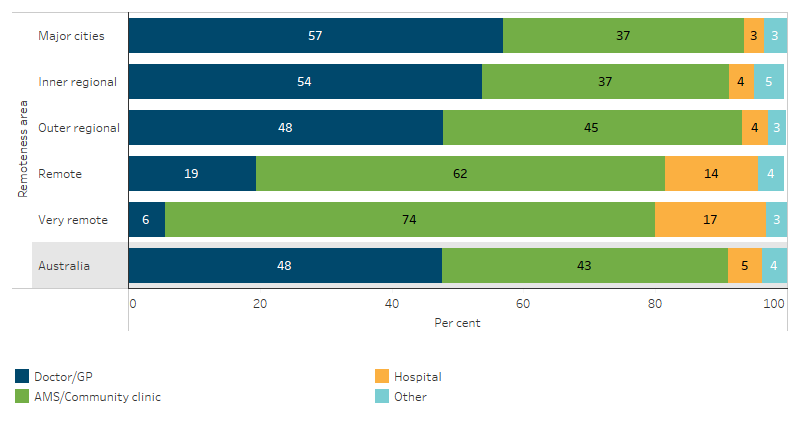
- 48% (473,600) of First Nations people reported they would prefer a doctor/GP (other than an AMS or hospital)
- 43% (430,500) preferred to go to an AMS or a community clinic
- 5.3% (52,700) preferred a hospital
- 3.7% (37,100) preferred other health care (including a traditional healer) (Table D3.17.1).
Preferences varied by remoteness, likely reflecting what services were available in their local area. Doctors/GPs were preferred mostly by First Nations people in Major cities (57% compared with 5.6% in Very remote areas); and AMSs and community clinics were preferred mostly by First Nations people in Very remote areas (74% compared with 37% in Major cities) (Table D3.17.2, Figure 3.17.3).
Figure 3.17.3: Preferred source of health care by type, First Nations people, by remoteness, 2022–23
Source: Table D3.17.2. AIHW and ABS analysis of National Aboriginal and Torres Strait Islander Health Survey 2022–23.
Looking at preferences by service availability directly, in 2022–23:
- In areas with only an AMS/CC (no GP), 76% of First Nations people preferred using an AMS/CC and 6.5% preferred using a GP.
- In areas with only a mainstream GP (no AMS/CC), 26% preferred using an AMS/CC and 65% preferred using a GP.
- In areas with both an AMS/CC and a GP, 47% preferred using an AMS/CC and 45% preferred using a GP (AIHW 2025).
Further AIHW analysis using the 2022–23 NATSIHS data used multivariate regression models to examine the variables that are associated with higher preference for using an AMS/CC. This analysis showed that the strongest predictor of preference for an AMS/CC was having one in a person’s local area. The odds of First Nations people aged 18 and over who had only an AMS/CC in their area preferring an AMS/CC were 2.7 times as high as for those without one, and 1.7 times as high as for those who had both an AMS/CC and a mainstream GP in their area (AIHW 2025).
Nationally in 2022–23, 19% (80,900) of First Nations people who said they would like to go to an AMS did not have an AMS available in their local area (Table D3.17.10). Those who live in Major cities, Inner regional and Outer regional areas contributed the most to this, with 23% (73,900) of First Nations people in non-remote areas reporting they would like to use AMS services, but could not, due to lack of availability. In comparison, only 7% (7,300) of First Nations people living in Remote and Very remote areas fit into this category (Table D3.17.12).
In 2022–23, of the estimated 430,500 people who preferred an Aboriginal Medical Service or Community Clinic (AMS/CC), 251,000 (58%) had one as their usual source of health care. This means that an estimated 180,000 First Nations people did not use an AMS/CC even though that was their preferred source. Close to one-third (31% or an estimated 135,000) used a mainstream GP and 7.3% (31,500) had no usual source of health care (AIHW 2025).
Of those who preferred to use an AMS/CC and who only had an AMS/CC in their local area, 89% (or an estimated 60,300 of 67,500) used an AMS/CC as their usual source of health care. Of those who preferred to use an AMS/CC and who had both an AMS/CC and a mainstream GP in their local area, 64% (an estimated 179,000 of 282,000) used an AMS/CC as their usual source of health care, suggesting that factors beyond availability also influence the use of preferred services (AIHW 2025).
Patient experience
In 2022–23, 72% (348,800) of First Nations people aged 15 and over who had seen a doctor in the past 12 months rated their health care experience in the previous 12 months as excellent/very good (Table D3.08.6). First Nations people aged 15 and over with no usual GP/medical service reported lower rates of satisfaction than those who attended a usual doctor or medical service, with 14% (5,300) rating their health care experience in the previous 12 months as fair/poor, compared with 8% (22,400) for those with a regular doctor/GP and 7% (9,300) for those with a regular AMS/community clinic (though these differences were not statistically significant) (Table D3.08.8).
The majority of First Nations people aged 15 and over reported that doctors always or usually listened to them (89%, or 434,400), explained things in a way that could be understood (89%, or 436,300), showed respect for what was said (91%, or 442,800), spent enough time with them (86%, or 419,700) and respected their culture, traditions, customs and beliefs (88%, or 429,400) (Table D3.08.8, Figure 3.17.4).
Figure 3.17.4: Patient experience by usual source of health care over previous 12 months, First Nations people aged 15 and over who saw a doctor, 2022–23
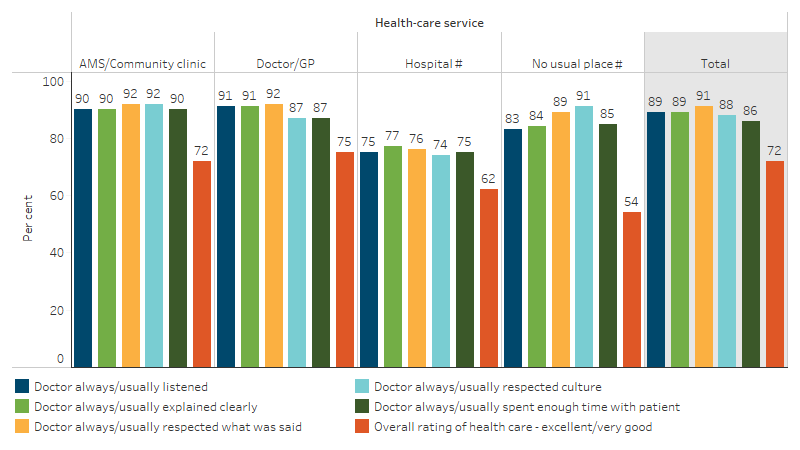
Note: Estimates for patients with ‘no usual place’ and ‘hospital’ given as their usual source of health care have high margins of error and should be treated with caution.
Source: Table D3.08.8. AIHW and ABS analysis of National Aboriginal and Torres Strait Islander Health Survey 2022–23.
National data for all Australians from the Patient Experience Survey 2023–24 showed that GPs always or often listened carefully (91%), showed respect (94%) and spent enough time with their patients (88%) (ABS 2024).
In 2022–23, about 2% (12,200) of First Nations people aged 15 and over avoided seeking care from doctors, nurses or other staff at hospitals or doctor’s surgeries because of previous unfair treatment. Meanwhile, 25% (144,000) of First Nations people aged 15 and over reported they had been treated unfairly in the previous 12 months because they are Indigenous (Table D3.08.17).
AIHW analysis of the 2022 Australian Reconciliation Barometer report showed that 82% of First Nations people aged 18 and over had fairly high or very high levels of trust with doctors, nurses and medical staff. The report also showed that 34% of First Nations people had ever experienced racial discrimination by doctors, nurses and medical staff, of which 20% experienced it in the last 12 months, compared with 9% of the general community having ever experienced racial discrimination (AIHW 2023).
Research and evaluation findings
GP and health service access
Almost 90% of Australians see a GP at least once per year (RACGP 2024). People who visit GPs less and experience more preventable hospital admissions include First Nations people, those with lower incomes, and individuals living outside metropolitan areas (Swerissen et al. 2018).
Primary health care is typically provided in community-based settings, including general practices, community health centres, First Nations-specific health services, and allied health clinics. It often serves as the initial entry point into the health system and plays a critical role in linking individuals to specialist care. However, access to these services remains limited overall – especially in remote regions, where the demand for health care is often greatest (AIHW 2024a).
Barriers to access
Even though most First Nations people live in major cities and regional areas – where mainstream health services like hospitals and GP clinics are often available – these services are not always accessible. Many First Nations people face barriers such as long travel distances, lack of transport, cultural safety, and difficulty navigating appointment systems or seeing a preferred doctor. Aboriginal Community Controlled Health Services (ACCHSs) and other First Nations-specific health services help bridge these gaps. They are trusted and preferred by many First Nations people, especially during times of crisis or in remote areas, because they offer culturally safe, respectful, and community-led care. However, even in major cities, ACCHSs may not be located nearby, may be overbooked, or may not exist in certain neighbourhoods, making them hard to reach for some urban residents. ACCHSs do more than provide medical treatment, they support patients with booking appointments, arranging transport, and accessing tests and scans. ACCHSs’ deep connection to the communities they serve, along with their holistic approach to care, allows them to understand and respond to local cultural, social, and environmental needs in ways that mainstream services often cannot (AIHW 2024a; Woodland et al. 2024).
First Nations people may experience barriers to health care engagement that are not as prevalent for non-Indigenous Australians, including feelings of shame, guilt, fear, mistrust, and issues stemming from judgment, misunderstandings, past trauma, and shifting priorities. In this context, research among GPs working in First Nations health has shown that the patient–doctor relationship, health literacy, and engagement with the health system are key factors influencing effective communication with First Nations patients. A strong patient–doctor relationship was identified as the foundation for any progress during consultations, with experienced GPs prioritising non-medical conversations and mindful body language to build rapport with patients. Spending more time with patients was seen as critical to encouraging disclosure, exploration of concerns, and guiding treatment decisions. Aboriginal Health Workers also played a vital role beyond screening and follow-up, helping to structure consultations, address cultural and gender sensitivities, and improve long-term health literacy for patients and their families (Ghamrawi et al. 2024).
Systemic and structural barriers to regular access to GP and health services for First Nations people are significantly worse for those living with a disability. Evidence provided to the Royal Commission into Violence, Abuse, Neglect and Exploitation of People with Disability clearly demonstrates substantial health inequalities experienced by First Nations people with disability, reflected by the stark disparity that those aged 15 to 64 with profound or severe disability were almost twice as likely (65%) to encounter barriers accessing health services compared to those without disability (34%). The Royal Commission also heard evidence that explains the potential reluctance of First Nations families to seek and accept a disability diagnosis. Past experiences of mistrust, inappropriate diagnosis and treatment, blame, and receiving punitive action by services leads to extreme anxiety and the disengagement from services, including health services. Addressing these systemic challenges requires a sophisticated and collaborative health care approach, where all parts of the health system jointly assume responsibility for improving health outcomes for First Nations people with disability (Royal Commission into Violence‚ Abuse‚ Neglect and Exploitation of People with Disability 2023).
Enabling culturally safe care
Trusting, culturally safe relationships between health care providers and patients are key to fostering long-term engagement with health care services. For First Nations peoples, this is especially important, as experiences of systemic discrimination and cultural disconnection have historically undermined trust in health care systems. Trustworthiness and genuine interest in patients’ lives – beyond just their physical health – are essential for creating a sense of welcome, respect, and belonging. Building these relationships requires health care providers to be flexible and stay connected with patients, using approaches like motivational interviewing that treat every interaction as a chance to support positive change. Services that are most valued offer holistic care, extend beyond medical treatment, and are actively involved in the community. Achieving and maintaining these relationships takes time, trust, respect, and adaptable care models that recognise and accommodate the competing priorities in patients’ lives (Davy et al. 2016).
‘Talk’ was identified as central to First Nations peoples’ experience of health care, with its presence fostering trust, strengthening engagement, and producing positive outcomes. A systematic review of 65 qualitative studies found that communication – referred to as ‘talk’ – was consistently described as essential to culturally safe care (Jennings et al. 2018).
A small qualitative study of GP registrars showed a positive intention to provide culturally safe care for First Nations patients, focusing on patient-centred approaches and trust-building. Strategies reported include creating welcoming environments and offering longer appointments. However, there was also a gap between intention and practice, with many adopting a universalist or generic approach to consultations and few adapting consultations to cultural needs. Registrars often rely on experiential learning with some registrars having an expectation that patients would teach and correct culturally unsafe practice by clinicians without reflecting on the power imbalance in the patient-GP relationship (Brumpton et al. 2024, 2025).
First Nations health services
Alternative primary health care services specifically designed for First Nations communities were created because mainstream health services were not adequately meeting the unique cultural and health needs of these communities (Harfield et al. 2018; Hayman et al. 2009; RACGP 2019; Spurling et al. 2009).
Evidence shows that access to primary health care can be improved for First Nations people if services are owned and managed by First Nations communities. ACCHSs are a vital part of Australia’s health care system and many First Nations people prefer these services, particularly those living in Very remote areas (Campbell et al. 2018).
A systematic scoping review identified the characteristics of First Nations primary health care service delivery models. Culture was the most prominent characteristic that underpinned all of the other 7 characteristics that were identified: accessible health services; community participation; continuous quality improvement; culturally appropriate and skilled workforce; flexible approach to care; holistic health care; and self-determination and empowerment (Harfield et al. 2018).
The Indigenous Australians’ Health Programme (IAHP) is a key Australian Government initiative for improving First Nations health. It funds ACCHSs and other services to provide high-quality, comprehensive, and culturally appropriate primary health care in urban, regional, and remote areas. The IAHP supports service delivery, workforce development, targeted health activities (such as chronic disease management and child ear and eye health), and infrastructure improvements, aiming to improve access to care and health outcomes for First Nations people (DHDA 2024).
An independent evaluation assessed the appropriateness and effectiveness of primary health care delivered under the Indigenous Australians’ Health Programme (IAHP). Commissioned by the Department of Health, Disability and Ageing (formerly Department of Health and Aged Care), the evaluation was co-designed with the First Nations health sector and conducted across 17 urban, regional, and remote sites. Evaluation findings delivered in June 2023 show that the IAHP provides critical investment in primary health care for First Nations people, particularly through ACCHSs. However, the report also stated that funding was too low for ACCHSs to consistently deliver values-aligned care.
The evaluation identified key challenges:
- workforce pressures, including rising vacancies and an ageing workforce
- high reporting burden across multiple funders
- fragmented governance and limited integration with broader health systems
- mainstream services unable to replicate community-driven, place-based care
- data systems focused on activity rather than outcomes valued by communities.
Recommendations include strengthening shared decision-making, increasing investment, improving workforce conditions, streamlining reporting, and enhancing data systems to support Indigenous data sovereignty and community-led needs assessments (Allen and Clarke et al. 2023).
Workforce and GP retention
GPs working in ACCHSs reported the highest levels of job satisfaction in 2024, with 88% indicating they were satisfied with their job. This compares to 73% satisfaction across all general practice settings. GPs in ACCHS settings had the lowest rates of burnout and the highest likelihood of recommending general practice as a career (68% compared with 44% overall) (RACGP 2024). This suggests that despite recruitment challenges, the culturally meaningful and community-led nature of First Nations health care contributes to a more rewarding professional experience.
GPs who chose to stay working in Aboriginal Medical Services (AMSs) reported finding the work rewarding, drawing satisfaction from improving patient wellbeing and managing clinically complex cases. They particularly valued organisational structures that allowed greater flexibility and freedom compared with mainstream practices, enabling them to spend more meaningful time with patients and families, and build trust through sustained relationships. These GPs proactively sought support from colleagues, including Aboriginal Health Workers, and advocated for mentorship separate from supervision, especially from mentors with First Nations health experience. Conversely, GPs who chose to leave AMSs often found the unpredictability of patient attendance challenging, and experienced frustration due to resource limitations (including lack of on-site supervision). Recommendations to enhance retention included providing tailored mentorship programs and advanced training in mental health, trauma-informed care, substance use, and public health (Prentice et al. 2024).
Continuity of care
Relational continuity of care with a regular and trusted general practitioner is essential for receiving quality, non-discriminatory primary health care. Evidence shows that continuity improves health outcomes, reduces emergency visits and hospitalisations, and lowers costs. For Indigenous peoples in Australia, Canada, and Aotearoa (New Zealand), continuity must go beyond clinical care to include culturally responsive, person-centred approaches that respect family, community, and cultural beliefs. Enablers include sustained trust between patients and providers, flexible care plans, and community connectors or navigators who support transitions and integrate health and social care. Barriers to continuity of care include fragmented services, lack of cultural safety, and limited access to coaching and peer support. Co-designing care solutions with First Nations communities is critical for achieving continuity and equity in chronic disease management (Pinero de Plaza et al. 2023).
A New Zealand study found that Māori patients valued continuity because it facilitated appropriate screening, protected them from differential treatment, and promoted a positive attitude towards health care. On the other hand, when people couldn’t see their preferred GP, they often felt the care was lower in quality and less valuable. Seeing unfamiliar doctors for one-off visits made it harder to build trust, which often discouraged them from returning for future care. Dissatisfaction often stemmed from a lack of meaningful connection during appointments – patients felt there was little emotional support, no sense of rapport, and that unfamiliar doctors struggled to have genuine conversations or reach shared understanding with them (Reid et al. 2016).
A cross-sectional study of 1,416 young people in New South Wales – including an oversample of marginalised groups, with 12% identifying as First Nations peoples – found that having a regular GP was associated with fewer reported barriers to care, including lower rates of cost concerns, feeling judged, and uncertainty about which service to attend. Young people and gender-diverse individuals may face unique barriers, including stigma, lack of culturally safe youth services, and difficulty navigating complex health systems. These groups often express a strong preference for continuity of care and culturally affirming environments yet report lower satisfaction and higher disengagement when these needs are unmet. Participants with a regular GP also demonstrated more positive attitudes towards navigating the health system, better understanding of available services, and less preference for online over face-to-face care. While some participants engaged in 'split care' across different practices, many expressed a preference for consistency, highlighting that having a regular GP may support better engagement, continuity, and coordination of care among young people, including those from marginalised backgrounds (Kang et al. 2020).
South Australia’s Continuity of Care Protocols Program is a leading example of Priority Reform 3: transforming government organisations through genuine partnership. The program was co-designed with ACCHSs and organisations and Local Health Networks to address systemic gaps in maternal and child health and improve cultural safety. Supported by a $5 million investment from the South Australian Government, it embedded First Nations leadership and cultural authority at every stage, using practices such as Yarning and Dadirri to guide design. The protocols themselves set out practical steps for ensuring continuity of care for First Nations mothers and children aged 0–4, including shared care plans, culturally safe referral pathways, and processes for information sharing between ACCHSs and organisations and hospitals. The protocols also require early engagement with families, clear handover points, and accountability measures to prevent gaps in care. Key features of the design process included 7 First Nations -led working groups, relational commissioning that prioritised trust and flexibility, and tailoring protocols to community needs through iterative testing. Early evaluations show improved coordination, stronger cultural leadership, and sustainable networks across the health system, laying the foundation for long-term systemic transformation (Productiity Commission n.d.; SA Health 2025).
Implications
Most First Nations people have a usual source of health care, which is one of the foundations for a good primary health care system that can deliver effective, continuous, and coordinated health services. The National Aboriginal and Torres Strait Islander Health Survey (NATSIHS) data show that the main sources of primary health care for First Nations people are GPs, Aboriginal Medical Services (AMSs) and community clinics. The interpretation of the NATSIHS data in this measure requires caution as some respondents may not clearly differentiate between these categories and it is not clear to what degree respondents intended to refer to mainstream health services or First Nations specific primary health care services, community controlled or otherwise.
Although AMSs and Aboriginal Community Controlled Health Services (ACCHSs) are preferred by many First Nations people – particularly in remote areas – mainstream general practice remains a significant source of care, especially in urban and regional settings. Where both ACCHSs and mainstream services are accessible, First Nations people report a marginally higher preference for ACCHSs (AIHW 2025). However, for most GPs, First Nations clients represent a small proportion of their patient base, which can limit their experience and confidence in delivering culturally safe care (NACCHO and RACGP 2025).
First Nations people continue to face a range of barriers to accessing mainstream primary health care, including racism, discrimination, poor communication, and a lack of cultural safety. These challenges highlight the need to strengthen cultural responsiveness across the entire health system (Hayes 2017). The larger travel distances in remote and very remote areas, coupled with strong preferences for culturally safe services, illustrate persistent barriers to timely and appropriate primary health care. AIHW modelling confirms that access to GPs relative to health need worsens significantly with increasing remoteness (AIHW 2024c). This reinforces the importance of targeted strategies to address geographic barriers and needs for culturally safe care, including expanding ACCHSs into areas of unmet need, leveraging telehealth and outreach services, and embedding cultural safety across all health care settings.
Measure 3.08 Cultural competency provides further exploration of these issues. The Cultural Respect Framework 2016–2026 provides a nationally consistent approach to embedding cultural respect principles, which are fundamental to improving service accessibility, quality of care, and ultimately health outcomes (National Aboriginal and Torres Strait Islander Health Standing Committee 2017). This commitment is supported by national monitoring through the Aboriginal and Torres Strait Islander Health Performance Framework and the Cultural safety in health care for Indigenous Australians: monitoring framework (AIHW 2023). However, these frameworks primarily apply to hospital settings, and there remains a need for fit-for-purpose measures tailored to primary care services. Despite longstanding recognition of the importance of cultural competency, there is limited data on the cultural competency of health services and the effectiveness of interventions to improve cultural safety for First Nations people (Clifford et al. 2015; Paradies et al. 2014; Truong et al. 2014). In particular, there remains a lack of reporting on the policies and practices of mainstream health services, limiting transparency and accountability (AIHW 2023).
The National Agreement on Closing the Gap outlines 4 Priority Reforms, including the transformation of government organisations to be culturally safe and responsive. This commitment is reinforced by the National Aboriginal and Torres Strait Islander Health Plan 2021–2031 (the Health Plan), which challenges mainstream health services to eliminate racism and to deliver culturally safe care in genuine partnership with First Nations communities. In particular, Priority 2: Aboriginal and Torres Strait Islander community controlled comprehensive primary health care; Priority 8: Identify and eliminate racism; and Priority 9: Access to person-centred and family-centred care; guide the provision of care to First Nations people.
The National Aboriginal and Torres Strait Islander Health Workforce Strategic Framework and Implementation Plan 2021–2031 aims to increase First Nations representation to 3.43% of the national health workforce by 2031, across the Australian health system. It also aims to strengthen the health system to create and sustain its cultural and professional capabilities, increase access to services and improve the attraction, retention and career development of First Nations staff. To achieve this, the Australian Government funds programs that develop the First Nations health workforce. This includes funding for:
- National Association of Aboriginal and Torres Strait Islander Health Workers and Practitioners (NAATSIHWP)
- Australian Indigenous Doctors’ Association (AIDA)
- Congress of Aboriginal and Torres Strait Islander Nurses and Midwives (CATSINaM)
- Indigenous Allied Health Australia
- Leaders in Indigenous Medical Education (LIME) Network.
The Australian Government has reaffirmed its commitment to improving health outcomes for First Nations people through continued investment in the Indigenous Australians’ Health Programme (IAHP). In response to the IAHP primary health care evaluation, the Government is implementing key reforms to strengthen service quality, cultural safety, and system integration.
Key actions include:
- transitioning to 4-year rolling funding arrangements for ACCHSs from 2024–25, supported by a $300 million boost, bringing total IAHP funding to $2.7 billion over 4 years
- working with the National Aboriginal Community Controlled Health Organisation (NACCHO) to develop a needs-based funding model through the Core Services and Outcomes Framework
- expanding co-design and shared decision-making, including through the First Nations Health Governance Group and a First Nations Schedule in the National Health Reform Agreement
- strengthening data governance and performance monitoring, including improved use of the Health Data Portal and alignment with Indigenous Data Sovereignty principles
- supporting community-led health needs assessments and strategic planning to better align services with local priorities.
These reforms are designed to operationalise the Priority Reforms under the National Agreement on Closing the Gap and ensure the IAHP continues to provide access to effective, responsive, high-quality, and culturally appropriate health care across the country (DoHAC 2024).
The Practice Incentives Program – Indigenous Health Incentive (PIP–IHI) also supports access to regular care for First Nations people living with chronic disease by encouraging services to provide proactive management of chronic disease and continuity of care.
Complementing these programs, the RACGP’s Five Steps towards excellent Aboriginal and Torres Strait Islander healthcare provides a practical framework for general practices to strengthen cultural safety and service quality. These steps include:
- registering for the PIP–IHI and completing cultural awareness training
- identifying Aboriginal and Torres Strait Islander patients respectfully
- conducting Medicare health assessments
- registering eligible patients for the Closing the Gap PBS co-payment
- using culturally appropriate clinical guidelines such as the National Guide to a Preventive Health Assessment.
The Australian Government funds several initiatives as part of the Australian General Practice Training Program for:
- All future GPs
- Enabling access to cultural education and cultural mentoring to equip all future GPs with the knowledge and skills to provide care that is respectful and responsive to the diverse cultural backgrounds of their patients, particularly First Nations peoples. This aims to address power imbalances, eliminate racism and discrimination, and promote equitable health outcomes.
- Increasing exposure to First Nations training placements by contributing to the salary for GP registrars in eligible settings.
- Trialling innovative employment models during training that includes a cultural package of learning to equip doctors to deliver comprehensive primary health care in their local communities. This aims to develop expertise in First Nations primary care.
- First Nations doctors
- Attracting more First Nations doctors to GP training, and providing targeted support to achieve a Fellowship, particularly for those doctors at high risk of leaving the profession.
- Cultural educators and mentors
- Enabling capacity building and professional development activities for First Nations doctors, including independent representation and coordination for community-based cultural educators and cultural mentors.
The Australian Government also funds the Remote Vocational Training Scheme (RVTS), a recruitment and retention program training GPs and Rural Generalists in remote and isolated communities throughout rural and remote Australia, including a dedicated annual intake of 10 doctors working in rural and remote AMSs and ACCHSs.
References
- ABS (Australian Bureau of Statistics) (2023) Estimates of Aboriginal and Torres Strait Islander Australians, ABS website, accessed 8 April 2026.
- ABS (2024) Patient experiences (2023–24), ABS, Australian Government, accessed 15 April 2026.
- AH&MRC (Aboriginal Health and Medical Research Council) (2015) Aboriginal communities improving Aboriginal health: an evidence review on the contribution of Aboriginal Community Controlled Health Services to improving Aboriginal health, report prepared by M Campbell and J Hunt, AH&MRC, accessed 14 April 2026.
- AIHW (Australian Institute of Health and Welfare) (2023) Cultural safety in health care for Indigenous Australians: monitoring framework, AIHW, Australian Government, accessed 14 April 2026.
- AIHW (2024a) Aboriginal and Torres Strait Islander Health Performance Framework: summary report, AIHW, Australian Government, accessed 8 April 2026.
- AIHW (2024b) Aboriginal and Torres Strait Islander people and primary health care: patterns of service use, preferences, and access to services, AIHW, Australian Government, accessed 8 April 2026, doi:10.25816/40jc-y926.
- AIHW (2024c) Modelling access to GPs relative to need in Australia: geographic variation among First Nations and non-Indigenous populations, AIHW, Australian Government, accessed 14 April 2026.
- AIHW (2025) Aboriginal and Torres Strait Islander people’s preferences for, use of, and access to primary health care 2025, AIHW, Australian Government, accessed 27 March 2026.
- Allen and Clarke, Central Queensland University, Monaghan Dreaming and University of Queensland Courts (2023) Final report of the evaluation of the Australian Government’s investment in Aboriginal and Torres Strait Islander primary health care through the Indigenous Australians’ Health Programme, DHDA, Australian Government, accessed 14 April 2026.
- Anderson I (2006) Aboriginal health and welfare colonialism: 1967–2004, [PhD thesis], La Trobe University.
- Bainbridge R, McCalman J, Clifford A and Tsey K (2015) Cultural competency in the delivery of health services for Indigenous people, report to Closing the Gap Clearinghouse, AIHW, AIFS, Australian Government, accessed 14 April 2026, doi:10.25816/5ec4ba84d1241.
- Brumpton K, Woodall H, Evans R, Neill H, Sen Gupta T, McArthur L and Ward R (2024) 'Exploring what GP registrars consider distinctive to consultations with Aboriginal and Torres Strait Islander patients: a mixed-methods study', BMJ Open, 14(5):e082137, doi:10.1136/bmjopen-2023-082137.
- Brumpton K, Woodall H, Evans R, Neill H, Sen Gupta T, McArthur L and Ward R (2025) 'Australian general practice registrars perceived development of cultural safety for Indigenous patients: a qualitative study', PloS One, 20(6):e0325960, doi:10.1371/journal.pone.0325960.
- Campbell MA, Hunt J, Scrimgeour DJ, Davey M and Jones V (2018) 'Contribution of Aboriginal Community-Controlled Health Services to improving Aboriginal health: an evidence review', Australian Health Review, 42(2):218–226, doi:10.1071/ah16149.
- Clifford A, McCalman J, Bainbridge R and Tsey K (2015) 'Interventions to improve cultural competency in health care for Indigenous peoples of Australia, New Zealand, Canada and the USA: a systematic review', International Journal for Quality in Health Care, 27(2):89–98, doi:10.1093/intqhc/mzv010.
- Commonwealth of Australia (2017) National Strategic Framework for Aboriginal and Torres Strait Islander Peoples’ Mental Health and Social and Emotional Wellbeing 2017–2023, PM&C, Australian Government, accessed 8 April 2026.
- Davy C, Cass A, Brady J, DeVries J, Fewquandie B, Ingram S, Mentha R, Simon P, Rickards B, Togni S, Liu H, Peiris D, Askew D, Kite E, Sivak L, Hackett M, Lavoie J and Brown A (2016) 'Facilitating engagement through strong relationships between primary healthcare and Aboriginal and Torres Strait Islander peoples', Australian and New Zealand Journal of Public Health, 40(6):535–541, doi:10.1111/1753-6405.12553.
- DHDA (Department of Health, Disability and Ageing) (2024) Indigenous Australians' Health Programme, DHDA website, accessed 14 April 2026.
- DHDA (2025) What Primary Health Networks are, DHDA website, accessed 14 April 2026.
- DoH (Department of Health) (2018) Fact sheet: primary health care, DoH website, accessed 14 April 2026.
- DoHAC (Department of Health and Aged Care) (2024) Evaluation of the Australian Government’s investment in Aboriginal and Torres Strait Islander primary health care through the Indigenous Australians’ Health Programme (IAHP Yarnes): management response, DoHAC, Australian Government, accessed 14 April 2026.
- Dudgeon P, Gibson C, Walker R, Bray A, Agung-Igusti R, Derry K, Gray P, McPhee R, Sutherland S and Gee G (2025) Social and emotional wellbeing: a review, Lowitja Institute, The University of Western Australia, accessed 14 April 2026, doi:10.48455/4f9e-3v29.
- Ghamrawi W, Benson J and Kennedy E (2024) 'Communicating medical information with Aboriginal patients: lessons learned from GPs and GP registrars in Aboriginal primary health care', Australian Journal of Primary Health, 30(1):PY23128, doi:10.1071/py23128.
- Harfield SG, Davy C, McArthur A, Munn Z, Brown A and Brown N (2018) 'Characteristics of Indigenous primary health care service delivery models: a systematic scoping review', Globalization and Health, 14:12, doi:10.1186/s12992-018-0332-2.
- Hayes P (9 November 2017) A path to better Aboriginal and Torres Strait Islander healthcare, newsGP, accessed 14 April 2026.
- Hayman NE, White NE and Spurling GK (2009) 'Improving Indigenous patients’ access to mainstream health services: the Inala experience', The Medical Journal of Australia, 190(10):604–606, doi:10.5694/j.1326-5377.2009.tb02581.x.
- Jackson C and Ball L (2018) 'Continuity of care: vital, but how do we measure and promote it?', Australian Journal of General Practice, 47(10):662–664, doi:10.31128/AJGP-05-18-4568.
- Jennings W, Bond C and Hill PS (2018) 'The power of talk and power in talk: a systematic review of Indigenous narratives of culturally safe healthcare communication', Australian Journal of Primary Health, 24(2):109–115, doi:10.1071/PY17082.
- Kang M, Robards F, Luscombe G, Sanci L and Usherwood T (2020) 'The relationship between having a regular general practitioner (GP) and the experience of healthcare barriers: a cross-sectional study among young people in NSW, Australia, with oversampling from marginalised groups', BMC Family Practice, 21:220, doi:10.1186/s12875-020-01294-8.
- NACCHO (National Aboriginal Community Controlled Health Organisation) and RACGP (Royal Australian College of General Practitioners) (2025) National guide to preventive health care Aboriginal and Torres Strait Islander people: recommendations, 4th edn, RACGP, Melbourne.
- National Aboriginal and Torres Strait Islander Health Standing Committee (2017) Cultural Respect Framework 2016–2026 for Aboriginal and Torres Strait Islander health, Australian Health Ministers' Advisory Council.
- Nolan-Isles D, Macniven R, Hunter K, Gwynn J, Lincoln M, Moir R, Dimitropoulos Y, Taylor D, Agius T, Finlayson H, Martin R, Ward K, Tobin S and Gwynne K (2021) 'Enablers and barriers to accessing healthcare services for Aboriginal people in New South Wales, Australia', International Journal of Environmental Research and Public Health, 18(6), doi:10.3390/ijerph18063014.
- Panaretto K, Wenitong M, Button S and Ring IT (2014) 'Aboriginal community controlled health services: leading the way in primary care', The Medical Journal of Australia, 200(11):649–652, doi:10.5694/mja13.00005.
- Paradies Y, Truong M and Priest N (2014) 'A systematic review of the extent and measurement of healthcare provider racism', Journal of General Internal Medicine, 29(2):364–387, doi:10.1007/s11606-013-2583-1.
- Pearson O, Schwartzkopff K, Dawson A, Hagger C, Karagi A, Davy C, Brown A, Braunack-Mayer A and on behalf of the Leadership Group guiding the Centre for Research Excellence in Aboriginal Chronic Disease Knowledge and Translation Exchange (2020) 'Aboriginal community controlled health organisations address health equity through action on the social determinants of health of Aboriginal and Torres Strait Islander peoples in Australia', BMC Public Health, 20:1859, doi:10.1186/s12889-020-09943-4.
- Pinero de Plaza MA, Gebremichael L, Brown S, Wu C-J, Clark RA, McBride K, Hines S, Pearson O and Morey K (2023) 'Health system enablers and barriers to continuity of care for First Nations peoples living with chronic disease', International Journal of Integrated Care, 23(4):17, doi:10.5334/ijic.7643.
- Prentice S, Barrett A, Benson J and Elliott T (2024) ''Being in a place where it matters': GPs who do and do not work in Aboriginal Health Services', Australian Journal of Primary Health, 30(1):PY23105, doi:10.1071/py23105.
- Productivity Commission (n.d.) Investing in transformative co-design processes: South Australian Continuity of Care Protocols Program, Productivity Commission, Australian Government, accessed 14 April 2026.
- RACGP (Royal Australian College of General Practitioners) (2019) General practice: health of the nation 2019, RACGP, accessed 14 April 2026.
- RACGP (2024) General practice: health of the nation 2024, RACGP, accessed 14 April 2026.
- Reid J, Cormack D and Crowe M (2016) 'The significance of relational continuity of care for Māori patient engagement with predominantly non‐Māori doctors: findings from a qualitative study', Australian and New Zealand Journal of Public Health, 40(2):120–125, doi:10.1111/1753-6405.12447.
- Royal Commission into Violence‚ Abuse‚ Neglect and Exploitation of People with Disability (2023) Final report volume 9: First Nations people with disability, Commonwealth of Australia, accessed 9 April 2026.
- SA Health (2025) Aboriginal Health Child and Maternal Health Continuity of Care Protocols Program, Government of South Australia, Australian Government website, accessed 14 April 2026.
- Spurling G, Hayman NE and Cooney AL (2009) 'Adult health checks for Indigenous Australians: the first year's experience from the Inala Indigenous Health Service', The Medical Journal of Australia, 190(10):562–564, doi:10.5694/j.1326-5377.2009.tb02563.x.
- Swerissen H, Duckett S and Moran G (2018) Mapping primary care in Australia, Grattan Institute, accessed 14 April 2026.
- Thurber KA, Wilkes B, Hasan M, Thandrayen J, Colonna E, McKay C, Evans O, Montgomery S, Harrap B, Sedgwick M and Lovett R (2024) Report 6–monitoring Aboriginal and Torres Strait Islander mental health and wellbeing around the Voice to Parliament Referendum, Yardhura Walani: National Centre for Aboriginal and Torres Strait Islander Wellbeing Research, Australian National University, accessed 15 April 2026.
- Truong M, Paradies Y and Priest N (2014) 'Interventions to improve cultural competency in healthcare: a systematic review of reviews', BMC Health Services Research, 14:99, doi:10.1186/1472-6963-14-99.
- Williams M and Ragg M (2023) Valuing ACCHOs, Yulang Indigenous Evaluation website, accessed 15 April 2026.
- Woodland R, Morgan P, MacLean S and Downey H (2024) 'The experiences of a regional Aboriginal community accessing primary health care during times of crisis', Australian Journal of Rural Health, 32:80–89, doi:10.1111/ajr.13064.