

Key messages
Why is it important?
Cultural safety is essential to effective health care for Aboriginal and Torres Strait Islander (First Nations) people and requires services to respect culture, uphold dignity, support self-determination and actively address racism, discrimination and the continuing effects of colonisation. When health care is not just culturally competent but culturally safe, First Nations people are more likely to trust service providers, feel respected, access care earlier and experience better health outcomes. ACCHOs demonstrate how community governance, cultural knowledge and holistic service models can deliver trusted and culturally responsive care. Moreover, mainstream health services must also transform their leadership, workforce practices, partnerships and accountability. Although cultural safety training is widely available among participating services and most First Nations people report respectful experiences with GPs and hospital staff, the quality and evaluation of training remain inconsistent, and respectful care is not experienced universally. Stronger accountability, monitoring and system-wide implementation are therefore needed to ensure cultural safety is embedded in practice and experienced consistently across the health system.
Data findings
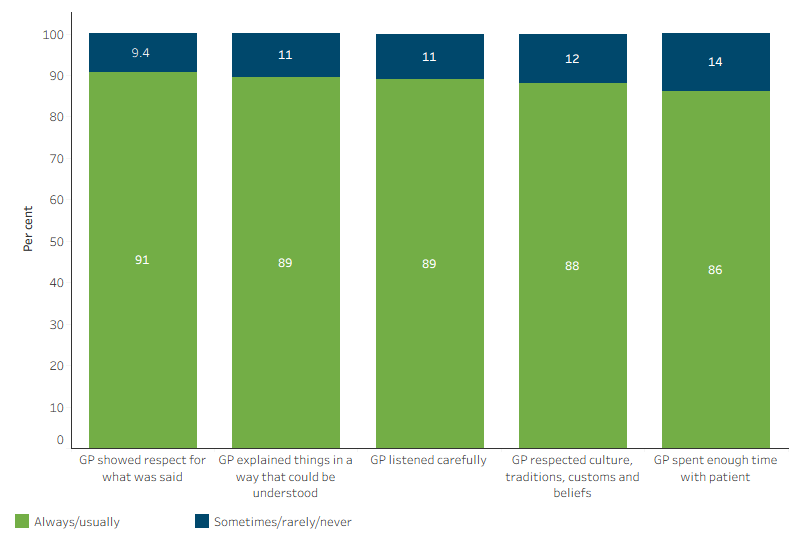
- Based on survey responses in 2022–23, most First Nations people aged 15 and over who had seen a doctor in the previous 12 months had positive experiences with their general practitioner (GP). Around 9 in 10 (88%, or an estimated 429,400 people) thought that their GP always or usually respected culture, traditions, customs and beliefs, showed respect for what was said (91%, or 442,800), listened carefully to them (89%, or 434,400), spent enough time with them (86%, or 419,700) or explained things in a way that could be understood (89%, or 436,300).
- In 2022–23, an estimated 51,800 (7.8%) First Nations people mainly spoke an Indigenous language. Of these, 31% had difficulty communicating with English speakers (understanding and being understood).
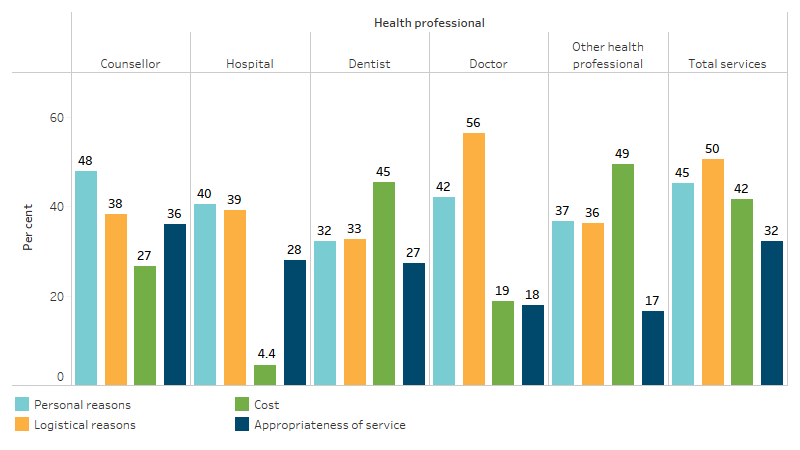
- In 2022–23, an estimated 348,000 (35%) of First Nations people did not access health care when they needed to in the previous 12 months. For around one third (32%) the reasons were related to the appropriateness of the service, including disliking service/professional, being embarrassed, afraid (21%), not trusting service/provider (11%), feeling it would be inadequate (9.0%) and discrimination/not culturally appropriate/language problems (2.8%). Other commonly reported reasons for not accessing health care when needed were logistical reasons, such as waiting time, transport, service availability (50%), personal reasons, such as work, personal, family responsibilities, or decided not to (45%) and cost (42%).
- Based on the Mayi Kuwayu Study, an estimated 23% of First Nations adults experienced racism when receiving health care, while 40% experienced discrimination in health care settings, including discrimination not specifically attributed to Indigenous status.
- The rate of self-discharge from hospital provides indirect evidence of the extent to which hospital services are culturally competent and responsive to First Nations patients’ needs. Between July 2021 and June 2023, there were 27,016 hospitalisations where First Nations people left hospital prior to completing treatment. After adjusting for differences in the age structure between the two populations, this represented 3.6% of all First Nations hospitalisations, compared with 0.7% for non-Indigenous Australians.
- The rate of employment of First Nations people in the health workforce increased from 215 per 10,000 in 2006 to 309 per 10,000 in 2021.
- At 30 June 2025, Aboriginal and Torres Strait Islander Health Workers and Practitioners represented 8.4% of all full-time equivalent (FTE) positions within Commonwealth-IAHP funded First Nations primary health care organisations. Just under half (49%) of the FTE paid positions in these organisations were occupied by First Nations people.
Why is it important?
Culturally respectful care requires more than the cultural competency of individual health practitioners; it also depends on how health services are organised and delivered. Health services can strengthen cultural respect through employing First Nations staff, creating welcoming environments, recognising cultural protocols, improving access to care, and addressing racism and discrimination within service delivery (Freeman et al. 2014). Cultural safety requires health practitioners to critically reflect on their knowledge, skills, attitudes, behaviours and power differentials when providing care to First Nations people. Culturally safe practice involves delivering safe, accessible and responsive health care free of racism, including by acknowledging the impacts of colonisation and systemic racism, addressing individual biases and racism, and supporting self-determined decision-making (AHPRA et al. 2022; AIHW 2023).
For First Nations communities, health is holistic, encompassing physical, emotional, social, and cultural wellbeing (Gee et al. 2014). Culturally safe care is not a preference but a necessity. It must be grounded in respect, trust, and an understanding of cultural identity and lived experience. This includes addressing systemic racism, valuing community knowledge, and supporting self-determination. Aboriginal Community Controlled Health Organisations (ACCHOs) exemplify this approach through community-controlled governance, the centrality of culture, and holistic, comprehensive models of primary health care that respond to the needs of First Nations individuals, families and communities (NACCHO 2021). However, ACCHOs cannot meet all health care needs alone. Mainstream services across primary, secondary and tertiary health care, as well as relevant social services, must also provide culturally safe and responsive care.
Health systems are shifting from cultural awareness to cultural respect by valuing First Nations voices, strengths and ways of knowing through workforce training, service accountability and partnerships with communities (National Aboriginal and Torres Strait Islander Health Standing Committee 2017). The Cultural Respect Framework for Aboriginal and Torres Strait Islander Health 2016–2026: A National Approach to Building a Culturally Respectful Health System guides this work nationally, with six key areas: leadership, communication, workforce development, community engagement, partnerships, and data. Progress is tracked through national monitoring tools like the Cultural Safety in Health Care for Indigenous Australians: Monitoring Framework.
Priority Reform 3 of the National Agreement on Closing the Gap reinforces the importance of transforming mainstream government organisations so they are culturally safe, responsive and accountable to First Nations people. The reform focuses on reducing experiences of racism, embedding culturally safe practice, improving engagement and delivering in partnership with First Nations people and organisations, improving transparency, and monitoring implementation of transformative actions.
There is growing recognition that culturally safe care leads to better health outcomes. Achieving cultural safety requires a health system where First Nations cultures are respected, and racism and inequality are actively challenged. The ‘Call It Out’ register, launched in 2022, documents the many forms of racism experienced by First Nations people—direct, indirect, interpersonal, online, and institutional. The 2025 report, ‘If you don’t think racism exists, come take a walk with us’, highlights the urgent need for systemic change. In response, the National Anti-Racism Framework (2024) outlines 63 recommendations for reform across key sectors, including health (Allison et al. 2025).
A 2021 survey found that cultural safety training was widely available among participating health services, with 96% of respondents reporting access to some form of training. However, the content, delivery and evaluation of training varied substantially: only 11% of respondents providing information about training content reported that all 14 identified topics were covered, only four services met all eight quality markers, and 21% reported that the training had been evaluated. These findings indicate a need for more systematic information about the quality and impact of cultural safety training, particularly whether it changes practice and contributes to culturally safe care as experienced by First Nations people (Hunter et al. 2021).
The Australian Health Practitioner Regulation Agency has been working with First Nations health leaders to embed cultural safety into health professional education, training, and practice. In 2022 these efforts led to cultural safety (as a guiding principle for health practice) being embedded into the national laws governing health practitioner regulations across jurisdictions. This requires the health workforce to be responsive to First Nations people and to actively eliminate racism (AHPRA et al. 2022). In 2024, the Australian Health Practitioner Regulation Agency made cultural safety education mandatory for specialist doctors.
ACCHOs continue to lead the way in delivering culturally safe, community-led primary health care grounded in culture, connection, and self-determination. In 2023–24, 69% of First Nations-specific primary health care organisations were ACCHOs, and nearly half operated in remote or very remote areas (AIHW 2025). These organisations provided over 4.3 million episodes of care to more than 550,000 clients, with a strong focus on prevention, early intervention, and chronic disease management (AIHW 2025). The systems and practices ACCHOs have established provide valuable lessons for strengthening cultural competency and safety across the broader health system to better meet the needs of First Nations people.
In 2022–23, most First Nations people aged 15 years and over reported that their culture, traditions, customs and beliefs were always or usually respected by GPs they had seen in the previous 12 months (88%), while 80% reported that these were respected by staff during their most recent hospital admission (ABS 2024). These findings indicate that most respondents experienced cultural respect in both settings, although the reported proportion was lower for hospital staff and respectful care was not experienced universally.
The National Aboriginal and Torres Strait Islander Health Plan 2021–2031 (the Health Plan) provides the framework for progress towards the Closing the Gap health targets, emphasising prevention, early intervention, and integrated care systems. The Health Plan calls for mainstream services to address racism, provide culturally safe care, be centred in culture and be accountable to First Nations people and communities.
The 2026-2031 Addendum to the National Health Reform Agreement (NHRA) commits governments, public hospitals and health services to providing culturally safe, equitable and racism-free health care that is responsive to the needs of First Nations people. NHRA commits hospitals and health services to providing culturally safe, responsive and racism-free health care.
Data findings
Monitoring and measuring cultural competency in the health system nationally is difficult due to lack of consistent national measures and indicators that can capture this complex and multi-dimensional concept. In addition, the available data rely on subjective patient-reported experiences of care which can vary by context, expectations and service type.
This measure draws from a range of national data collections which provide various perspectives from First Nations people on their experiences of the Australian health system.
Population counts reported in this section are estimates derived from survey responses.
Self-reported survey data
In the 2022–23 National Aboriginal and Torres Strait Islander Health Survey (NATSIHS), 25% of respondents aged 15 and over (corresponding to an estimated 144,000 people aged 15 and over in the whole First Nations population) reported that they had been treated unfairly at least once in the previous 12 months because they were of Aboriginal and/or Torres Strait Islander origin, while 75% (430,700) reported that they had not been treated unfairly (excluding respondents who did not know whether they had been treated unfairly). The survey question related to experiences of unfair treatment in general and was not limited to health care settings (Table D3.08.1).
Among First Nations people aged 15 years and over who had experienced unfair treatment in the previous 12 months, the most commonly reported types of unfair treatment were hearing racial comments or jokes (73%) and being called names, teased or sworn at (34%) (ABS 2024).
In the 2022–23 NATSIHS, 15% of First Nations people aged 15 and over, representing an estimated 90,200 people, reported that they avoided situations in the previous 12 months because of past unfair treatment. Of those who had avoided situations as a result of unfair treatment, 14% (an estimated 12,200 people) reported avoiding seeking health care (Table D3.08.17).
In the 2022–23 NATSIHS, most First Nations people aged 15 and over who had seen a doctor in the last 12 months reported that their general practitioner (GP) always/usually:
- respected culture, traditions, customs and beliefs (88%, or an estimated 429,400 people)
- showed respect for what was said (91%, or 442,800)
- listened carefully to them (89%, or 434,400)
- spent enough time with them (86%, or 419,700)
- explained things in a way that could be understood (89%, or 436,300) (Table D3.08.6, Figure 3.08.1).
National data for Australians aged 15 and over from the Patient Experience Survey 2024–25 showed that GPs always or often listened carefully (91%), showed respect (94%) and spent enough time with their patients (89%) (ABS 2025). Note that the Patient Experience Survey data are collected from Australians aged 15 and over. However, the survey is restricted to usual residents of private dwellings and excludes persons resident in very remote Australia and the Indigenous Community Strata, and some other population groups (for more see Data sources and quality). Estimates from this survey are not directly comparable with NATSIHS data due to differences in survey mode, methodology and questionnaire design.
Figure 3.08.1: Patient experience in the last 12 months, First Nations people aged 15 and over, 2022–23
Source: Table D3.08.6. AIHW and ABS analysis of National Aboriginal and Torres Strait Islander Health Survey 2022–23.
Based on the responses to the 2022–23 NATSIHS, of the estimated 51,800 (7.8%) First Nations people who mainly spoke an Indigenous language, 31% (an estimated 15,800 people) had difficulty communicating (understanding and being understood) with English speakers (Table D3.08.15).
The responses to the 2022–23 NATSIHS suggested that 72% (an estimated 348,800) of First Nations people aged 15 and over rated the health care they received in the previous 12 months as excellent or very good, 20% (98,200) rated it as good and 8.5% (41,400) rated it as fair or poor (Table D3.08.6).
An estimated 35%, representing an estimated 348,000 of First Nations people, did not access health care when they needed to in the previous 12 months based on the 2022–23 NATSIHS. Around a third of respondents (32%) reported reasons relating to the appropriateness of service (with more than one response allowed), including:
- disliking service/professional, embarrassed, afraid (21%, or an estimated 71,600 people)
- not trusting service/provider (11%, or 37,900)
- feeling it would be inadequate (9.0%, or 31,400)
- discrimination/not culturally appropriate/language problems (2.8%, or 9,800) (Table D3.08.3, Table 3.08-1).
Other reasons First Nations people reported for why they did not access health care when needed were logistical reasons (50%), personal reasons (45%) and cost (42%). Reasons do not total 100% as more than one response was allowed (Table D3.08.3, Figure 3.08.2).
Table 3.08-1: First Nations people who did not access health services when needed to, reasons relating to appropriateness, 2022–23
|
Dentist |
Doctor |
Other health professional |
Hospital |
Counsellor |
Total health services |
|
|---|---|---|---|---|---|---|
|
|
Per cent |
|||||
|
Did not access service when needed to in last 12 months on at least one occasion |
21.3 |
16.0 |
12.1 |
5.3 |
13.3 |
35.0 |
|
Reason(s) did not access service |
|
|
|
|
|
|
|
Discrimination/ not culturally appropriate/ language problems |
0.8 | 1.5 | #0.7 | 3.2 | 5.5 | 2.8 |
|
Dislikes service/professional, embarrassed, afraid |
22.6 | 8.4 | 8.9 | 15.4 | 15.7 | 20.6 |
|
Felt it would be inadequate |
1.3 | 6.9 | 7.0 | 9.5 | 12.6 | 9.0 |
|
Does not trust service provider |
7.9 | 5.4 | 3.6 | 10.6 | 12.6 | 10.9 |
|
At least one reason relating to appropriateness of service (subtotal) |
27.2 | 17.8 | 16.7 | 27.9 | 36.0 | 32.3 |
# proportion has a high margin of error and should be used with caution.
Note: Sum of components may exceed total as respondents may have reported more than one reason.
Source: Table D3.08.3. AIHW and ABS analysis of National Aboriginal and Torres Strait Islander Health Survey 2022–23.
In 2022–23, among First Nations people who did not access care when it was needed, reasons relating to the cultural appropriateness of the service were most commonly reported for counsellors (36%), followed by hospitals (28%), dentists (27%) and doctors (18%). Cost (45%) and dislikes service/professional or felt embarrassed/afraid (23%) were the most commonly reported barriers to accessing dental services, which may contribute to poorer oral health outcomes (Table D3.08.3, Figure 3.08.2).
Figure 3.08.2: Reasons why First Nations people did not access health services when needed to on at least one occasion, 2022–23
Note: Sum of components may exceed total as respondents may have reported more than one reason.
Source: Table D3.08.3. AIHW and ABS analysis of National Aboriginal and Torres Strait Islander Health Survey 2022–23.
Data from the Mayi Kuwayu Study showed that, between 2019 and 2021, an estimated 23% of First Nations adults experienced racism when receiving health care. A broader measure of discrimination in health care, which also included discrimination not attributed to Indigenous status or where no reason was specified, was reported by an estimated 40% of First Nations adults (McKay et al. 2026).
Hospitalisation
NATSIHS data provide direct measures of whether First Nations people feel respected, listened to and understood when receiving health care, and whether concerns about cultural appropriateness or discrimination affect access to services. These experiences may influence engagement with health services and whether people return for care, providing context for indirect measures of cultural safety such as self-discharge from hospital prior to completing treatment and potentially preventable hospitalisations (PPH).
NATSIHS data show that, among First Nations people who did not go to hospital when needed in 2022–23, 28% of respondents (corresponding to an estimated 14,700 of 52,700 people) reported at least one reason relating to the appropriateness of the service, including concerns about trust, adequacy, cultural appropriateness, discrimination or language (Table D3.08-1, Figure 3.08.2).
While reasons for leaving hospital before completing treatment may be varied and complex, such a measure can indicate the extent to which hospitals are responsive to the needs of First Nations patients.
Between July 2021 and June 2023, there were 27,016 hospitalisations where First Nations people left hospital prior to completing treatment. After adjusting for differences in the age structure between the two populations, this represented 3.6% of all First Nations hospitalisations, compared with 0.7% for non-Indigenous Australians (Table D3.09.1). For more information, see measure 3.09 Self-discharge from hospital.
Higher rates of PPH may reflect barriers to accessing effective primary health care. Between July 2021 and June 2023, there were 96,443 PPH for First Nations people, accounting for 13% of all First Nations hospitalisations (6.6% for non-Indigenous Australians) (Table D1.02.5, Table D3.07.2). For more information, see measure 3.07 Selected potentially preventable hospital admissions.
Employed health practitioners
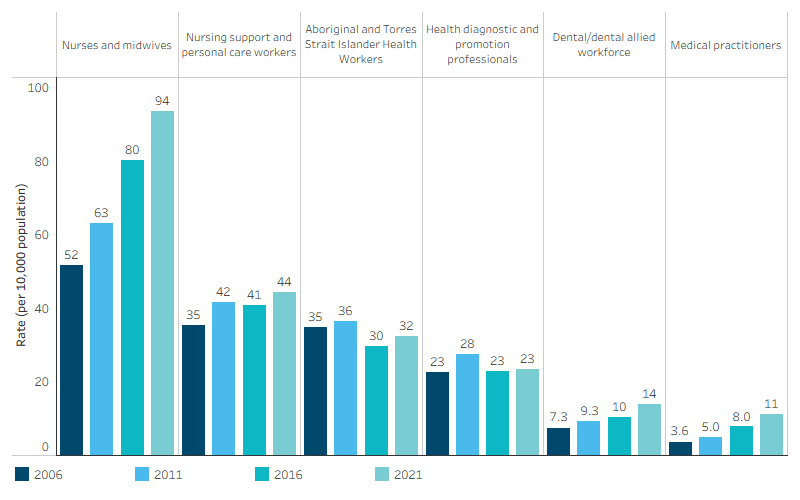
In 2021, there were 16,659 First Nations people aged 15 and over employed in health-related occupations. Nursing and midwifery (around 5,000 people) was the largest group followed by nursing support and personal care workers (around 2,400), and Aboriginal and Torres Strait Islander Health Workers (around 1,700). Between 2006 and 2021, the rate of First Nations people employed in the health workforce increased from 215 to 309 per 10,000 First Nations population (see measure 3.12 First Nations people in the health workforce) (Table D3.12.12, Figure 3.08.3). Changes over time should be interpreted with caution, as growth in the First Nations population over this period was influenced by both demographic factors and improved Census identification of Aboriginal and Torres Strait Islander people. As a result, the observed increase in the rate may underestimate actual growth in the First Nations health workforce.
Figure 3.08.3: Employed First Nations people aged 15 and over, by health‑related occupation, Australia, 2006, 2011, 2016 and 2021
Source: Table D3.12.12. AIHW and ABS analysis of Census of Population and Housing.
First Nations primary health care organisations
At 30 June 2025, Aboriginal and Torres Strait Islander Health Workers and Practitioners represented 8.4% of all occupied full-time equivalent (FTE) positions within First Nations primary health care organisations, funded under the Australian Government's Indigenous Australians’ Health Programme (IAHP) (Table D3.22.11). In 2024–25, just under half (49%) of the FTE paid positions in IAHP-funded First Nations primary health care organisations were occupied by First Nations people (Table D3.12.15).
Research and evaluation findings
Effective communication is the foundation for the delivery of accessible, responsive and safe health care (AHMAC 2017). Finlay and Wenitong (2020) discussed the important role of Aboriginal Community Controlled Health Services (ACCHSs) during the COVID-19 pandemic, when clear, concise, culturally appropriate health communication is vital for Indigenous Australians who are at increased risk from COVID‐19 (Finlay & Wenitong). The study notes that ACCHSs have demonstrated their capacity to deliver scientifically valid, evidence‐based and culturally appropriate disease prevention messages, and that communications have been produced in addition to usual service delivery while using existing funding.
The communication gap between health professionals and Indigenous Australians has a significant effect on health outcomes, and is most pronounced in remote areas where cultural and linguistic differences are greatest. There is an urgent need to pay more attention to the communication needs of remote Indigenous Australians, but this is not taught in medical education (Amery 2017). Recommended communication strategies include greater use of interpreters, using diagrams and illustrations, using plain English, demonstrating procedures first, allowing extra time for Indigenous patients to respond, and looking for culturally meaningful analogies.
A systematic review of the literature on teaching cultural competence in dental education and its relevance for the oral health care of Indigenous Australians found that students need knowledge of health disparities to better understand the perspectives of, and to communicate effectively with, culturally diverse populations (Forsyth et al. 2017). The most effective strategies were educational seminars, community service-learning and reflective writing.
In its first audit of institutional racism, the Health Performance Council of South Australia assessed nine of the ten South Australian Local Health Networks (LHN) as having very high evidence of institutional racism, with the tenth LHN assessed as being in the moderate range (Health Performance Council 2020). The audit recommended that institutional racism could be ameliorated in the LHNs in a number of ways, including by providing culturally safe and appropriate health care services in accordance with nationally agreed health system performance standards.
A study of 755 Indigenous adults in Victoria found 30% had experienced racism in health settings in the previous 12 months (Kelaher et al. 2014). In a qualitative evidence review, Gomersall and others (2017) found that there was often a lack of respect and no shared understanding between primary health care providers and Indigenous clients in mainstream services, or among clients (Gomersall et al. 2017). In contrast, relationships in ACCHSs were characterised by respect and understanding.
An evaluation of the Victorian government’s Koolin Balit investment showed improvements in cultural responsiveness and cultural safety for Indigenous Australians in some Victorian hospitals (Social Compass 2017).
A qualitative study of the cultural appropriateness of primary health care services provided to Indigenous Australians living in a remote North West Queensland community found that a significant number of the 54 Indigenous patients interviewed did not consider the services they were receiving to be culturally appropriate, in contrast to the views of the primary health care providers, who perceived their communication with Indigenous patients to be clear and understandable (Smith et al. 2017). There was however, alignment between Indigenous patients and the primary health care providers on perceptions that patients received a high level of respect and support from providers.
When services are designed specifically for and with Indigenous Australians, improved outcomes are achievable (Gwynne et al. 2019). A review of the evidence showed that ACCHSs contribute to improving the health and wellbeing of Indigenous Australians by providing accessible, comprehensive primary health care (Campbell et al. 2018). Studies have shown that ACCHS programs have improved access and use of a range of services such as antenatal care, cardiac and respiratory rehabilitation programs, mental health, eye care and dental care. A private GP practice in Queensland found that by working in partnership with the Indigenous community the number of Indigenous patients increased from 5 to 40 per month (Johanson & Hill 2011). Strategies introduced included bulk billing, one session per week specifically for Indigenous patients and a bus to the clinic. In addition, cultural safety training was undertaken by staff and an Indigenous health worker attended the clinic to assist with cultural safety and referrals.
A small study measuring the effect of a community of practice on the self-assessed cultural competency and change to the practice of 13 dieticians working in Indigenous health found that formalised and structured Communities of Practice may be an effective workforce development strategy, with participants describing increased competence through networking and joint problem solving (Elvidge et al. 2019). The participants described increased confidence in their work through improved understanding of the factors related to the effect of history, culture and use of resources on service delivery, appropriate communication strategies, effective relationships and managing conflict.
A qualitative study of the Aboriginal Maternity Group Practice Program that started in Perth in 2011 surveyed 16 program clients and 22 individuals from partner organisations, and interviewed 15 staff (Bertilone et al. 2017). The program employed Indigenous staff in a partnership model working with local maternity services. The study found that this program contributed to the provision of a culturally competent service, particularly in hospitals, and providing transport, team home visits and employing Indigenous staff improved access to care.
A review of evaluations of cultural competency interventions in health care for Indigenous peoples and other minority culturally and linguistically diverse groups in Canada, Australia, New Zealand and the United States (CANZUS) found heterogeneity in workforce intervention strategies, measures and outcomes (Jongen et al. 2018a). The two main intervention strategies were cultural competency training and professional development interventions such as mentoring. While positive outcomes were frequently reported for health practitioners’ knowledge and attitudes, there was limited evidence of the impact on health care and outcomes. Another review of evaluations and measures of cultural competency interventions in CANZUS nations noted that there is strong advocacy for systems-level approaches to cultural competence, but the primary focus in the literature remains on strategies aimed at health promotion initiatives, workforce development and student education (McCalman et al. 2017). The fundamental principles for implementing systems approaches were user engagement, organisational readiness and delivery across multiple sites. The primary types of strategies were audit and quality improvement approaches and service-level policies or strategies. Gaps identified were a need for cost and effectiveness studies of systems approaches and an explanation of the impact on client experience.
A Western Australian report on cancer care (Thompson M. et al. 2011a) made several practical recommendations to improve the cultural competency of care for Indigenous patients including: providing a welcoming environment through welcome to country services, yarning places and access to traditional foods; facilitating the return of Indigenous patients to their homelands for continued care where possible; ensuring that there is access to Indigenous language interpreters for Indigenous people who are not confident speakers of English, ensuring that staff understand differences in Indigenous verbal and non-verbal communication styles; and ensuring service providers are familiar with, acknowledge and respect Indigenous family structures, culture and life circumstances.
Elvidge and others (2019) developed a survey and scale to measure cultural safety in New South Wales hospitals from an Indigenous patient perspective (Elvidge et al. 2019). The survey covered five domains: positive communication between patients and hospital staff; negative communication; trust between patients and hospital staff; the hospital environment; and support for Indigenous families and culture. The validity and reliability of this tool was tested on 316 participants who had attended a New South Wales hospital in the past 12 months. Testing demonstrated a high level of content and construct validity, and the Cultural Safety Survey Scale has potential as a tool for hospitals to measure the cultural safety of their services, and whether efforts to improve cultural safety are resulting in Indigenous patients reporting more culturally safe experiences.
Aboriginal and Torres Strait Islander Health Workers play an important role in improving cultural competency in health care delivery (Thompson S. et al. 2011b). Conway and others (2017) discussed the vital role of Aboriginal Health Workers in better chronic disease management via culturally appropriate support and knowledge sharing with clients (Conway et al. 2017). A small study in the cardiology unit of a Western Australian hospital found these health workers improved the cultural safety of the care provided, and their positive impacts included facilitating culturally appropriate care, bridging communication divides, reducing the number of discharges against medical advice, providing cultural education and increasing participation in cardiac rehabilitation through increased patient contact time and follow-up (Taylor et al. 2009). Strategies to reduce discharge against medical advice from hospitals include the development of more flexible community-based care models to provide culturally appropriate care (Shaw 2016).
Shared medical appointments are ‘comprehensive medical visits run with groups of participating patients’ and have been shown to improve access to primary health care for Indigenous Australians (Stevens et al. 2016). A study in New South Wales showed these are an effective way to improve patient experience after seeing an increase in attendance over time among Indigenous male patients who attended shared medical appointments with trained Aboriginal Health Workers (Stevens et al. 2016).
Harfield and others (2018) noted that Indigenous primary health care services evolved because of the inability of mainstream health services to adequately meet the needs of Indigenous communities, and the exclusion of Indigenous people from mainstream health services (Harfield. et al. 2018). This systematic review identified eight vital characteristics of Indigenous primary health care service delivery models—culture, accessible health services, community participation, continuous quality improvement, culturally appropriate and skilled workforce, flexible approach to care, holistic health care, and self-determination and empowerment.
A systematic review of health programs for Indigenous Australians enabling expression of cultural identity, which targeted diet, physical activity, birthing and antenatal care, and emotional wellbeing, identified improvements in psychosocial, behavioural and clinical measures (MacLean et al. 2017).
Implications
There remain significant gaps in the evidence on the cultural competency of health services in Australia, in particular for mainstream services. However the evidence available suggests that in 2018–19 30% of Indigenous Australians did not access health care when they needed to in the past 12 months. While there were a range of reasons for non-access, the reason was related to the cultural appropriateness of the service for around one-third of people who did not go to hospital or a counsellor, and around one-quarter of those who did not see a dentist or doctor. Elevated levels of discharge against medical advice suggest that there are significant issues in the responsiveness of hospitals to the needs and perceptions of Indigenous Australians, and there remains a disparity in accessibility and outcomes for hospital procedures between Indigenous and non-Indigenous Australians (see measures 3.06 Access to hospital procedures and 3.09 Self-discharge from hospital).
Gomersall and others’ (2017) review of qualitative evidence recommended that mainstream practitioners seeking to improve the accessibility and quality of their care should invest in understanding Indigenous clients’ needs and learn how to be respectful of their culture; take a flexible and proactive approach, for example, meeting clients outside standard operating hours; and invest in creating a welcoming environment, such as by displaying posters representative of Indigenous culture in clinics (Gomersall et al. 2017). However, the authors cautioned that for many Indigenous Australians, the care provided by mainstream primary health care providers might not be a substitute for care provided by ACCHSs. Mainstream organisations can struggle to provide an appropriate service for a small minority of the population with specific needs. A review of chronic disease care programs operating in rural and remote ACCHSs found that a partnership between mainstream health services and ACCHSs is essential (Liaw et al. 2011).
The Lighthouse Hospital Project, funded through the Indigenous Australians’ Health Programme, and run by the Heart Foundation aims to drive systemic change in the acute care sector to change the way hospitals and health services are governed, organised, structured and staffed to address institutional racism and improve care and outcomes for Indigenous Australians who experience acute coronary syndrome (ACS) (Heart Foundation 2020; Verhoeven 2018). It is designed to improve governance, clinical quality, and cultural competence of the health workforce. Each hospital in the program receives the Lighthouse Toolkit, which includes a plan, action areas and quality improvements, and outlines ways hospitals can provide culturally appropriate and clinically competent care for Indigenous Australians and their families. In 2017, phase three expanded the project to 18 hospitals across Australia. Phase three evaluation of the project highlighted that more than three-quarters of Indigenous Australians with ACS surveyed in Lighthouse Hospitals rated their hospital experience as ‘very good’ or ‘good’.
To Indigenous Australians the term ‘health’ means not just the physical wellbeing of an individual, but refers to the social, emotional and cultural wellbeing of the whole community in which each individual can achieve their full potential as a human being, thereby bringing about the total wellbeing of their community. Culturally competent health services recognise this holistic concept of health, and Australian governments have focused on improving the cultural competency of health services.
The National Aboriginal and Torres Strait Islander Health Plan 2013–2023 (NATSIHP) draws attention to ‘the centrality of culture in the health of Aboriginal and Torres Strait Islander peoples and the rights of individuals to a safe, healthy and empowered life’ (DoHA 2013). Achieving improvements in health outcomes for Indigenous Australians means working towards fulfilling the vision of the NATSIHP—a health system that is free of racism and inequality and where all Indigenous Australians have access to health services that are effective, high quality, appropriate and affordable. Beginning in late 2020, the plan will undergo a refresh—to embed cultural and social determinants of health and provide a single, overarching policy framework for Indigenous health. More information on the NATSIHP is in Policies and strategies.
The development and delivery of well-designed and implemented cultural safety training programs can assist in the aim of achieving a health system that is a safe environment for Indigenous Australians and where cultural differences are respected. Health services should have the organisational culture, and adequate resources, to support cultural safety and responsiveness training of health staff at all levels and across all disciplines (AHMAC 2017). The cultural awareness training programs that are currently offered, however, could be improved (Aspin et al. 2012). Indigenous cultural awareness training tends to homogenise Indigenous cultures, and position them as distinct from the ‘norm’. An increased emphasis on reflexivity and self-awareness in training could assist health workers to better understand their own values and beliefs, and how they shape the care that they provide. It is acknowledged that cultural education needs to be ongoing, and localised to the region in which health-care providers are working (Kerrigan et al. 2020). However, there is a need for more research and evaluation of training programs to understand what works (Downing et al. 2011).
References
-
ABS (Australian Bureau of Statistics) (2024) National Aboriginal and Torres Strait Islander Health Survey 2022–23, ABS, Australian Government.
-
ABS (2025) Patient experiences (2024–25), ABS, Australian Government, accessed 15 April 2026.
-
ACSQHC (Australian Commission on Safety and Quality in Health Care) (2026) First Nations health, Australian Commission on Safety and Quality in Health Care website website, accessed 5 March 2026.
-
AHMAC (Australian Health Ministers' Advisory Council) (2016) Cultural Respect Framework 2016–2026 for Aboriginal and Torres Strait Islander health, AHMAC website.
-
AHPRA (Australian Health Practitioner Regulation Agency), Aboriginal and Torres Strait Islander Health Strategy Group and Forum NHL (2022) Joint statement: Aboriginal and Torres Strait Islander health and cultural safety at heart of National Law changes, Australian Health Practitioner Regulation Agency.
-
AIHW (Australian Institute of Health and Welfare) (2023) Cultural safety in health care for Indigenous Australians: monitoring framework, AIHW, Australian Government, accessed 14 April 2026.
-
AIHW (2025) Aboriginal and Torres Strait Islander specific primary health care: results from the OSR and nKPI collections, AIHW, Australian Government, accessed 14 April 2026.
-
Allison F, Cunneen C, Coombes L and Selcuk A (2025) “If you don’t think racism exists come take a walk with us”. The Call It Out Racism Register 2023-2024, Sydney: Jumbunna Institute for Indigenous Education and Research, University of Technology.
-
Amery R (2017) 'Recognising the communication gap in Indigenous health care', The Medical Journal of Australia, doi:10.5694/mja17.00042.
-
Aspin C, Brown N, Jowsey T, Yen L and Leeder S (2012) 'Strategic approaches to enhanced health service delivery for Aboriginal and Torres Strait Islander people with chronic illness: a qualitative study', BMC Health Services Research, 12:143, doi:10.1186/1472-6963-12-143.
-
Bertilone CM, McEvoy SP, Gower D, Naylor N, Doyle J and Swift-Otero V (2017) 'Elements of cultural competence in an Australian Aboriginal maternity program', Women and Birth, 30(2):121–128.
-
Campbell MA, Hunt J, Scrimgeour DJ, Davey M and Jones V (2018) 'Contribution of Aboriginal Community-Controlled Health Services to improving Aboriginal health: an evidence review', Australian Health Review, 42(2):218–226, doi:10.1071/ah16149.
-
Conway J, Tsourtos G and Lawn S (2017) 'The barriers and facilitators that indigenous health workers experience in their workplace and communities in providing self-management support: a multiple case study', BMC Health Services Research, 17(1):319, doi:10.1186/s12913-017-2265-5.
-
Department of Health (2021) National Aboriginal and Torres Strait Islander health plan 2021–2031, Australian Government of Department of Health, Canberra.
-
DoHA (Department of Health and Ageing) (2013) National Aboriginal & Torres Strait Islander Health Plan 2013-2023, Commonwealth of Australia.
-
Downing R, Kowal E and Paradies Y (2011) 'Indigenous cultural training for health workers in Australia', International Journal for Quality in Health Care, 23(3):247–257, doi:10.1093/intqhc/mzr008.
-
Elvidge E, Paradies Y, Aldrich R and Holder C (2019) 'Cultural safety in hospitals: validating an empirical measurement tool to capture the Aboriginal patient experience', Australian Health Review, 44(2):205–211.
-
Finlay S and Wenitong M 'Aboriginal Community Controlled Health Organisations are taking a leading role in COVID-19 health communication', Australian and New Zealand Journal of Public Health, n/a(n/a), doi:10.1111/1753-6405.13010.
-
Forsyth CJ, Irving MJ, Tennant M, Short SD and Gilroy JA (2017) 'Teaching cultural competence in dental education: a systematic review and exploration of implications for Indigenous populations in Australia', Journal of Dental Education, 81(8):956–968.
-
Freeman T, Edwards T, Baum F, Lawless A, Jolley G, Javanparast S et al. (2014) 'Cultural respect strategies in Australian Aboriginal primary health care services: beyond education and training of practitioners', Australian and New Zealand Journal of Public Health, 38(4):355–361.
-
Gee G, Dudgeon P, Schultz C, Hart A and Kelly K (2014) 'Aboriginal and Torres Strait Islander social and emotional wellbeing', in Dudgeon P, Milroy H and Walker R (eds) Working together: Aboriginal and Torres Strait Islander mental health and wellbeing principles and practice, Telethon Institute for Child Health Research/Kulunga Research Network, University of Western Australia, PM&C.
-
Gomersall JS, Gibson O, Dwyer J, O'Donnell K, Stephenson M, Carter D et al. (2017) 'What Indigenous Australian clients value about primary health care: a systematic review of qualitative evidence', Australian and New Zealand journal of public health, doi:10.1111/1753-6405.12687. http:.
-
Gwynne K, Jeffries T and Lincoln M (2019) 'Improving the efficacy of healthcare services for Aboriginal Australians', Australian Health Review, 43(3):314–322.
-
Harfield SG, Davy C, McArthur A, Munn Z, Brown A and Brown N (2018) 'Characteristics of Indigenous primary health care service delivery models: a systematic scoping review', Globalization and Health, 14:12, doi:10.1186/s12992-018-0332-2.
-
Health Performance Council [South Australia] (2020) Institutional racism — Audit of South Australia’s Local Health Networks.
-
Heart Foundation (2020) The Lighthouse Hospital Project: The story so far, Heart Foundation website, accessed 29/08/2020 2020.
-
Hunter K, Coombes J, Ryder C, Lynch P, Mackean T, Kairuz Santos C et al. (2021) National Survey on Cultural Safety Training: Analysis of Results, The George Institute for Global Health.
-
Johanson RP and Hill P (2011) 'Indigenous health: A role for private general practice', Australian Family Physician, 40(1/2).
-
Jongen C, McCalman J and Bainbridge R (2018) 'Health workforce cultural competency interventions: a systematic scoping review', BMC Health Services Research, 18(1):232.
-
Kelaher MA, Ferdinand AS and Paradies Y (2014) 'Experiencing racism in health care: The mental health impacts for Victorian Aboriginal communities', The Medical Journal of Australia, 201(1):44–47.
-
Kerrigan V, Lewis N, Cass A, Hefler M and Ralph AP (2020) '“How can I do more?” Cultural awareness training for hospital-based healthcare providers working with high Aboriginal caseload', BMC Medical Education, 20:1–11.
-
Liaw ST, Lau P, Pyett P, Furler J, Burchill M, Rowley K et al. (2011) 'Successful chronic disease care for Aboriginal Australians requires cultural competence', Australian and New Zealand Journal of Public Health, 35(3):238–248.
-
MacLean S, Ritte R, Thorpe A, Ewen S and Arabena K (2017) 'Health and wellbeing outcomes of programs for Indigenous Australians that include strategies to enable the expression of cultural identities: a systematic review', Australian Journal of Primary Health, 23(4):309–318.
-
McCalman J, Jongen C and Bainbridge R (2017) 'Organisational systems’ approaches to improving cultural competence in healthcare: a systematic scoping review of the literature', International Journal for Equity in Health, 16(1):78.
-
McKay C, Harrap B, Wilkes B, Thurber K, Colonna E, Bourke S et al. (2026) Report 1 – Monitoring the prevalence of racism experienced by Aboriginal and Torres Strait Islander adults, 2019–2021, Yardhura Walani National Centre for Aboriginal and Torres Strait Islander Wellbeing Research.
-
NACCHO (National Aboriginal Community Controlled Health Organisation) (2021) Core Services and Outcomes Framework: the Model of Aboriginal and Torres Strait Islander Community-Controlled Comprehensive Primary Health Care, NACCHO, accessed 31 March 2026.
-
National Aboriginal and Torres Strait Islander Health Standing Committee (2017) Cultural Respect Framework 2016–2026 for Aboriginal and Torres Strait Islander health, Australian Health Ministers' Advisory Council.
-
Shaw C (2016) An evidence-based approach to reducing discharge against medical advice amongst Aboriginal and Torres Strait Islander patients, Deeble Institute Issues Brief no. 14, AHHA.
-
Smith K, Fatima Y and Knight S (2017) 'Are primary healthcare services culturally appropriate for Aboriginal people? Findings from a remote community', Australian Journal of Primary Health, 23(3):236–242.
-
Social Compass (2017) Evaluation of Improving Cultural Responsiveness of Victorian Hospitals Final Report, Government of Victoria.
-
Stevens JA, Dixon J, Binns A, Morgan B, Richardson J and Egger G (2016) 'Shared medical appointments for Aboriginal and Torres Strait Islander men', Australian Family Physician, 45(6):425.
-
Taylor KP, Thompson SC, Wood MM, Ali M and Dimer L (2009) 'Exploring the impact of an Aboriginal Health Worker on hospitalised Aboriginal experiences: lessons from cardiology', Australian Health Review, 33(4):549–557.
-
Thompson M, Robertson J and Clough A (2011a) 'A review of the barriers preventing Indigenous Health Workers delivering tobacco interventions to their communities', Australian and New Zealand Journal of Public Health, 35, doi:10.1111/j.1753-6405.2010.00632.x.
-
Thompson S, Shahid S, Greville H and Bessarab D (2011b) “A whispered sort of stuff” A community report on research around Aboriginal people’s beliefs about cancer and experiences of cancer care in Western Australia, Cancer Council.
Related measures
- 1.13 Community functioning
- 3.09 Self-discharge from hospital
- 3.12 Aboriginal and Torres Strait Islander people in the health workforce
- 3.13 Competent governance
- 3.14 Access to services compared with need
- 3.17 Regular general practitioner or health service
- 3.20 Aboriginal and Torres Strait Islander people training for health-related disciplines