
Key messages
Why is it important?
Diabetes is a complex, long-term metabolic condition that affects how the body processes blood sugar. Diabetes is a leading contributor to illness and preventable death among Aboriginal and Torres Strait Islander (First Nations) people. Complications from diabetes include increased risk of heart disease, kidney failure, stroke, nerve damage, vision loss, and amputations. The disease burden from diabetes is rising among young people and women of childbearing age, with long-term and potentially intergenerational impacts. Navigating the diabetes care continuum can be challenging for patients, highlighting the need for self-determination and empowerment through genuine partnerships, shared decision making and culturally safe, and coordinated care arrangements across the health system.
Data findings
-
In 2022, among First Nations people, 11,631 years of healthy life (DALY) were lost due to endocrine disorders (largely diabetes), accounting for 3.7% of the total disease burden. Type 2 diabetes accounted for 10,198 DALY, or 3.2% of the total disease burden. Between 2011 and 2022, the burden due to endocrine disorders among First Nations people decreased (from 25.4 to 18.2 DALY per 1,000 population, based on age-standardised rates).
-
In 2022–23, 13% (75,700) of First Nations adults reported having diabetes or high sugar levels. This increased with age, from 2.1% for those aged 18–24, to over a quarter of those aged 55 and over (29%).
-
Data from the 2022–24 National Aboriginal and Torres Strait Islander Health Measures Survey showed that 15.5% (92,200) of First Nations people aged 18 years and over had diabetes, with 12.6% having known diabetes and a further 2.8% who had newly diagnosed diabetes.
-
Endocrine, nutritional and metabolic diseases, consisting largely of diabetes, were the 5th leading cause of death for First Nations people in 2019–2023 and were listed as the underlying cause of death in 8.8% of all deaths. Endocrine, nutritional and metabolic diseases were the third leading cause of the absolute gap in death rates between First Nations people and non-Indigenous Australians (16% of the total gap in death rates).
-
In 2019–2023, for 7.3% (1,452) of deaths of First Nations people diabetes was listed as the underlying cause of death (a rate of 34 deaths per 100,000 population). The rates were higher for First Nations women than men (38 compared with 30 deaths per 100,000 population).
-
After adjusting for differences in the age structure between the two populations, the rate of deaths where diabetes was the underlying cause for First Nations people was 4.4 times the rate for non Indigenous Australians.
-
The rate of deaths where endocrine, nutritional and metabolic diseases were the underlying cause of death for First Nations people was 7.6 times the rate for non-Indigenous Australians in remote areas, and 2.5 times that in non-remote areas.
-
There were 10,253 hospitalisations of First Nations people where the principal diagnosis was diabetes between July 2021 and June 2023, making up 0.8% of First Nations hospitalisations and corresponding to a rate of 5.1 hospitalisations per 1,000 population.
-
Between July 2021 and June 2023, there were 167,054 hospitalisations among First Nations people where diabetes was recorded as a principal or additional diagnosis (this included hospitalisations with multiple causes and those where diabetes was not the main diagnosis). This corresponds to a rate of 83 per 1,000 population.
-
After adjusting for differences in the age structure between the two populations, the rate of hospitalisation for First Nations people was 3.8 times the rate for non-Indigenous Australians for a principal diagnosis of diabetes, and 3.6 times the rate for a principal or additional diagnosis in the same period.
-
From 2016 to 2021, the age-standardised rate of death due to diabetes decreased by 14% for First Nations people, while the rate for non-Indigenous Australians did not change significantly.
-
Over the period from 2016–17 to 2022–23, the age-standardised hospitalisation rate for diabetes increased by 16% for First Nations people and 0.7% for non-Indigenous Australians.
-
Data from the National Perinatal Data Collection in 2023 showed that 15% of First Nations women who gave birth had gestational diabetes and 2.6% had pre-existing diabetes.
Research and evaluation findings
-
Social determinants – such as education, income and employment are associated with higher risks of diabetes, including earlier onset, poorer management, and increased complications.
-
Evidence shows that children born to women with diabetes have increased risk of youth onset chronic disease including diabetes. The burden of diabetes in pregnant First Nations women is amplified by the effect of social determinants of health.
-
Prevention and early intervention are critical across the life course with growing risk of type 2 diabetes among First Nations young people.
-
Evidence from multiple studies and reviews indicates that community-led, culturally safe programs are effective in improving diabetes outcomes among First Nations people.
-
Structural racism and limited culturally safe care remain barriers, highlighting the need to strengthen community-controlled organisations to deliver primary health care and care coordination.
-
A study in remote Northern Territory found that primary health care use for First Nations people with diabetes is highly cost-effective: the cost of preventing one hospitalisation was $248 for medium-use of care patients (2–11 visits/year) or $739 for high-use of care patients (12+ visits/year), compared to $2,915 per hospitalisation. Medium-use patients also had lower hospitalisation rates, fewer avoidable admissions, reduced mortality, and fewer years of life lost than low-use patients (0–1 visits/year).
Implications
Addressing the high rates of diabetes among First Nations people requires sustained and equitable investment in addressing social determinants, primordial prevention (addressing the root causes of disease), health promotion, primary prevention, early intervention initiatives and coordinated chronic disease care and management that support self-determination and empowerment. This requires working in genuine partnership with a strong Aboriginal Community Controlled Health Services (ACCHS) sector and with communities. Evidence shows that culturally safe, community-led programs delivered in partnership with ACCHSs can improve outcomes, and there are growing opportunities to expand and strengthen these partnerships nationally with the mainstream health sector and government programs. National strategies and initiatives identify First Nations people as a priority population, reinforcing the urgent need for structural health system reform and accountability to deliver culturally safe and integrated care across all settings.
Why is it important?
Diabetes is a complex, long-term metabolic condition that affects how the body processes blood sugar. Diabetes is characterised by high blood sugar levels which can arise from either the body’s inability to produce insulin or its inability to respond to insulin. Insulin is a hormone that regulates blood sugar levels. Diabetes can lead to serious health complications if not properly managed. It impacts multiple systems in the body and requires daily attention to prevent associated complications such as heart disease, kidney failure, stroke, nerve damage, vision loss, lower limb amputations, and certain cancers. It is the leading cause of end-stage kidney disease, non-traumatic amputations, and preventable blindness in working-age adults. People living with diabetes also face increased risks of mental health challenges, infections, and complications during pregnancy.
There are 3 main types of diabetes (Diabetes Australia 2024):
- Type 1 diabetes – a lifelong autoimmune condition that is not linked to modifiable risk factors and it is not known how it can be prevented. Type 1 diabetes often develops in childhood or adolescence and can be life-threatening if not diagnosed early.
- Type 2 diabetes – the most common form, influenced by genetic, environmental and behavioural factors such as poor diet, physical inactivity, obesity, smoking, and high blood pressure. Sedentary lifestyles and easy access to unhealthy food continue to drive its rising prevalence. Evidence from Australia and overseas shows that early intervention through intensive diet changes and weight loss may lead to remission in around half of recently diagnosed cases (Nakhleh et al. 2024).
- Gestational diabetes mellitus (GDM) – occurs during pregnancy and usually resolves after giving birth, but increases the long-term risk of developing type 2 diabetes as well as cardiovascular disease.
As at 30 June 2025, more than 1.5 million Australians were registered as having diabetes, with type 2 diabetes accounting for nearly 87% of cases (NDSS 2025). Diabetes-related rates of hospitalisation and death are much higher among Aboriginal and Torres Strait Islander (First Nations) peoples, with a median age of death nearly 20 years younger than that of non-Indigenous Australians. First Nations peoples experience significantly higher rates of type 2 diabetes, including among children and young people. Youth-onset and pre-gestational diabetes are rising, with rates among First Nations youth estimated to be 20 times higher than in non-Indigenous youth. These forms of diabetes are associated with more severe complications, reduced quality of life, and premature death (Menzies School of Health Research 2025a, 2025b).
Diabetes is a major public health problem worldwide. High rates of metabolic disease (including diabetes) are associated with rapid transitions in lifestyle among previously active populations. Indigenous populations with similar histories of European colonisation have been particularly impacted by epidemiological transitions (Hare et al. 2022; Harris et al. 2017). These disparities are not the result of individual choices alone. They are deeply rooted in systemic inequities, including limited access to culturally safe health care, nutritious food, stable housing, and consistent health education. The ongoing impacts of colonisation, intergenerational trauma, and socioeconomic disadvantage continue to shape health outcomes in many First Nations communities (Agarwal et al. 2023).
In response to the significant burden of diabetes, First Nations people are leading culturally informed, community-driven strategies that draw on traditional knowledge, connection to Country, and holistic models of care. For example, the National Aboriginal Community Controlled Health Organisation (NACCHO), is training over 500 Aboriginal and Torres Strait Islander Health Workers to support the growth and sustainability of the Aboriginal Community Controlled Health Services (ACCHS) workforce. This initiative focuses on culturally safe training, face-to-face delivery, and integration into local ACCHSs (NACCHO 2024). NACCHO is also partnering with the Bupa Foundation in developing a specialist diabetes prevention training pathway for Aboriginal and Torres Strait Islander Health Workers to address diabetes prevention within communities. These efforts reflect a broader movement toward self-determination in health, where communities are empowered to lead solutions that reflect their values and lived experiences (NACCHO n.d.).
The National Aboriginal and Torres Strait Islander Health Plan 2021–2031 provides a strategic framework for improving health outcomes, including the prevention and management of chronic conditions such as diabetes. While it does not outline diabetes-specific programs in detail, the plan supports diabetes and other chronic disease prevention, early intervention and care within a broader commitment to culturally safe, community-led health system reform. Complementing the Health Plan, the Australian Government supports initiatives such as the Australian National Diabetes Strategy 2021–2030, which provides a national approach to reducing the impact of diabetes. The Indigenous Australians’ Health Programme (IAHP) funds culturally appropriate health care services, while programs like the Integrated Team Care program and the Medical Outreach Indigenous Chronic Disease Program aim to improve access to coordinated care and chronic disease management in First Nations communities.
Burden of disease
In 2022, among First Nations people, 11,631 years of healthy life (DALY) were lost due to endocrine disorders, accounting for 3.7% of the total disease burden. Type 2 diabetes accounted for 10,198 DALY, or 3.2% of the total disease burden (AIHW 2026c).
Of the total burden attributed to endocrine disorders, 88% was due to type 2 diabetes, 7.9% due to type 1 diabetes, 3.0% due to other diabetes types (excluding gestational diabetes), and the remainder due to other endocrine disorders, such as thyroid disorders. Most of the burden due to endocrine disorders was fatal (54%) rather than non-fatal (46%).
Between 2011 and 2022, the burden due to endocrine disorders among First Nations people decreased (from 25.4 to 18.2 DALY per 1,000 population, based on age-standardised rates). This was driven by a decrease in the fatal burden (Years of Life Lost or YLL) while the non-fatal burden (Years Lost to Disability or YLD) remained stable over this period (AIHW 2026c).
In 2022, after adjusting for differences in the age structure between the two populations, the rate of burden due to endocrine disorders for First Nations people was 3.6 times the rate for non-Indigenous Australians (18.2 and 5.1 DALY per 1,000 people, respectively). Endocrine disorders were responsible for 5.8% of the total gap between First Nations people and non-Indigenous Australians (forthcoming analysis AIHW 2026c).
The disease burden for endocrine disorders reflects their direct impact only. Diabetes also increases the risk of other conditions, such as coronary heart disease and chronic kidney disease. These indirect effects are not counted in the endocrine disease burden. Instead, they are included in the disease groups where the effects occur – for example, cardiovascular (circulatory) diseases and kidney and urinary diseases. The impact of diabetes on these conditions can be estimated by considering high blood plasma glucose as a risk factor. In previous Burden of Disease analysis using 2018 data, among First Nations people, high blood plasma glucose was responsible for 38% of the burden due to peripheral vascular disease, 25% of the chronic kidney disease burden, 14% of the coronary heart disease burden and 13% of the stroke burden (AIHW 2022a).
Data findings
Deaths from diabetes
Deaths data in this measure are sourced from the National Mortality Database. The data are used to report the total number of deaths due to diabetes (where diabetes is listed as the underlying cause of death) in Australia (nationally), which includes Australian residents of all states and territories. However, when reporting death rates, data have been limited to 5 jurisdictions for which the quality of Indigenous status identification in the deaths data is considered adequate: New South Wales, Queensland, Western Australia, South Australia and the Northern Territory. National death rates are not published due to concerns around the quality of Indigenous status identification in Victoria, Tasmania and the Australian Capital Territory.
Nationally, over the 5-year period 2019–2023, there were 1,551 deaths with diabetes listed as the underlying cause of death (7.0% of total deaths) among First Nations people, of which 45% were among First Nations males and 55% were among First Nations females (Table D1.23.32b).
Deaths data in the remainder of this measure are from 5 jurisdictions for which the quality of Indigenous identification is considered to be adequate: New South Wales, Queensland, Western Australia, South Australia and the Northern Territory. Data by remoteness are reported for all jurisdictions combined (see Data sources: National Mortality Database).
In the 5-year period between 2019–2023 in the 5 jurisdictions with adequate level of Indigenous identification, 7.3% (1,452) of total deaths of First Nations people had diabetes listed as the underlying cause of death. The proportion of total deaths due to diabetes was higher for First Nations females (813 deaths or 8.9% of all First Nations female deaths) than First Nations males (639 or 5.9%), and the death rate was higher for females than males (38 compared with 30 deaths per 100,000 population) (Table D1.23.32a).
In 2019–2023 in the 5 jurisdictions, the death rate due to diabetes for First Nations people was 34 deaths per 100,000 population. This comprised:
- 20 per 100,000 deaths due to type 2 diabetes
- 1.5 per 100,000 deaths due to type 1 diabetes
- 13 per 100,000 deaths due to other unspecified or specified diabetes (Table D1.23.32a).
Among First Nations people in the 2019–2023 period, the leading cause of death due to diabetes was type 2 diabetes (839 or 58% of all diabetes deaths), followed by other specified and unspecified diabetes (549 or 38%) and type 1 diabetes (64 or 4.4%) (Table D1.23.32a).
After adjusting for differences in the age structure between the two populations, the rate of deaths where diabetes was the underlying cause for First Nations people was 4.4 times the rate for non Indigenous Australians (Table D1.23.32a).
Diabetes accounted for 83% (1,452 out of 1,758) of deaths with endocrine, nutritional and metabolic diseases listed as the underlying cause of death. In 2019–2023, endocrine, nutritional and metabolic disease:
- was the 5th leading cause of death for First Nations people, accounting for 8.8% of all deaths
- was the 3rd leading cause of the absolute gap in death rates between First Nations people and non-Indigenous Australians (16% of the total gap in death rates), after cardiovascular (circulatory) diseases (21%) and cancer and other neoplasms (19%) (Table D1.23.1).
After adjusting for differences in the age structure between the two populations, the rate of deaths where endocrine, nutritional and metabolic diseases were the underlying cause of death for First Nations people was 3.6 times the rate for non-Indigenous Australians (Table D1.23.1). The death rate for endocrine, nutritional and metabolic disease for First Nations people was:
- 7.6 times as high as for non-Indigenous Australians in remote areas (Remote and Very remote areas combined)
- 2.5 times as high as for non-Indigenous Australians in non-remote areas (Major cities, Inner regional and Outer regional areas combined) (Table D1.23.30).
Diabetes does not often lead directly to death, rather it contributes to death from other causes (for example, cardiovascular (circulatory) disease or kidney disease). This is referred to as associated cause of death (see Box 1.09.1) (AIHW 2017). In 2019–2023, there were 4,376 deaths of First Nations people in which diabetes was listed as an underlying or associated cause of death (defined as multiple causes of death). Therefore, 22% of the total deaths of First Nations people were directly or partly due to diabetes (Table D1.23.32a).
Hospitalisation for diabetes
Between July 2021 and June 2023, there were 10,253 hospitalisations of First Nations people with a principal diagnosis of diabetes, representing 0.8% of all hospitalisations (including dialysis) and 1.4% of hospitalisations excluding dialysis for First Nations people (Table D1.02.5, D1.09.7). This corresponds to a crude rate of 5.1 hospitalisations per 1,000 population, with a higher rate for First Nations females (5.5 per 1,000) than males (4.8 per 1,000) (Table D1.09.10).
Of these 10,253 hospitalisations with a principal diagnosis of diabetes, 599 hospitalisations (5.8%) were for gestational diabetes (only among females). The remaining 9,654 hospitalisations were for type 2 diabetes (69%, or 7,076 hospitalisations), type 1 diabetes (23%, or 2,358) and other diabetes (2.1%, or 220) (Table D1.09.10).
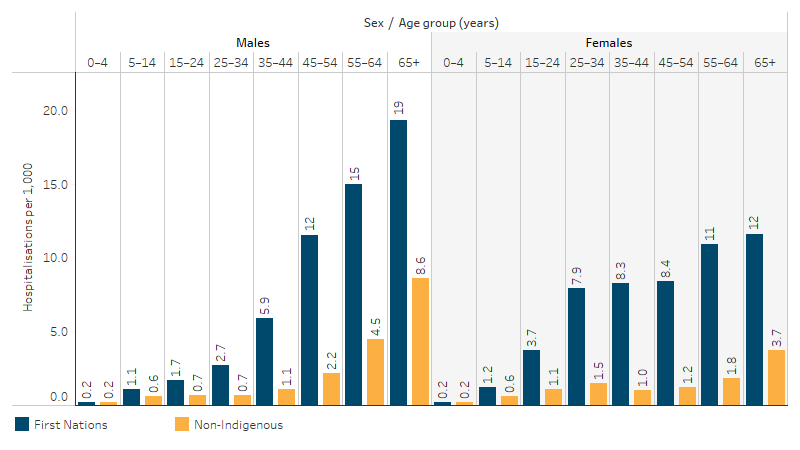
For First Nations people, rates of hospitalisation with a principal diagnosis of diabetes increased with age, from 0.2 hospitalisations per 1,000 population for those aged 0–4 to 15 per 1,000 for those aged 65 and over. Rates were higher for First Nations females (from the 5–14 age group) than First Nations males until the 45–54 age group, when the rate for males began to increase more sharply than the rate for females (Table 1.09.7, Figure 1.09.1).
Figure 1.09.1: Hospitalisation rates for diabetes (based on principal diagnosis), by Indigenous status, sex and age, Australia, July 2021 to June 2023
Source: Table D1.09.7. AIHW analysis of National Hospital Morbidity Database.
For hospitalisations with a principal diagnosis of diabetes across all age groups, the relative gap between First Nations and non-Indigenous Australians (measured by the rate ratio) increased with age, peaked among those aged 35–44, and then declined in older age groups. First Nations males aged 35–44 were 5.7 times as likely as non-Indigenous males aged 35–44 to be hospitalised for diabetes, with respective rates of 5.9 and 1.1 hospitalisations per 1,000 population. First Nations females aged 35–44 were 8.0 times as likely as non-Indigenous females of the same age group to be hospitalised for diabetes (8.3 and 1.0 per 1,000, respectively) (Table D1.09.7, Figure 1.09.1).
After adjusting for differences in the age structure between the two populations, the rate of hospitalisation for a principal diagnosis of diabetes for First Nations people was 3.8 times the rate for non-Indigenous Australians (Table D1.09.8).
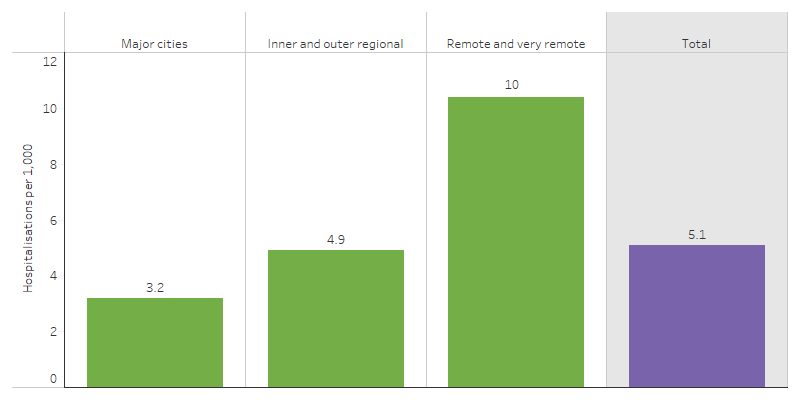
Between July 2021 and June 2023, the rate of hospitalisation for diabetes was higher for First Nations people living in remote than non-remote areas. The rate was highest for First Nations people living in Remote and very remote areas (10.4 hospitalisations per 1,000 population), followed by Inner and outer regional areas (4.9 per 1,000). The rate was lowest in Major cities (3.2 per 1,000) (Table D1.09.9, Figure 1.09.2). The rate for First Nations people also varied by jurisdiction, with the lowest rate in the Australian Capital Territory (2.4 per 1,000) and highest in the Northern Territory (9.8 per 1,000) (Table D1.09.8).
Figure 1.09.2: Hospitalisation rates for diabetes (based on principal diagnosis) among First Nations people, by remoteness, Australia, July 2021 to June 2023
Source: Table D1.09.9. AIHW analysis of National Hospital Morbidity Database.
From July 2021 to June 2023, there were 167,054 hospitalisations among First Nations people where diabetes was recorded as a principal or additional diagnosis (this included hospitalisations with multiple causes and those where diabetes was not the main diagnosis). This corresponds to a crude rate of 83 per 1,000 population (Table D1.09.7).
After adjusting for differences in the age structure between the two populations, the rate of hospitalisation for a principal or additional diagnosis of diabetes for First Nations people was 3.6 times the rate for non-Indigenous Australians (Table D1.09.7).
Complications of diabetes such as lower limb amputations were also more common among First Nations people than non-Indigenous Australians. In 2017–18, there were 415 hospitalisations for lower limb amputation with type 2 diabetes as a principal or additional diagnosis among First Nations people, equating to 84 hospitalisations per 100,000. After adjusting for differences in the age structure between the two populations, rates for First Nations people were 4.7 times as high as for non-Indigenous Australians (107 and 23 per 100,000, respectively). The rate was 8 times as high among First Nations women and 3.5 times as high among First Nations men when compared with their non-Indigenous counterparts (AIHW 2020).
Diabetes management
Diabetes is a complex chronic disease that requires lifestyle modification and self-management. First Nations-specific primary health care organisations and general practitioners (GPs) play a critical role in providing guidance for their patients in monitoring risk factors and medication management.
Commonwealth-funded First Nations-specific primary health care organisations provide national Key Performance Indicators data on a range of process-of-care measures related to diabetes (AIHW 2026a). The Chronic Disease Management items on the Medicare Benefits Schedule (MBS) enable GPs to plan and coordinate the health care of patients with chronic or terminal medical conditions. At June 2025, 54% (or around 26,500) of First Nations regular clients with type 2 diabetes had a Chronic Disease Management Plan prepared within the previous 24 months.
In the six months to June 2025, 51% (or around 25,300) of regular clients of Commonwealth-funded First Nations-specific primary health care organisations with type 2 diabetes had an HbA1c test, with 43% (or around 11,000) reporting an HbA1c result in the recommended range (AIHW 2026a).
MedicineInsight is a database managed by NPS MedicineWise containing data on care provided in general practice from over 700 Australian general practices. In 2020–21, MedicineInsight collected data from 471 general practices and 4,110 GPs (5.8% of all Australian general practices and 10.8% of all Australian GPs) (NPS MedicineWise 2021). Data from participating MedicineInsight general practices shows that type 2 diabetes (including diabetes type not specified) was among the top 10 conditions ever recorded for First Nations people, with 7.3% of patients having a type 2 diabetes (or type not specified) diagnosis listed on their medical record. Of the 65,262 First Nations patients who visited participating practices in 2020–21, type 2 diabetes (or type not specified) was the 7th most common condition recorded, with 3.7% of patients being recently diagnosed. When GPs were providing care to First Nations people on average:
- 8.7 per 100 clinical encounters were with a patient who had a recent diagnosis of type 2 diabetes (or type not specified)
- 16 per 100 clinical encounters were with a patient who had ever been diagnosed with type 2 diabetes (or type not specified).
Findings from ABS Health Survey data
According to self-reported data from the 2022–23 National Aboriginal and Torres Strait Islander Health Survey (NATSIHS), around 7.4% (73,800) of First Nations people were living with diabetes (ABS 2024). This estimate is for First Nations people who report currently having diabetes which has lasted, or is expected to last, for 6 months or more, but also includes people who reported they had diabetes, but that it was not current at the time of interview. However, to better understand and capture the health risk to the First Nations people population and to understand the disparity with the non-Indigenous Australian population, the following rates focus on those aged 18 and over (due to low rates occurring among children) and include those with high sugar levels.
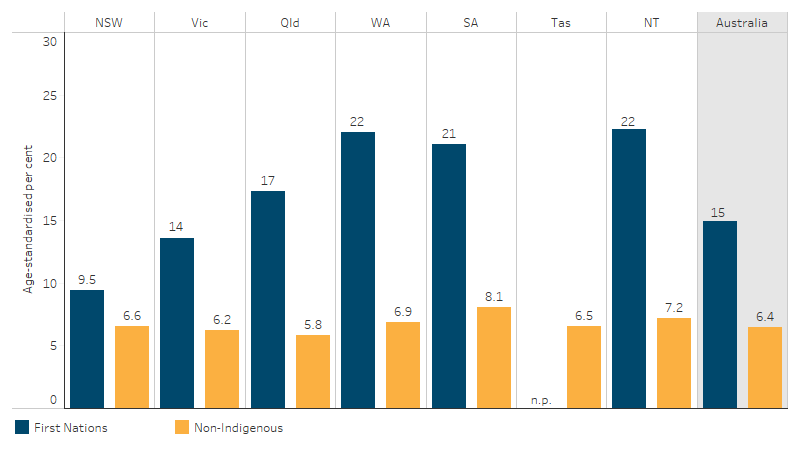
The 2022–23 NATSIHS showed that 13% (75,700) of First Nations people aged 18 and over (First Nations adults) reported having diabetes or high blood/urine sugar levels that were current and long term (Table D1.09.14). After adjusting for differences in the age structure, First Nations adults were 2.3 times as likely to report having diabetes or high sugar levels as non-Indigenous Australians – 15% compared with 6.4%, respectively. First Nations male and female adults reported having diabetes or high sugar levels at a similar rate (15% for both sexes).
First Nations adults in remote areas reported a higher rate of diabetes or high sugar levels (24%, or 20,100 adults) than those in non-remote areas (13%, or 55,500). The rate of reported diabetes or high sugar levels for First Nations adults varied by states and territories, ranging from 9.5% (17,600) in New South Wales to 22% in the Northern Territory (9,300) and Western Australia (12,800) (Table D1.09.2, Figure 1.09.3).
Figure 1.09.3: Age-standardised proportion of persons aged 18 and over who reported having diabetes or high sugar levels, by Indigenous status and state and territory, 2022–23
Source: Table D1.09.2. AIHW and ABS analysis of National Aboriginal and Torres Strait Islander Health Survey 2022–23 and National Health Survey 2022.
The proportion of First Nations adults having diabetes or high sugar levels increased with age, from 2.1% (2,600) for those aged 18–24, to over a quarter of those aged 55 and over (29%; 39,700) (Table D1.09.2, Figure 1.09.4).
Figure 1.09.4: Proportion of adults who reported having diabetes or high sugar levels, by Indigenous status and age, 2022–23
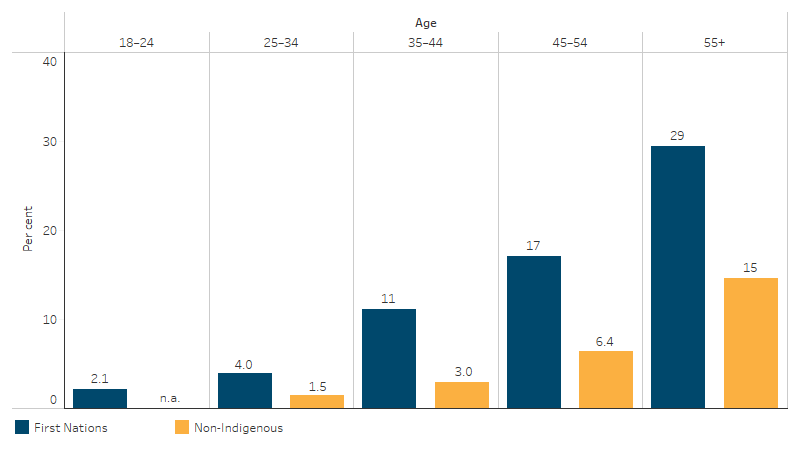
Note: The 18–24 age group proportion for non-Indigenous people has a high margin of error and has been excluded from this figure.
Source: Table D1.09.2. AIHW and ABS analysis of National Aboriginal and Torres Strait Islander Health Survey 2022–23 and National Health Survey 2022.
First Nations adults were more likely to report having diabetes or high sugar levels if they:
- lived in a household within the lowest 20% (1st quintile) of equivalised household income compared with those who lived in a household within the highest 40% (4th/5th quintile) of equivalised household income (2.3 times) (Table D1.09.5)
- reported having fair/poor health status compared with those who reported excellent/very good/good health status (2.6 times)
- were obese compared with those who were not obese (includes those who were underweight, normal or overweight) (1.9 times)
- reported having heart or cardiovascular (circulatory) problems compared with those who did not (3.1 times)
- reported having kidney disease compared with those who did not (2.8 times) (Table D1.09.1).
In 2022–23, 27% (234,400) of First Nations people who reported not having been diagnosed with diabetes/high sugar levels had been tested for diabetes/high sugar levels in the last 3 years (Table D1.09.4).
Of the 76,600 First Nations people with current diabetes or current and long-term high sugar levels (all ages), the main health actions taken to manage diabetes or high blood sugar levels were:
- 91% had their blood glucose checked in the last 12 months
- 65% had taken lifestyle action relating to diet, weight loss and exercise in the last two weeks
- 64% had their feet checked in the last 12 months
- 61% used medicine/tablets for treating diabetes in the last two weeks (excluding insulin, vitamins and herbal medicines)
- 25% had used insulin daily in the last two weeks (Table D1.09.4).
According to data from the 2022–24 National Aboriginal and Torres Strait Islander Health Measures Survey (NATSIHMS), 15.5% (92,200) of First Nations people aged 18 years and over had diabetes. This comprised:
- 12.6% who had known diabetes – the respondent either self-reported a diabetes diagnosis and regularly take diabetes medication (even if their blood test results were normal), or self-reported a diabetes diagnosis and had a blood test result above the cut-offs for diabetes
- 2.8% who had newly diagnosed diabetes – the respondent’s blood test result as part of the survey was above the cut-off for diabetes but they had not self-reported a diabetes diagnosis (ABS 2025: Table 1).
Diabetes data by type
Type 1 diabetes
One source of data on the incidence of diabetes by type is the National (insulin-treated) Diabetes Register (NDR). However, not all First Nations people with type 2 diabetes are registered with the National Diabetes Services Scheme (NDSS), and not all are insulin dependent. The NDR draws upon the NDSS as the source population for calculating incidence rates (new cases) of insulin-treated type 2 diabetes. This means rates of type 2 diabetes for First Nations people (insulin or non-insulin dependent) are underestimated from both the NDR and NDSS (AIHW 2022c). This is a data gap, therefore, only information on the incidence of type 1 diabetes is presented here.
In 2020, 164 First Nations people were diagnosed with type 1 diabetes (incidence of 19 new cases per 100,000 population). After adjusting for differences in the age structures between the two populations, the incidence rates of type 1 diabetes for First Nations people was 1.4 times the rate for non-Indigenous Australians (AIHW 2022c).
Gestational diabetes
The primary national data sources for gestational diabetes for First Nations women are the National Hospital Morbidity Database and the National Perinatal Data Collection (AIHW 2019).
Data from the National Perinatal Data Collection in 2023 showed that 15% of First Nations women who gave birth had gestational diabetes and 2.6% had pre-existing diabetes. After adjusting for differences in the age structure between the two populations, First Nations women who gave birth had gestational diabetes at 1.1 times the rate of non-Indigenous mothers, and had pre-existing diabetes at 3.5 times the rate of non-Indigenous mothers (AIHW 2026b).
Hospitalisation data also provides information about the incidence of new cases of gestational diabetes for First Nations mothers. In 2021–22, there were around 2,500 new cases of gestational diabetes among First Nations women, equating to 16% of First Nations women aged 15–49 who gave birth in hospital. Incidence increased with age, peaking in the 40–49 age group at 31%; women in this age group were 2.8 times as likely to be diagnosed with gestational diabetes as First Nations women aged 15–24 (11%). After adjusting for differences in the age structure between the two populations, the incidence of gestational diabetes for First Nations women was around 1.1 times the rate for non-Indigenous women (AIHW 2024).
Changes over time in deaths from diabetes
Time series analysis of deaths data in the HPF has been limited to the 2016 to 2021 period due to the changes in the derivation of Indigenous status in deaths data in New South Wales after 2021 constituting a break in time series for First Nations death statistics. Comparisons in death rates over time between jurisdictions, particularly New South Wales, should therefore be interpreted with caution (for more information see measure 1.22 All-cause age-standardised death rates and Data Sources and Quality).
Between 2016 and 2021, the age-standardised rate of death due to diabetes in the 5 states with adequate Indigenous identification decreased by 14% for First Nations people, while the rate for non-Indigenous Australians did not change significantly (change over time estimated using linear regression). This resulted in a narrowing of the gap by 16% (Table D1.23.22, Figure 1.09.5).
Figure 1.09.5: Age-standardised death rates due to diabetes, by Indigenous status, NSW, Qld, WA, SA and NT, 2016–2023
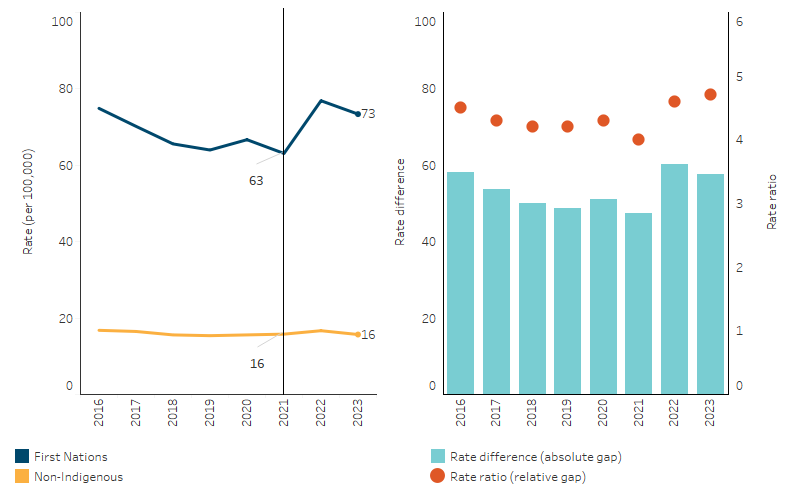
Note: Rate difference is the age-standardised rate (per 100,000) for First Nations people minus the age-standardised rate (per 100,000) for non-Indigenous Australians. Rate ratio is the age-standardised rate for First Nations people divided by the age-standardised rate for non-Indigenous Australians.
Source: Table D1.23.22. AIHW National Mortality Database.
Changes over time in hospitalisations for diabetes
From 2016–17 to 2022–23, the number of hospitalisations for First Nations people with diabetes as the principal diagnosis increased from 3,811 to 5,403. After adjusting for differences in the age structure between the two populations, the rate of hospitalisation due to diabetes increased by 16% for First Nations people and by 0.7% for non-Indigenous Australians. The rate for First Nations people was 3.4 times the rate for non-Indigenous Australians in 2016–17, and 3.9 times the non-Indigenous rate in 2022–23 (Table D1.09.12, Figure 1.09.6).
Figure 1.09.6: Age-standardised hospitalisation rates for a principal diagnosis of diabetes, by Indigenous status, Australia, 2016–17 to 2022–23
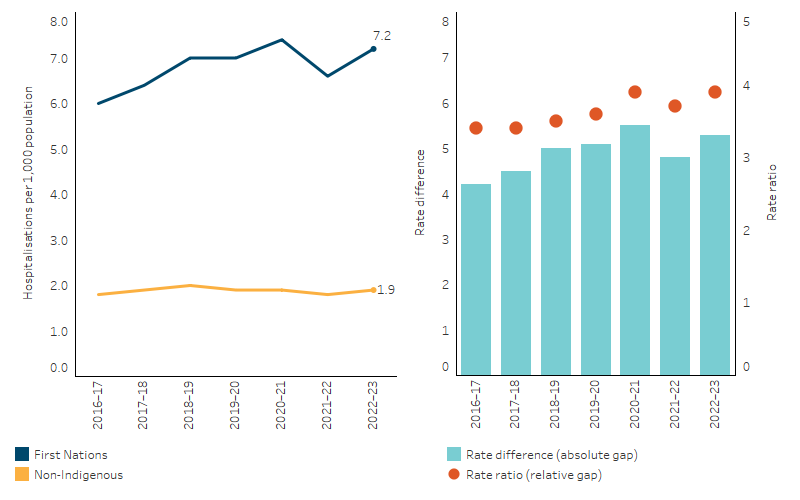
Note: Rate difference is the age-standardised rate (per 1,000) for First Nations people minus the age-standardised rate (per 1,000) for non-Indigenous Australians. Rate ratio is the age-standardised rate for First Nations people divided by the age-standardised rate for non-Indigenous Australians.
Source: Table D1.09.12. AIHW analysis of National Hospital Morbidity Database.
Research and evaluation findings
Diabetes overview
As of 30 June 2025, more than 1.5 million Australians with diabetes were registered through the National Diabetes Services Scheme (NDSS), a national dataset of diabetes registrations. Of these, 86.6% had type 2 diabetes (1,314,132 people), 9.4% had type 1 diabetes (142,873), and 3.1% were gestational diabetes (46,501 women). Over the past 12 months to 30 June 2025, around 118,000 people with diabetes newly registered with the NDSS, including around 46,500 new cases of gestational diabetes (NDSS 2025). Although the incidence of new cases of diabetes among First Nations people can be reported from the NDSS, First Nations people are under-represented among registrations with the NDSS (AIHW 2024).
Type 1 diabetes, while less common than type 2 diabetes, is a serious condition that is not caused by modifiable lifestyle factors, and it is not known how it can be prevented. It is typically diagnosed in childhood or adolescence, but an increasing number of cases are now being identified in adults over 65. The exact causes remain unknown, and further research is needed to understand the genetic and environmental factors involved (Diabetes Australia 2024).
Type 2 diabetes is driven by both genetic and modifiable risk factors, including obesity, poor diet, physical inactivity, and smoking, and patients are often comorbid with other conditions with similar risk factors such as high blood pressure and hyperlipidaemia which increase the risk of complications such as cardiovascular disease and kidney disease (Chaurasia et al. 2025; Diabetes Australia 2024; Petrie et al. 2018; U.S. Department of Health and Human Services 2014). Obesity remains the most significant risk factor. Easy access to unhealthy food and sedentary lifestyles continue to drive rising prevalence. While there is no cure, remission may be possible through intensive dietary changes and weight loss, particularly in early stages. Emerging research also identifies subtypes of type 2 diabetes with varying risks and complications (Diabetes Australia 2024).
Evidence suggests that children born to women with diabetes have increased risk of youth onset chronic disease including diabetes. There may be an intergenerational effect contributing to the global epidemic of diabetes, with epigenetics potentially being a factor, though further research is needed. Internationally, the burden of diabetes facing pregnant Indigenous women is amplified by the effect of social determinants (Maple-Brown and Hampton 2020). These challenges are intensified in rural and remote areas, where residents face reduced access to diabetes education, fewer employment opportunities, and higher living costs (AIHW 2025). Structural racism and geographical inequity further exacerbate these outcomes with inequitable distribution of resources, power, knowledge, prestige and the beneficial social connections associated with socioeconomic status (Agarwal et al. 2023).
The onset of type 2 diabetes occurs earlier among First Nations Australians compared with non-Indigenous Australians, which leads to a greater burden of illness associated with the complications of diabetes, including kidney damage, loss of vision, peripheral nerve damage and peripheral vascular diseases (AIHW 2022b; Shaw and Tanamas 2012). Titmuss et al. (2019) highlighted that First Nations young people with type 2 diabetes also have high rates of comorbidities such as hypertension, dyslipidaemia and obesity which will have a significant effect on the burden of disease into the future (Titmuss et al. 2019).
The risk of developing type 2 diabetes typically increases with age, but it is now increasingly prevalent among First Nations children and youth. First Nations children under 17 years are between 6 and 20 times as likely to develop type 2 diabetes as non-Indigenous children, according to national surveillance data (Ride 2022).
A study of First Nations people in northern Australia found a high burden of youth-onset type 2 diabetes – particularly females – with poor glycaemic control and with early signs of cardiovascular risk. Moreover, in-utero exposure to maternal hyperglycaemia and obesity increases the risk of developing cardiometabolic conditions at a younger age, reinforcing the importance of prevention across generations (Titmuss et al. 2022). Other research in the Northern Territory suggests that prevention or delay of onset of type 2 diabetes in younger women is vital to improving pregnancy outcomes (Maple-Brown et al. 2019).
International evidence from countries with similar colonial history – such as Australia, Canada, New Zealand, and the United States – shows that pregnant Indigenous women with pre-existing type 2 diabetes face elevated risks of miscarriage, pre-eclampsia, pre-term birth, and neonatal complications (Voaklander et al. 2020). Gestational diabetes, typically occurring in the second or third trimester, is influenced by risk factors such as maternal age over 35, obesity, excessive weight gain, family history of diabetes, and conditions like polycystic ovarian syndrome. Although it usually resolves after childbirth, it significantly increases the mother’s risk of developing type 2 diabetes and cardiovascular disease and raises the child’s risk of developing diabetes later in life (Diabetes Australia 2024).
International literature reviews have highlighted how socioeconomic disadvantage – particularly low income, limited education, and insecure employment – is linked to higher diabetes prevalence, earlier onset, and increased mortality. For example, diabetes rates are twice as high among low-income individuals, and mortality risk doubles for those without a high school education. Additional factors such as housing instability, poorer access to healthy environments, and exposure to environmental toxins further worsen outcomes (Hill-Briggs et al. 2020).
Greater disease severity, lower access to health services and increased risk factors have also contributed to increased diabetes-related complications in Indigenous populations worldwide (Harris et al. 2017).
Community-based Health Promotion
Community-led health promotion activities have demonstrated positive impacts on diabetes prevention and management among First Nations peoples. Evidence from systematic reviews and program evaluations nationally and internationally shows that culturally safe, community-driven approaches can improve glycaemic control, self-management, and engagement with health services (Chopra et al. 2022; Tan et al. 2024).
School-based programs aim to improve knowledge, attitudes, and behaviours related to preventable chronic disease risk factors among young people. Internationally, the World Health Organization and the United Nations have recognised the potential of school-based health programs (Pulimeno et al. 2020). In Australia, an evaluation of the Deadly Choices program (which includes school and community health promotion programs) led by the Institute of Urban Indigenous Health (IHUI), reported significant improvements in physical activity, fruit and vegetable intake, and uptake of First Nations Health Checks (Medicare Item 715), as well as improved knowledge, attitudes and self-efficacy, demonstrating the potential of culturally tailored preventative health education for First Nations young people (Malseed et al. 2014).
Community-based interventions have also shown success in improving diabetes outcomes. A cluster randomised trial in remote north Queensland found that a community health worker-led model significantly improved glycaemic control in adults with poorly managed type 2 diabetes, reducing HbA1c by 1.0% over 18 months compared to 0.2% in the control group, and improving access to nutrition and dental services (McDermott et al. 2015).
Local evaluations, such as those of the Wurli Wurlinjang Diabetes Day Program in Katherine, Northern Territory, illustrate how culturally tailored, community-controlled initiatives can improve clinical outcomes and social and emotional wellbeing. While single-site studies are limited in generalisability, they share common features with larger-scale evidence: culturally safe environments, strong community leadership, and integration of clinical and lifestyle supports (Entwistle et al. 2011).
Other innovative models include peer-led and lifestyle programs such as ‘Too deadly for diabetes’ in Western Sydney, which reported improvements in weight, blood pressure, and glycaemic control, alongside strong participant engagement and cultural acceptability (Power et al. 2021). Similarly, a co-designed program at Waminda in New South Wales combined Shared Medical Appointments with culturally appropriate nutrition education, achieving sustained improvements in HbA1c and remission for some participants over 12 months (Stevens et al. 2025). These examples represent service-level research with strong community co-design and partnership, reinforcing the importance of culturally safe, locally driven solutions.
Health System Responses
Poor diabetes management induces a high cost to the health system. Health expenditure attributable to diabetes may be underestimated due to indirect costs, such as those significant costs associated with carers, annual lost wages, as well as the present and future effect of lost opportunities due to diabetes related morbidity, disability and premature mortality (Shaw and Tanamas 2012).
Evidence from regional cost-effectiveness research in remote Northern Territory communities shows that investing in primary health care can substantially reduce hospitalisation costs. For example, the cost of preventing one hospitalisation for diabetes was $248 for patients with medium-use of primary care (2–11 visits annually) and $739 for those with high-use (12 or more visits), compared with an average hospitalisation cost of $2,915. Patients with medium-use of primary care had lower hospitalisation rates, fewer avoidable admissions, and reduced mortality compared to those with minimal care (Thomas et al. 2014).
Diabetes requires complex, coordinated care involving multiple healthcare providers. An observational study in remote Northern Territory found that patients with adequate access to primary health care achieved better diabetes management and had fewer hospitalisations than those with limited access (Zhao et al. 2015). However, remote living creates barriers to accessing diabetes education and resources, making self-management more critical for these communities (Sav et al. 2015).
Further evidence from larger-scale cohort research across 49 Northern Territory communities highlights the importance of timely care planning. Among 2,567 First Nations diabetes patients, those who received a documented diabetes care plan soon after diagnosis had better short-term blood glucose control and fewer hospital admissions. Delays in care planning were associated with higher HbA1c levels and increased hospitalisation risk, underscoring gaps in delivering suitable models of care in remote areas (Li et al. 2019).
Finally, a national and international evidence synthesis found few First Nations-specific interventions published in peer-reviewed journals. The review concluded that outcomes improve when communities are involved at all stages of intervention design and delivery, and that culturally safe, holistic approaches lead to better glycaemic control. It called for more high-quality research to strengthen the evidence base for accessible, culturally appropriate diabetes care (Tan et al. 2024).
Implications
Diabetes has profound impacts on health, quality of life, and need for health care. Early detection and regular monitoring are critical to prevent complications such as vision loss, kidney disease, and amputations. Community-led programs that support healthy eating, physical activity, and cultural connection can empower individuals and families to manage risk factors and improve health outcomes.
Evidence from the National Aboriginal and Torres Strait Islander Health Survey and Health Measures Survey shows that nearly one in five First Nations adults who had indicators of diabetes from blood tests did not report a previous diabetes diagnosis. Additionally, the age-standardised rate of hospitalisation due to diabetes has increased over time for First Nations people. These findings emphasise the importance of regular blood glucose monitoring, particularly for adults with risk factors, as part of routine health checks in primary health care to support early detection and reduce the risk of diabetes complications.
Reducing the burden of disease among First Nations people requires a sustained, coordinated effort across the life course, across generations, and throughout the health system. Diabetes is not only a medical condition – it reflects broader structural inequities rooted in colonisation, intergenerational trauma, and socioeconomic disadvantage (Agarwal et al. 2023; Burrow and Ride 2016; Hill-Briggs et al. 2020).
Policies and interventions for First Nations people should adopt a Health in All Policies (HiAP) approach (meaning health considerations are integrated across all sectors) and focus on both primordial and primary prevention. Primordial prevention addresses the root causes of disease by improving social and environmental conditions, while primary prevention aims to stop disease before it occurs through risk reduction. This requires addressing the social determinants of health, such as food environments, housing, education and employment, that contribute to disease development. Actions should aim to prevent or delay type 2 diabetes by identifying those at high risk, delivering education programs, and providing evidence-based, culturally aligned health promotion that addresses physical activity, nutrition and weight loss (Burrow and Ride 2016; Shaw and Tanamas 2012). In addition, implementing effective secondary prevention strategies – including culturally safe care, medication, and ongoing support – are essential to prevent diabetes-related complications.
The high prevalence of type 2 and gestational diabetes, particularly among young people and women of childbearing age, highlights the urgent need for early, culturally safe intervention. This includes action from preconception and pregnancy through to adulthood. First Nations communities are already leading innovative, strengths-based responses that draw on traditional knowledge, connection to Country, and holistic models of care. Programs such as the Wurli Wurlinjang Diabetes Day Program (Entwistle et al. 2011), Deadly Choices (Malseed 2013) and Too Deadly for diabetes (Power et al. 2021) have demonstrated success in improving health literacy, participation in health care, and empowering participants in managing and improving their health. More high-quality studies of holistic, culturally safe and accessible interventions are needed.
The Australian National Diabetes Strategy 2021–2030 provides a national framework to reduce the social and economic impacts of all forms of diabetes. It prioritises prevention, early detection, effective management, and coordinated care. Recognising the disproportionate burden of diabetes, the Strategy identifies First Nations people as a priority population and supports:
- community-led programs delivered in partnership with Aboriginal Community Controlled Health Services (ACCHSs)
- improved access to specialist care via telehealth and regional networks
- targeted education on intergenerational risk, healthy lifestyles, and youth engagement
- early intervention during pregnancy and childhood
- food security, and workforce development.
In the 2025–26 Federal Budget, the Australian Government reaffirmed its commitment to addressing diabetes, particularly within First Nations communities, through continued investment in chronic disease initiatives. While no new diabetes-specific funding line was introduced, diabetes remains a key focus under the broader Australian National Diabetes Strategy. For First Nations communities, support continues through programs such as the Integrated Team Care (ITC) Program and the Indigenous Australians’ Health Programme (IAHP), which fund culturally appropriate care through ACCHSs. These efforts are complemented by broader investments in the First Nations health workforce, digital health infrastructure, and culturally safe models of care.
Primary health care plays a vital role in the prevention, early detection, and ongoing management of diabetes. The Aboriginal and Torres Strait Islander Health Check (Medicare Item 715) supports early identification of diabetes risk using tools like the Australian Type 2 Diabetes Risk Assessment Tool, with referrals to lifestyle programs for high-risk individuals. Ongoing care is supported through additional Medicare items for multidisciplinary planning, and national performance indicators help monitor and improve care quality.
National initiatives such as the Northern Australia Partnership as well as the Australian National Diabetes Strategy focus on reducing inequities by tackling structural racism and geographical disadvantage. Since 2011, the Northern Australia Partnership has strengthened community-led governance, expanded the diabetes workforce, and improved screening, leading to an 80% increase in identification of gestational diabetes among First Nations women (Walker et al. 2023).
These efforts highlight the importance of embedding community leadership and structural reform into national strategies.
The National Aboriginal and Torres Strait Islander Health Plan 2021–2031 further strengthens this approach by promoting structural reform and integrated models of care. It calls for mainstream health services to address racism, deliver culturally responsive care, and be accountable to First Nations people and communities. Diabetes is identified as a key health priority alongside cardiovascular, renal, ear, and eye health. The plan emphasises prevention, early intervention, and culturally safe management of chronic conditions, supported by community-led models and a strong ACCHS sector.
Programs such as QAAMS (Quality Assurance for Aboriginal and Torres Strait Islander Medical Services) support culturally appropriate diabetes care through point-of-care testing and tailored training for First Nations health professionals. The National Diabetes Services Scheme (NDSS) enhances access to essential diabetes management products and support services. Culturally tailored initiatives under the NDSS, such as the Diabetes Yarning program and community-led education events, help improve understanding and self-management. However, many First Nations people with diabetes have not registered with the NDSS, particularly in remote areas, limiting access and data quality (AIHW 2022d). People living in remote and very remote areas can face barriers to accessing health care due to distance, limited infrastructure, fewer services and higher costs associated with accessing services (AIHW 2025). In relation to diabetes care, where First Nations people live in remote and very remote locations, NDSS Access Points may be limited. However, patients may obtain diabetes-related products or services through targeted Indigenous-specific programs and services, including through ACCHSs under Section 100 arrangements, which provide First Nations people access to free and subsidised products needed by people with insulin-treated diabetes (AIHW 2022e).
A suite of national programs further supports chronic disease management, including:
- Integrated Team Care (ITC) program for personalised, multidisciplinary support,
- Medical Outreach – Indigenous Chronic Diseases Program (MOICDP) for specialist outreach in rural and remote areas,
- Practice Incentives Program – Indigenous Health Incentive (PIP-IHI to support appropriate chronic disease management,
- Closing the Gap (CTG) PBS Co-payment Program and the Remote Area Aboriginal Health Services (RAAHS) Program to reduce medicine costs and improve treatment adherence.
Measure 3.05 Chronic disease management, provides more information on the effectiveness of the health system in providing diabetes care, including on the need for regular monitoring of blood glucose levels for patients with diabetes.
The Australian Government also supports a range of research and innovation initiatives. The Medical Research Future Fund is backing the first large-scale study of the epigenetic landscape of First Nations people to improve understanding of how genetic and environmental factors influence disease risk using the South Australian Aboriginal Type 2 Diabetes cohort (known as the PROPHECY Cohort) (The Kids Research Institute Australia 2022). The Targeted Translation Research Accelerator (TTRA) is investing $38 million to improve prevention, diagnosis, and treatment of diabetes and related conditions, with a strong focus on First Nations-led research, co-designed priorities, and culturally safe service innovations (MTPConnect 2024).
Advances in epigenetic research in type 2 diabetes have potential benefits for future precision medicine, including for populations with disproportionate levels of diabetes risk such as First Nations people. However, much of the genomic research has lacked diversity and application of genomics has not been equitable. Australian researchers have highlighted several future directions for advancing type 2 diabetes epigenetic research in Indigenous health (internationally) to better capture the complexity and diversity of epigenetic influences relevant to Indigenous people groups. However, they also highlight that ethical considerations, appropriate research methods (working with Indigenous communities), Indigenous data sovereignty and governance will be important to build trust in the conduct of research and ensure that Indigenous communities have equitable opportunities to participate in and benefit from this research (Munns et al. 2025).
References
-
ABS (Australian Bureau of Statistics) (2024) National Aboriginal and Torres Strait Islander Health Survey 2022–23, ABS, Australian Government.
-
ABS (2025) National Aboriginal and Torres Strait Islander Health Measures Survey, ABS, Australian Government, accessed 30 March 2026.
-
Agarwal S, Wade AN, Mbanya JC, Yajnik C, Thomas N, Egede LE, Campbell JA, Walker RJ, Maple-Brown L and Graham S (2023) 'The role of structural racism and geographical inequity in diabetes outcomes', The Lancet, 402(10397):235–249, doi:10.1016/s0140-6736(23)00909-1.
-
AIHW (Australian Institute of Health and Welfare) (2017) Deaths among people with diabetes in Australia, 2009–2014, AIHW, Australian Government, accessed 30 March 2026.
-
AIHW (2019) Improving national reporting on diabetes in pregnancy: technical report, AIHW, Australian Government, accessed 30 March 2026.
-
AIHW (2020) Indicators for the Australian National Diabetes Strategy 2016–2020: data update, AIHW, Australian Government, accessed 30 March 2026.
-
AIHW (2021) Deaths in Australia, AIHW, Australian Government, accessed 30 March 2026.
-
AIHW (2022a) Australian Burden of Disease Study 2018: interactive data on risk factor burden among Aboriginal and Torres Strait Islander people, AIHW, Australian Government, accessed 30 March 2026.
-
AIHW (2022b) Australian Burden of Disease Study: impact and causes of illness and death in Aboriginal and Torres Strait Islander people 2018, AIHW, Australian Government, accessed 9 April 2026, doi:10.25816/xd60-4366.
-
AIHW (2022c) Incidence of insulin-treated diabetes in Australia, AIHW, Australian Government, accessed 30 March 2026.
-
AIHW (2022d) The National (insulin-treated) Diabetes Register 2020; quality statement, AIHW, METEOR website, accessed 30 March 2026.
-
AIHW (2022e) Rural and remote health, AIHW, Australian Government, accessed 29/08/2022.
-
AIHW (2024) Diabetes: Australian facts, AIHW website, accessed 30 March 2026.
-
AIHW (2025) Rural and remote health, AIHW, Australian Government, accessed 3 April 2026.
-
AIHW (2026a) Aboriginal and Torres Strait Islander specific primary health care: results from the OSR and nKPI collections, AIHW, Australian Government, accessed 30 March 2026.
-
AIHW (2026b) Australia's mothers and babies, AIHW, Australian Government, accessed 15 May 2026.
-
AIHW (2026c) First Nations Burden of Disease Study 2022, AIHW, Australian Government, accessed 16 April 2026.
-
Burrow S and Ride K (2016) 'Review of diabetes among Aboriginal and Torres Strait Islander people', Australian Indigenous HealthInfoNet, 16(3).
-
Chaurasia NK, Mothashin M and Hossain MG (2025) 'Prevalence and determinants of comorbidities among patients with type 2 diabetes mellitus in Nepal: a cross-sectional study', BMC Endocrine Disorders, 25:247, doi:10.1186/s12902-025-02068-y.
-
Chopra S, Lahiff TJ, Franklin R, Brown A and Rasalam R (2022) 'Effective primary care management of type 2 diabetes for indigenous populations: a systematic review', PloS One, 17(11):e0276396, doi:10.1371/journal.pone.0276396.
-
Diabetes Australia (2024) The state of the nation 2024: the diabetes epidemic in Australia, Diabetes Australia, accessed 30 March 2026.
-
Entwistle P, Entwistle D and Stothers K (2011) Wurli-Wurlinjang Diabetes Day Program: evaluation report, Centre for Remote Health, Flinders University, Charles Darwin University, accessed 30 March 2026.
-
Hare MJL, Zhao Y, Guthridge S, Burgess P, Barr ELM, Ellis E, Butler D, Rosser A, Falhammer H and Maple-Brown LJ (2022) 'Prevalence and incidence of diabetes among Aboriginal people in remote communities of the Northern Territory, Australia: a retrospective, longitudinal data-linkage study', BMJ Open, 12(5):e059716, doi:10.1136/bmjopen-2021-059716.
-
Harris SB, Tompkins JW and TeHiwi B (2017) 'Call to action: a new path for improving diabetes care for Indigenous peoples, a global review', Diabetes Research and Clinical Practice, 123:120–133, doi:10.1016/j.diabres.2016.11.022.
-
Hill-Briggs F, Adler NE, Berkowitz SA, Chin MH, Gary-Webb TL, Navas-Acien A, Thornton PL and Haire-Joshu D (2020) 'Social determinants of health and diabetes: a scientific review', Diabetes Care, 44(1):258–279, doi:10.2337/dci20-0053.
-
Li SQ, Guthridge S, Lawton P and Burgess P (2019) 'Does delay in planned diabetes care influence outcomes for aboriginal Australians? A study of quality in health care', BMC Health Services Research, 19(1):582, doi:10.1186/s12913-019-4404-7.
-
Malseed C (2013) Deadly Choices health promotion initiative evaluation report January 1 – December 31, 2013, The Lowitja Institute, the Institute for Urban Indigenous Health, The University of Queensland, accessed 30 April 2026.
-
Malseed C, Nelson A and Ware R (2014) 'Evaluation of a school-based health education program for urban Indigenous young people in Australia', Health, 6(7):587, doi:10.4236/health.2014.67077.
-
Maple-Brown L, Lee I-L, Longmore D, Barzi F, Connors C, Boyle JA, Moore E, Whitbread C, Kirkwood M and Graham S (2019) 'Pregnancy and neonatal diabetes outcomes in remote Australia: the PANDORA study—an observational birth cohort', International Journal of Epidemiology, 48(1):307–318, doi:10.1093/ije/dyy245.
-
Maple-Brown LJ and Hampton D (2020) 'Indigenous cultures in countries with similar colonisation histories share the challenge of intergenerational diabetes', The Lancet Global Health, 8(5):e619–e620, doi:10.1016/s2214-109x(20)30072-3.
-
McDermott R, Schmidt B, Preece C, Owens V, Taylor S, Li M and Esterman A (2015) 'Community health workers improve diabetes care in remote Australian Indigenous communities: results of a pragmatic cluster randomized controlled trial', BMC Health Services Research, 15:68, doi:10.1186/s12913-015-0695-5.
-
Menzies School of Health Research (2025a) Sharing the diabetes in pregnancy story, Menzies website, accessed 30 March 2026.
-
Menzies School of Health Research (2025b) Youth diabetes, Menzies website, accessed 30 April 2026.
-
MTPConnect (2024) Transforming health outcomes for diabetes and cardiovascular disease in Australia: interim report on impacts of the first Targeted Translation Research Accelerator, MTPConnect, accessed 30 March 2026.
-
Munns S, Brown A and Buckberry S (2025) 'Type-2 diabetes epigenetic biomarkers: present status and future directions for global and Indigenous health', Frontiers in Molecular Biosciences, 12, doi:10.3389/fmolb.2025.1502640.
-
Nakhleh A, Halfin E and Shehadeh N (2024) 'Remission of type 2 diabetes mellitus', World Journal of Diabetes, 15(7):1348–1389, doi:10.4239/wjd.v15.i7.1384.
-
NACCHO (National Aboriginal Community Controlled Health Organisation) (2024) Media Release – Strengthening the Healthcare Workforce: First Nations Health Worker Traineeship Program Launched. [media release], NACCHO.
-
NACCHO (n.d.) Health Strong Diabetes Gone: A NACCHO and Bupa Foundation Partnership, NACCHO website.
-
NDSS (National Diabetes Services Scheme) (2025) NDSS data snapshots: all types of diabetes – reporting as at 30 June 2025, National Diabetes Services Scheme, Diabetes Australia, accessed 19/5/2026.
-
NPS MedicineWise (2021) Medicine Insight: general practice insights report July 2020–June 2021, accessed 30 March 2026.
-
Petrie JR, Guzik TJ and Touyz RM (2018) 'Diabetes, hypertension, and cardiovascular disease: clinical insights and vascular mechanisms', Canadian Journal of Cardiology, 34(5):575–584, doi:10.1016/j.cjca.2017.12.005.
-
Power T, East L, Gao Y, Usher K and Jackson D (2021) 'A mixed‐methods evaluation of an urban Aboriginal diabetes lifestyle program', Australian and New Zealand Journal of Public Health, 45(2):143–149, doi:10.1111/1753-6405.13092.
-
Pulimeno M, Piscitelli P, Colazzo S, Colao A and Miani A (2020) 'School as ideal setting to promote health and wellbeing among young people', Health Promotion Perspectives, 10(4):316–324, doi:10.34172/hpp.2020.50.
-
Ride K (2022) Summary of diabetes among Aboriginal and Torres Strait Islander people, Australian Indigenous HealthInfoNet, accessed 30 March 2026.
-
Sav A, King MA, Kelly F, McMillan SS, Kendall E, Whitty JA and Wheeler AJ (2015) 'Self-management of chronic conditions in a rural and remote context', Australian Journal of Primary Health, 21(1):90–95, doi:10.1071/PY13084.
-
Shaw J and Tanamas S (2012) Diabetes: the silent pandemic and its impact on Australia, Baker Heart and Diabetes Institute, accessed 30 March 2026.
-
Stevens J, Firth W, Dooley L, Longbottom H, Wills K, Egger G and Morgan B (2025) 'Continuous glucose monitors and programmed shared medical appointments in managing type 2 diabetes mellitus among First Nation women in Australia: a co-designed feasibility study', American Journal of Lifestyle Medicine:15598276241312084, doi:10.1177/15598276241312084.
-
Tan C, Williams Z, Islam MA, Kelly R, Esgin T and Ekinci EI (2024) 'Interventions for Aboriginal and Torres Strait Islander people with type 2 diabetes that modify its management and cardiometabolic risk factors: a systematic review', The Medical Journal of Australia, 221(11):623–630, doi:10.5694/mja2.52508.
-
The Kids Research Institute Australia (21 September 2022) Large-scale study of epigenetic landscape to understand and overcome diabetes in Indigenous Australians [media release], The Kids Research Institute Australia, accessed 30 March 2026.
-
Thomas SL, Zhao Y, Guthridge SL and Wakerman J (2014) 'The cost-effectiveness of primary care for Indigenous Australians with diabetes living in remote Northern Territory communities', The Medical Journal of Australia, 200(11):658–662, doi:10.5694/mja13.11316.
-
Titmuss A, Davis EA, Brown A and Maple‐Brown LJ (2019) 'Emerging diabetes and metabolic conditions among Aboriginal and Torres Strait Islander young people', The Medical Journal of Australia, 210(3):111–113, doi:10.5694/mja2.13002.
-
Titmuss A, Davis EA, O'Donnell V, Wenitong M, Barr ELM, Boffa J, Brown ADH, Connors C, Corpus S, Dowler J, Graham S, Griffiths E, Kirkham R, Lee C, Moore E, Pearson G, Shaw JE, Singleton S, Sinha A, White G, Zimmet P, Maple-Brown LJ and Haynes A (2022) 'Youth-onset type 2 diabetes among First Nations young people in northern Australia: a retrospective, cross-sectional study', The Lancet Diabetes & Endocrinology, 10(1):11–13, doi:10.1016/S2213-8587(21)00286-2.
-
U.S. Department of Health and Human Services (2014) The health consequences of smoking—50 years of progress: a report of the Surgeon General, U.S. Department of Health and Human Services, Centers for Disease Control and Prevention, National Center for Chronic Disease Prevention and Health Promotion, Office on Smoking and Health, accessed 30 March 2026.
-
Voaklander B, Rowe S, Sanni O, Campbell S, Eurich D and Ospina MB (2020) 'Prevalence of diabetes in pregnancy among Indigenous women in Australia, Canada, New Zealand, and the USA: a systematic review and meta-analysis', The Lancet Global Health, 8(5):e681–e698, doi:10.1016/s2214-109x(20)30046-2.
-
Walker AF, Graham S, Maple-Brown L, Egede LE, Campbell JA, Walker RJ, Wade AN, Mbanya JC, Long JA, Yajnik C, Thomas N, Ebekozien O, Odugbesan O, DiMeglio LA and Agarwal S (2023) 'Interventions to address global inequity in diabetes: international progress', Lancet, 402(10397):250–264, doi:10.1016/s0140-6736(23)00914-5.
-
Zhao Y, Connors C, Lee AH and Liang W (2015) 'Relationship between primary care visits and hospital admissions in remote Indigenous patients with diabetes: a multivariate spline regression model', Diabetes Research and Clinical Practice, 108(1):106–112, doi:10.1016/j.diabres.2015.01.013.