
Key messages
Why is it important?
Education is a key social determinant of health that shapes health outcomes across the life course through its influence on health literacy, access to care, employment, income and living conditions. Higher educational attainment among Aboriginal and Torres Strait Islander (First Nations) people is associated with improved employment opportunities, healthier behaviours, and greater access to safe housing, while lower levels of education are linked to higher mortality rates, particularly from preventable causes. Education also supports essential life skills and is a protective factor across broader social outcomes. Improving education outcomes for First Nations young people is therefore critical to reducing inequities and Closing the Gap in health and socioeconomic outcomes.
Data findings
-
In 2025, the student attendance rate for full-time First Nations students in Years 7–10 nationally was 71%, having decreased from 79% in 2016. This rate in 2025 was highest in Tasmania (77%) and lowest in the Northern Territory (53%).
-
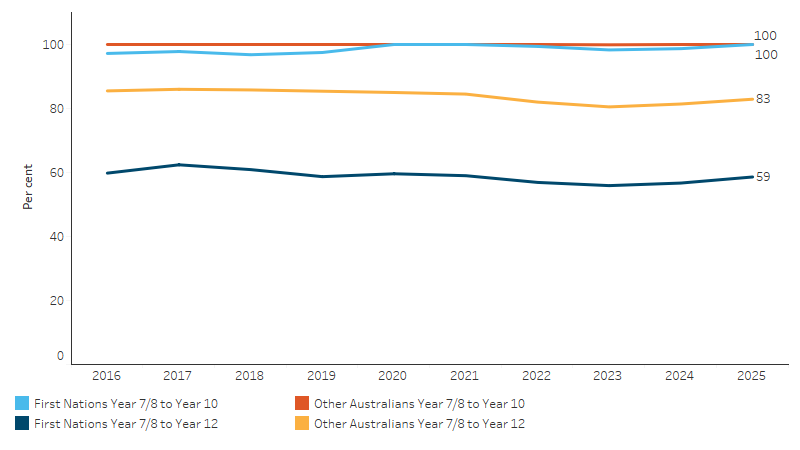
The national apparent retention rate from Year 7/8 to Year 12 for full-time First Nations students was 59% in 2025, compared with 83% for Other students.
-
Between 2016 and 2025, national apparent retention rates from Year 7/8 to Year 12 for full-time First Nations students decreased by 1.2 percentage points. For Other students the rate decreased by 2.6 percentage points.
-
In 2025, among First Nations students, females had higher apparent retention rates than males across most school year groups and jurisdictions. Nationally, the apparent retention rate from Year 7/8 to Year 12 for First Nations female students was 63%, compared with 54% for First Nations male students.
-
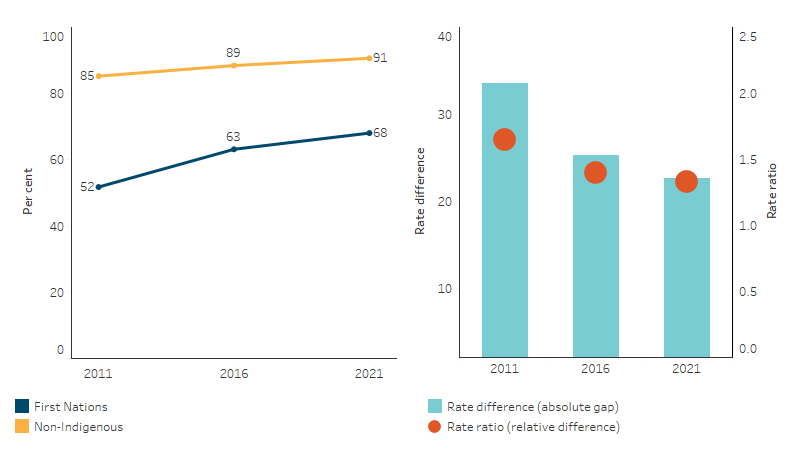
In 2021, 68% of First Nations people aged 20–24 had attained Year 12 or equivalent (Certificate III or above), increasing from 52% in 2011.
-
From 2011 to 2021, improvements in the Year 12 or equivalent attainment were observed in all jurisdictions, with the largest increases in Western Australia (18 percentage point increase), South Australia (17 percentage point increase) and New South Wales (16 percentage point increase).
-
The proportion of First Nations people aged 20–24 who had completed Year 12 or equivalent in 2021 decreased with increasing remoteness of usual residence: 76% in Major cities, 68% in Inner regional areas, 66% in Outer regional areas, 53% in Remote areas, and 42% in Very remote areas. Between 2011 and 2021, improvements were observed across all 5 remoteness areas, ranging between a 12 percentage point increase in Very remote areas to a 15 percentage point increase in Outer regional areas.
-
In 2021, the Year 12 or equivalent attainment rate was 1.3 times as high for non-Indigenous Australians aged 20–24 as for First Nations people of the same age (91% compared with 68%). As rates of Year 12 attainment increased more for First Nations people than for non-Indigenous Australians over the period from 2011 to 2021, the relative difference decreased from a ratio of 1.6 to 1.3, and the rate difference decreased from 34 to 23 percentage points.
Research and evaluation findings
-
Research shows that school engagement can be influenced by contextual factors such as students’ experiences, needs and characteristics, including self-identity and connectedness; the school and classroom context, including teacher quality, attitudes of peers and culturally inclusive practices in schools; and the wider environment, including parental and community involvement.
-
Reviews of student experiences of boarding show that culturally safe environments, health and wellbeing services, and tailored transition support are critical to improving outcomes for First Nations students, especially those from remote communities.
-
Preschool participation has demonstrated long-term benefits for First Nations children, including improved vocabulary, developmental outcomes, and achievement in reading and maths.
-
Anti-racism education programs like Speak Out Against Racism (SOAR) have been shown to enhance racial literacy, empathy, and inclusion, helping to create safer school environments and improve student engagement and confidence.
Implications
Sustained investment in culturally responsive, community-led education strategies is essential to improving outcomes for First Nations students. This includes strengthening support for transitions through primary, secondary and tertiary education pathways, embedding cultural safety and reflexivity in teaching practices, focusing on communities in remote areas where educational inequities are most pronounced, and deepening partnerships with First Nations organisations and communities to co-design locally driven solutions. Mainstream education policies and institutions are increasingly being aligned with Closing the Gap objectives to deliver improved education experiences for First Nations students, including through working in partnership with First Nations stakeholders.
Why is it important?
Education is widely recognised as a key social determinant of health. It influences a person’s ability to access health care, understand health information, and make informed decisions about their wellbeing. Higher levels of education are associated with improved health outcomes through greater health literacy and better prospects for socioeconomic status (including income and employment), though higher education levels are associated with improved health regardless of socioeconomic status (AIHW 2024; Baker et al. 2011; Hart et al. 2017; Marmot et al. 2008). Income, educational attainment, and occupation are commonly used indicators of socioeconomic position, and widening inequalities in these areas are closely linked to widening health disparities (Flavel et al. 2022).
Higher education levels also support increased access to safe and healthy housing (see measures 2.01 Housing and 2.02 Access to functional housing with utilities), healthy lifestyle choices such as regularly eating fruit and vegetables, and lower likelihood of smoking (see measures 2.19 Dietary behaviours and 2.15 Tobacco use) (Clark and Utz 2014). Aboriginal and Torres Strait Islander (First Nations) people who complete Year 12, or a higher qualification, are more likely to be employed, to work full-time, and have higher skilled jobs than early school leavers (Shirodkar et al. 2018; Venn and Biddle 2018). Regular school attendance is foundational for developing essential life skills, including literacy and numeracy (Purdie and Buckley 2010). Education, particularly school completion, is also one of the strongest protective factors against the risk of arrest for First Nations people (Weatherburn et al. 2024).
In Australia, adults with lower education levels experience significantly higher mortality rates. For example, adults aged 25–84 with no Year 12 or post-secondary qualifications had significantly higher mortality rates than those with university degrees – 2.2 times higher for men and 1.6 times higher for women (Korda et al. 2020). Further analysis shows these disparities are most pronounced in preventable causes of death, such as injuries in younger adults and chronic diseases in older populations (Welsh et al. 2022).
In July 2020, the National Agreement on Closing the Gap (the National Agreement) was developed in partnership between Australian governments and the Coalition of Aboriginal and Torres Strait Islander Peak Organisations. It is guided by 4 Priority Reforms, co-designed with First Nations people, aimed at transforming how governments engage with communities. These reforms focus on fostering shared decision-making, strengthening the Aboriginal community-controlled sector, transforming government institutions, and improving access to data and information to support informed, community-led decision-making.
Recognising the critical role of education, the National Agreement emphasises the importance of ensuring that First Nations students achieve their full learning potential. To support this outcome, it includes specific targets to guide policy and monitor progress. These include:
- Target 4 – By 2031, increase the proportion of Aboriginal and Torres Strait Islander children assessed as developmentally on track in all five domains of the Australian Early Development Census (AEDC) to 55 per cent.
- Target 5 – By 2031, increase the proportion of Aboriginal and Torres Strait Islander people (age 20–24) attaining Year 12 or equivalent qualification to 96 per cent.
- Target 6 – By 2031, increase the proportion of Aboriginal and Torres Strait Islander people aged 25–34 years who have completed a tertiary qualification (Certificate III and above) to 70 per cent.
- Target 7 – By 2031, increase the proportion of Aboriginal and Torres Strait Islander youth (15–24 years) who are in employment, education or training to 67 per cent.
For the latest data on the Closing the Gap targets, see the Closing the Gap Information Repository.
The National Aboriginal and Torres Strait Islander Health Plan 2021–2031 also highlights education as a vital social determinant of health. It emphasises the importance of culturally safe, community-led education that affirms identity and supports lifelong learning – contributing to improved health, mental wellbeing, and equity across the life course.
Data findings
The National Schools Statistics Collection (NSSC) provides data on students, staff and government and non-government schools with the aim of supporting national education reporting (ABS 2026).
In 2025, there were 117,634 First Nations students in Years 7 to 12, making up 6.3% of total students nationally.
In the Northern Territory, 38% (6,336) of Year 7 to 12 students were First Nations students, followed by 11% (4,002) in Tasmania, 8.8% (36,107) in Queensland, and 7.0% (38,915) in New South Wales (Table D2.05.4, Table D2.05.5).
School attendance rates
The Report on Government Services 2026 provides information on the equity, effectiveness and efficiency of government services in Australia, including performance information on school education nationally (Productivity Commission 2026).
Student attendance rates are a key indicator of student engagement, with consistent attendance associated with positive schooling outcomes. Student attendance rates are the number of full-time equivalent student-days attended by full-time students as a percentage of the total number of possible student-days (Productivity Commission 2026).
In 2025, the student attendance rate for First Nations students in Years 7–10 nationally was 71%. This ranged from 78% for First Nations students in Year 7, to 66% for those in Year 10. Tasmania had the highest student attendance rate for First Nations students in Years 7–10 (77%), followed by 76% in the Australian Capital Territory, 75% in Queensland, 74% in both Victoria and South Australia, and 73% in New South Wales. The Northern Territory and Western Australia had the lowest rates of all jurisdictions (53% and 61%, respectively).
Student attendance rates decreased with increasing remoteness. Major cities had the highest rate for First Nations students in Years 7–10 (75%), decreasing to 60% and 45% for Remote and Very remote areas, respectively.
Over time, First Nations student attendance rates have decreased in all jurisdictions across all year groups. Nationally, student attendance rates have decreased from 79% for First Nations students in Years 7–10 in 2016 to 71% in 2025. The largest decrease was in Victoria, declining by 11 percentage points over the same period from 84% to 74%.
Among non-Indigenous students, the student attendance rate for those in Years 7–10 nationally was 88% in 2025, 16 percentage points higher than for First Nations students. Student attendance rates were higher in all jurisdictions for non-Indigenous students than for First Nations students in Years 7–10, with the largest difference (of 34 percentage points) being in the Northern Territory (student attendance rates of 87% and 53%, respectively). Over the period 2016 to 2025, the student attendance rate for Years 7–10 for non-Indigenous students decreased by 4 percentage points from 92% to 88%, a slightly lower decrease than for First Nations people (7 percentage point decrease) (Productivity Commission 2026).
School retention rates
Rates of school retention and attainment are important markers of education outcomes in a population. The apparent school retention rate from Years 7/8 to Year 12 is an estimate of the percentage of students who stayed enrolled full time in secondary school from the start of secondary school (Year 7 or 8, depending on jurisdiction) to Year 12. This is estimated based on the total number of students who stay enrolled in each school year. The first year of secondary school is referred to as Year 7/8 when reporting the numbers and rates hereafter.
In 2025, the national apparent retention rate from Year 7/8 to Year 12 for First Nations students was 59%, compared with 83% for Other students (Table D2.05.2). Other students include non-Indigenous students and those whose Indigenous status is unknown.
First Nations female students had higher apparent retention rates than First Nations male students across most year groups and jurisdictions. Nationally, the apparent retention rate for First Nations female students from Year 7/8 to Year 12 was 63%, compared with 54% for First Nations male students (Table D2.05.2).
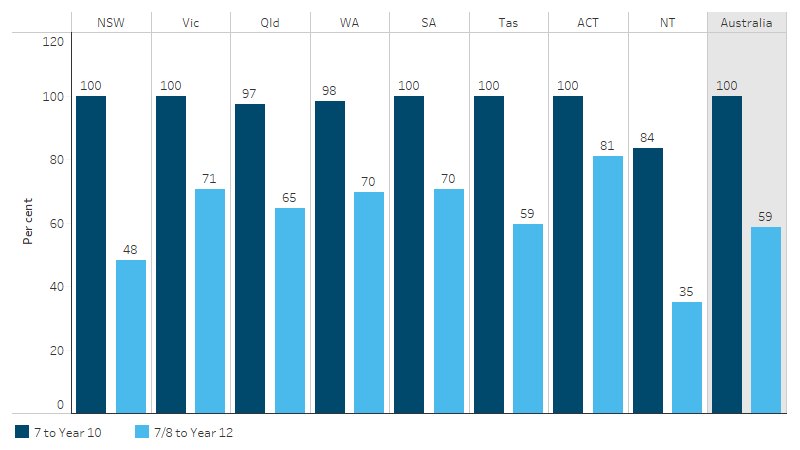
New South Wales, Victoria, South Australia, Tasmania and the Australian Capital Territory all had apparent retention rates of First Nations students from Year 7 to Year 10 of 100%, with rates below 100% in Western Australia (98%), Queensland (97%) and the Northern Territory (84%) (Table D2.05.2, Figure 2.05.1).
From Year 7/8 to Year 12, apparent retention rates of First Nations students were highest in the Australian Capital Territory (81%) and lowest in the Northern Territory (35%) (Table D2.05.2, Figure 2.05.1).
Figure 2.05.1: Apparent retention rate of First Nations students, by jurisdiction and school years retained, 2025
Notes:
1. Rates in Tas and ACT should be interpreted with caution, due to their small number of First Nations students.
2. Apparent retention rates above 100% have been presented as 100% here.
3. Data on actual retention rates are unavailable. Apparent rates may differ from actual rates for various reasons, and rates may exceed 100% (see ABS 2026 for details). For example, in 2025, the Year 7 to Year 10 retention rate for First Nations students exceeded 100% in NSW (105%), Vic (112%), SA (107%), Tas (109%) and the ACT (104%). As a result, the national rate also exceeded 100% (101%), despite the rate being lower than 100% in 3 jurisdictions.
Source: Table D2.05.2, AIHW analysis of National Schools Statistics Collection.
Over the period 2016 to 2025, national apparent retention rates for full-time First Nations students decreased across almost all measured school year groups, except for Year 7/8 to Year 10 (for which national apparent retention rates significantly increased) and Year 11 to Year 12 (where there was no significant change):
- Year 7/8 to Year 10 apparent retention rates increased by 3.9 percentage points
- Year 7/8 to Year 11 apparent retention rates decreased by 4.6 percentage points
- Year 7/8 to Year 12 apparent retention rates decreased by 1.2 percentage points
- Year 10 to Year 12 apparent retention rates decreased by 1.2 percentage points
- Year 11 to Year 12 apparent retention rates increased by 2.7 percentage points but this change was not statistically significant (Table D2.05.3).
Over the same period for Other students (students whose Indigenous status was reported as 'non-Indigenous' or 'not stated'), the Year 7/8 to Year 10 apparent retention rate did not change significantly, while the Year 7/8 to Year 12 apparent retention rate decreased by 2.6 percentage points. As a result, the gap (absolute difference) between the Year 7/8 to Year 10 apparent retention rate for First Nations and Other students decreased from 5.1 to 1.0 percentage points. There was no significant change in the gap between the Year 7/8 to Year 12 apparent retention rate for First Nations and Other students (Table D2.05.3, Figure 2.05.2).
Figure 2.05.2: Apparent Year 7/8–Year 10 and Year 7/8–Year 12 retention rates, by Indigenous status, 2016 to 2025
Notes:
1. Apparent retention rates above 100% have been represented as 100% here.
2. The category ‘Other Australians’ includes students whose Indigenous status was reported as ‘non-Indigenous’ or as ‘not stated’, as these categories are not reported separately in the National Schools Statistics Collection.
Source: Table D2.05.3. AIHW analysis of National Schools Statistics Collection.
Year 12 or equivalent attainment rates
The National Agreement includes a target to increase the proportion of First Nations people aged 20–24 attaining a Year 12 or equivalent qualification to 96% by 2031. The new target measures a Year 12 attainment or Certificate III or above as the equivalent qualification, a change from the 2008 Council of Australian Governments’ (COAG) Closing the Gap target, which measured a Year 12 attainment or Certificate II or above as the equivalent qualification.
The ABS Census of Population and Housing is the primary data source for measuring the target to increase Year 12 attainment or equivalent (Certificate III or above).
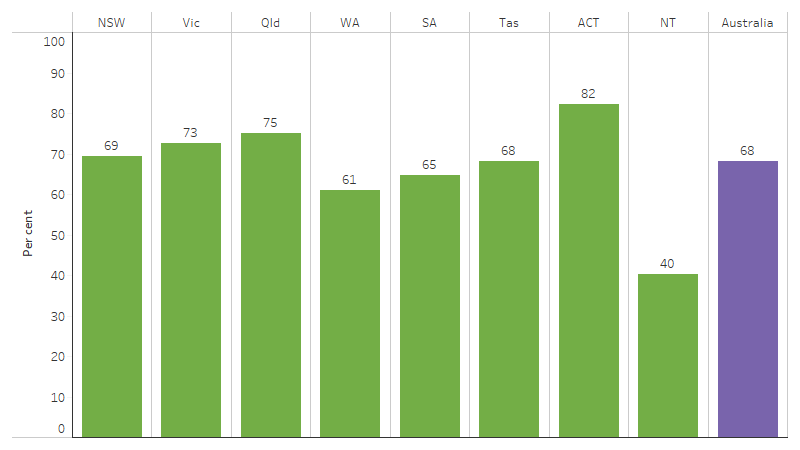
The 2021 Census data showed that 45,800 (68%) First Nations people aged 20–24 had attained a Year 12 or equivalent (Certificate III or above). By jurisdiction, rates of Year 12 or equivalent attainment in 2021 were highest in the Australian Capital Territory (82%), and lowest in Western Australia (61%) and the Northern Territory (40%) (Table D2.05.1, Figure 2.05.3).
The proportion of First Nations people aged 20–24 who had completed Year 12 or equivalent in 2021 decreased with increasing remoteness of usual residence: 76% in Major cities, 68% in Inner regional areas, 66% in Outer regional areas, 53% in Remote areas, and 42% in Very remote areas (Table D2.05.1).
Figure 2.05.3: Proportion of First Nations people aged 20–24 who had completed Year 12 or equivalent (Certificate III or above), by jurisdiction, 2021
Source: Table D2.05.1. AIHW analysis of Census of Population and Housing 2021 (ABS 2022).
The proportion of First Nations people aged 20–24 who had completed Year 12 or equivalent increased from 52% in the 2011 Census, to 63% in 2016, and 68% in 2021. Improvements were observed in every jurisdiction, with the largest absolute increases in Year 12 attainment observed in Western Australia (18 percentage point increase), South Australia (17 percentage point increase) and New South Wales (16 percentage point increase) (Table D2.05.1).
Improvements were also observed across all 5 remoteness areas between 2011 and 2021, ranging from a 12 percentage point increase for those living in Very remote areas to a 15 percentage point increase in Outer regional areas (Table D2.05.1).
Among non-Indigenous Australians, the proportion who had completed Year 12 or equivalent increased from 85% to 91% between 2011 and 2021. As rates of Year 12 attainment increased more for First Nations people than non-Indigenous Australians over the period from 2011 to 2021, the gap decreased over the decade (from 34 to 23 percentage points).
The relative difference (rate ratio) also decreased. In 2011 the non-Indigenous Year 12 attainment rate was 1.6 times as high as the rate for First Nations people, and this decreased to 1.3 times as high in 2021 (Table D2.05.1, Figure 2.05.4).
Figure 2.05.4: Completion of Year 12 or equivalent (Certificate III or above) for Australians aged 20–24, by Indigenous status, 2011, 2016 and 2021
Source: Table D2.05.1. AIHW analysis of ABS Census of Population and Housing 2021 (ABS 2022).
Note – the National Aboriginal and Torres Strait Islander Social Survey (NATSISS) which collects detailed information on the social and cultural experiences of First Nations people has not been conducted since 2014–15. The following data therefore cannot be updated.
In the 2014–15 NATSISS, information was collected from parents or guardians on types of assistance they thought would help secondary school students aged under 15 continue going to school until they had completed Year 12. These included support from family, friends and school (reported for 85% of students); more individual tutoring (43%); career guidance (39%); provision of coaches or mentors (33%); and support networks (33%) (Table D2.05.6).
Research and evaluation findings
Research analysing potential factors influencing the school readiness, education participation and achievement of First Nations people has revealed that challenges which start early in life can have long-term impacts. First Nations children in their first year of school are more likely to be developmentally vulnerable in all domains identified by the Australian Early Development Census (AEDC) (Department of Education‚ Skills and Employment 2022). However, First Nations pre-school enrolment has increased significantly in recent years (Productivity Commission n.d.). After controlling for a range of factors, Holzinger and Biddle (2015) found at ages 5 to 7 (2 years after preschool enrolment) participation in preschool had a significant positive impact on vocabulary for First Nations students. Over the longer term (3 to 5 years after preschool enrolment) positive impacts on developmental outcomes, reading and maths achievement were seen for First Nations students. An analysis of linked early childhood and school data in the Northern Territory demonstrated a positive relationship between preschool attendance and Year 3 reading and maths outcomes, and found this was achieved through gains in early literacy/numeracy skills and early primary school attendance (He et al. 2021).
School attendance in later years can also have educational and social benefits for students, families and communities (Groves et al. 2025).
Another study applied a within-cohort peer matching approach to analyse National Assessment Program – Literacy and Numeracy (NAPLAN) data for First Nations students from 2010 to 2019. Results showed consistent lower performance with increasing remoteness, but substantial variability within remoteness categories and across states. Major Cities and regional areas generally recorded higher relative performance, while remote areas showed lower scores, particularly in the Northern Territory and Western Australia. In some states, such as South Australia, remote areas demonstrated comparatively strong outcomes. Performance trends over time were largely stable, with slight declines in Reading in remote areas (Anderson et al. 2024).
Housing instability, particularly overcrowding and frequent relocation, has been shown to significantly impact school attendance among First Nations children. A qualitative study in a remote Northern Territory community found that children living in overcrowded homes often experienced disrupted sleep, food insecurity, and exposure to illness, all of which contributed to irregular school attendance and poor concentration in class (Lowell et al. 2018). Similarly, a systematic review of Indigenous children’s health outcomes across Australia, Canada, and New Zealand identified high residential mobility as a contributing factor to emotional and behavioural difficulties, which can further hinder consistent school participation and academic engagement (Nikolof et al. 2023). School attendance can also be influenced by a family’s financial context. A study of income management policies in the Northern Territory found that school attendance dropped at the time of implementation, before returning to pre-existing (baseline) levels within 6 to 12 months. However, attendance did not improve beyond these baseline levels, indicating that the policy did not result in sustained gains in attendance (Cobb-Clark et al. 2018).
The transition period from primary to secondary school has been identified as a point at which risk of disengagement is notably high across the population, and is intensified for First Nations students by historical, cultural and geographic factors (Potia et al. 2025).
Key factors influencing retention include student aspirations and motivation, the supportive role of families, the quality of teachers, specific school programs and initiatives, post-school pathways and boarding schools. On Country learning is particularly motivating for school retention, while the lack of sustainability and funding for many remote programs had a negative impact on retention (Guenther et al. 2024).
While research has highlighted that school attendance and retention are important, they alone are not enough to improve education outcomes. Other factors such as how engaged students are at school, and whether they are being equipped with adequate skills are also crucial for their future wellbeing. Research shows that school engagement can be influenced by contextual factors such as students’ experiences, needs and characteristics, including self-identity and connectedness; the school and classroom context, including teacher quality, attitudes of peers and culturally inclusive practices in schools; and the wider environment, including parental and community involvement (Hancock et al. 2013; SCRGSP 2014, 2016). Where teachers are supported to engage in professional learning, and families and communities are involved in school life and decision-making, First Nations student outcomes improve (Moodie et al. 2021). First Nations student outcomes can also be viewed through the lens of school system performance. Research shows that schools often lack the ‘readiness’ to support First Nations students to meet their aspirations and reach their full potential. Findings reveal a lack of teacher, curriculum, pedagogical, school environment and culture readiness (Anderson et al. 2023).
While educational achievement for all students decreases with increasing remoteness, the decrease is more significant for First Nations students, and there are a range of out-of-school and school-based factors that explain why this is the case. First Nations people are much more likely to live in regions and areas where issues to do with accessibility make the provision of education and training much more costly. Salary costs pertaining to staffing an entire educational facility are substantially higher in remote regions, but also in smaller regional towns. Furthermore, the fixed costs in providing educational infrastructure are spread over fewer individual students (Biddle 2010). In terms of attendance rates, it is more difficult and costly to attend education facilities in remote areas than in urban areas, and remote facilities often lack basic services and adequately trained teachers. Students from remote and very remote areas are often required to move away from home to attend secondary school, which contributes to transition periods being particularly high risk for First Nations student engagement (Biddle 2010; Ockenden 2014).
An analysis of the funding sources for supporting First Nations students attending boarding schools and facilities was undertaken in 2019. The analysis found that revenue for boarding schools that mainly support First Nations students is insufficient to cover the boarding costs for First Nations students. A number of recommendations were made to improve education outcomes for First Nations boarding students and their families, including health management, transition support and needs-based funding for support services (Thornton 2019).
Evidence shows that First Nations students from remote areas who attend boarding schools often demonstrate strong aspirations for further education and leadership. Programs that support transitions between school and higher education, particularly those co-designed with First Nations stakeholders, are more likely to be effective in sustaining participation and achievement (Grant-Smith and Irmer 2022).
A review of literature relating to First Nations experiences of boarding school found that for the most part, boarding schools were not culturally responsive and failed to meet the needs of First Nations students. The review found it was important for boarding school staff to be conscious of social inequalities, view students as capable learners, recognise their moral responsibility to make schools more culturally responsive, learn about students and their communities, build flexibility and cultural safety in boarding, provide adequate health and wellbeing services, and support students’ aspirations (Healey and Auld 2024).
Racism and discrimination remain significant barriers to educational equity. A report by the United Nations highlights that ethnic and cultural discrimination in schools is a major obstacle to equal access to education globally, contributing to poor performance and higher dropout rates among Indigenous students (United Nations 2017).
The Australian Human Rights Commission identified places of learning as key settings for preventative education about racism (AHRC 2024). Programs such as Speak Out Against Racism (SOAR) have demonstrated the potential to improve racial literacy, empathy, and acceptance of diversity among students. Evaluations of SOAR show that anti-racism education can enhance students’ confidence and contribute to safer, more inclusive school environments. The program also offers opportunities to align with broader wellbeing and mental health initiatives in schools (Priest et al. 2020).
The Remote School Attendance Strategy (RSAS) was a strategy designed to lift First Nations students’ school attendance in 84 remote schools across Australia. An analysis of MySchool data found that in the period from 2014–19, following the initiation of the program in 2014, school attendance was lower in participating schools than it had been in the period preceding the program (2008–13). The analysis attributed this ineffectiveness to a lack of true co-design and community buy-in (Guenther et al. 2022). A separate evaluation of the RSAS found services were better positioned to increase school attendance when they worked with families and accounted for the needs of families in different circumstances (Niddrie et al. 2018).
The RSAS was replaced by the Education Engagement and Attainment Initiative (EEAI) which began on 1 January 2024. The EEAI builds on the principles of the former RSAS and aims to improve education outcomes for young First Nations people by improving relationships between First Nations parents and carers, families, young people and communities with schools, overcome or address barriers to participation, help communities value schooling and education, use solutions and approaches designed by communities and work collaboratively with other stakeholders to increase educational outcomes. The EEAI is delivered across 84 schools in the Northern Territory, Queensland, Western Australia, South Australia, and New South Wales.
Programs like the EEAI and SOAR are most effective when grounded in First Nations identities, delivered by trusted local staff, and embedded within broader efforts to affirm cultural identity and reduce racism. These approaches support not only attendance but also a deeper sense of belonging and connection to learning, which are essential for long-term educational success (Moodie et al. 2019; Priest et al. 2020).
A review of school-based First Nations cultural programs found programs that facilitated immersion in local language and culture had great value for First Nations students and their families. Students’ access to authentic, community-centric programs resulted in improved schooling engagement. One barrier to implementing language-based programs in urban and regional schools is the diversity of First Nations language groups represented in some school communities, with more research needed as to how to deliver what can sometimes be competing community aspirations (Lowe et al. 2021).
The Review of the National School Reform Agreement recognises the lack of cultural safety in many schools as a key barrier preventing First Nations students from being engaged with learning. Participants in the review partially attributed this to a poor understanding of First Nations culture among teachers and school leaders. First Nations teachers play an important role in building cultural awareness and supporting cultural safety, with higher average reported working hours than non-Indigenous teachers – however, this expanded role is not always recognised. Despite their crucial role, First Nations teachers are underrepresented in schools, making up only about 2% of the teaching workforce in 2018, despite the share of First Nations students being closer to 6% of the student population, nationally (Productivity Commission 2022).
Research by the Australian Council for Educational Research (ACER) highlights that strong school-community partnerships and culturally responsive pedagogy are key enablers of student learning and engagement for First Nations students (Milgate 2017). A case study of Coonamble Public School highlights how early identification of student needs, strong partnerships with health services, and flexible staffing arrangements, such as hiring First Nations staff and additional support officers, helped create a culturally safe environment and strengthen community connections. These strategies contributed to improved educational outcomes. In 2020, students at Coonamble Public School showed above-average academic growth in Years 3 to 5 compared to other New South Wales government schools. This progress was formally recognised when the school received an ‘Excelling’ rating in the Transitions and Continuity of Learning domain of the School Excellence Framework during its external validation (NSW Department of Education 2021).
The Australian Education Research Organisation (AERO)’s 2024 summary, Cultural Responsiveness in Education identified ‘reflexivity’ as an emerging theme in the literature around cultural responsiveness. Reflexive practice requires teachers, educators and school leaders to critically examine and evaluate their own personal attitudes and behaviours, and how these influence their teaching and learning. The emergence of this concept reflects a shift in the understanding of cultural responsiveness – from responsiveness to cultures different from your own, to responsiveness to how your own values and assumptions are influenced by your cultural background (Australian Education Research Organisation 2024).
Digital inclusion remains a priority, particularly in remote and very remote areas. The COVID-19 pandemic exposed and intensified the digital divide, disproportionately affecting First Nations students’ access to online learning (World Vision and The Australian Literacy and Numeracy Foundation 2021).
The arrival of the COVID-19 pandemic in Australia required schools and universities to establish learning from home, necessitating the rollout of online learning (Lamb et al. 2020). For First Nations students, this transition exposed and intensified the pre-existing digital divide (the gap between those with reliable access to technologies and those without). This divide is shaped by both social and geographical factors, including limited access to devices, and affordability constraints, and physical barriers such as poor network coverage in remote regions. These challenges have raised concerns that the COVID-19 pandemic could impact on progress towards Closing the Gap targets and broader education outcomes for First Nations people (Bennett et al. 2020). The House of Representatives Standing Committee on Employment, Education and Training found that students in remote and complex environments face persistent infrastructure barriers, including unreliable broadband, limited access to devices, and scarce technical support. These limitations significantly affected students’ ability to engage with online learning during the pandemic and continue to pose challenges to equitable education access. The report also highlighted that remote households often pay more for internet services, experience frequent outages, and lack access to education-specific data plans, particularly for tertiary and vocational students, further exacerbating the digital divide (House of Representatives Standing Committee on Employment 2020).
Vocational education and training (VET) continue to be a meaningful pathway for many First Nations youth. First Nations participation in VET continues to increase, with positive outcomes for employability and enrolment in further study (National Centre for Vocational Education Research 2023). These findings indicate that when more options are available for First Nations learners, it can lead to positive education outcomes for those who may find more enjoyment or meaning in pursuing vocational studies, training or employment. See measure 2.06 Educational participation and attainment of adults for more information.
Implications
Improving education outcomes for First Nations young people requires sustained, culturally responsive, and community-led approaches. Transitions between school stages – particularly from primary to secondary school – are high-risk periods for disengagement, especially for students from remote communities. While Year 12 attainment and school retention rates have improved over the past decade, significant disparities remain – particularly in remote areas and among male students (Department of Education 2024).
Initiatives such as the Education Engagement and Attainment Initiative (EEAI), Speak Out Against Racism (SOAR), and Indigenous Boarding Providers Grant aim to demonstrate the value of place-based, strengths-based models that affirm cultural identity and foster belonging (PM&C 2018; Priest et al. 2020). The Australian Government continues to invest in First Nations-led education initiatives that support student success through culturally responsive, community-driven approaches. In 2024, $4 million was committed to support the GO Foundation to continue to deliver their scholarship program for First Nations students, which provides access to cultural workshops and wider opportunities including internships, as well as financial support to cover education costs. An additional $4.5 million was committed to support the expansion of the Aurora Education Foundation’s RISE (Redefining Indigenous Success in Education) initiative to support up to 800 students by 2027. These investments recognise that educational success for First Nations students is not just about academic achievement, but also about cultural identity, community connection, and personal wellbeing.
The Australian Government’s Indigenous Boarding Provider Grants Program has been extended until the end of 2026, reflecting a strong policy commitment to provide access to secondary education for First Nations students in remote communities. With a total investment of $43.2 million, the program supports over 40 boarding schools and facilities across Australia, providing accommodation and wrap-around services for up to 2,500 students.
This initiative was complemented in the 2024–25 Budget by a $40.4 million investment to boost enrolment and engagement through On-Country Learning in Central Australia and $71 million for new and upgraded remote boarding schools under the Studio Schools model. Notably, the Central Australia Boarding Response Fund was established to support capital works projects that expand access to boarding facilities for students from remote communities. Together, these investments aim to address specific place-based immediate infrastructure and access needs as well as providing stability for providers as the Australian Government continues to finalise the Indigenous Boarding Design Review. The review is expected to guide long-term, systemic reforms to improve outcomes for First Nations students who need to study away from home.
In recognition of the need to support students, families, and school communities to strengthen education outcomes for First Nations youth, Australian governments have invested in important education initiatives. Two examples include the Good to Great Schools Australia Pilot Program and Kimberley Schools Project which address the unique educational challenges that can hinder the academic progress for First Nations students. The Good to Great Schools Australia Pilot Program focuses on enhancing teacher quality and curriculum delivery in remote schools primarily attended by First Nations students. Its approach incorporates the delivery of rigorous, culturally responsive literacy programs and provides ongoing professional development for teachers. The Kimberley Schools Project in Western Australia aims to improve First Nations students' literacy and numeracy outcomes by enhancing school readiness, attendance, and engagement. The program adopts an approach that focuses on strengthening classroom instruction and developing partnerships with families and communities to foster a supportive learning environment.
The Australian Government is evaluating existing distance education models to determine what is working well and improvements needed to enable more First Nations students to access and benefit from distance education. The evaluation will report by the end of 2026. This work also involves piloting community-led models of distance education in remote communities in 2025 and 2026, with the aim of providing culturally appropriate and accessible distance education for First Nations students, to a total of $9.3 million. Following extensive engagement with interested communities, pilot locations include Northeast Arnhem Land, South Australian APY (Aṉangu Pitjantjatjara Yankunytjatjara) Lands and remote Queensland.
Recent policy developments reflect this continued national commitment:
- $18.2 million over 4 years from 2024–25 to develop a new First Nations Education Policy and engage with First Nations stakeholders
- $33.6 million over 2 years from 2025–26 to extend the Clontarf Foundation’s support for up to 12,500 First Nations boys and young men
- $12.5 million over 4 years from 2024–25 to support the National Aboriginal and Torres Strait Islander Education Corporation (NATSIEC)
- $16.6 million over 4 years from 2024–25 to support SNAICC – National Voice for our Children
- $5.5 million over 3 years from 2024–25 to expand the English Language Learning for Indigenous Children (ELLIC) program from 20 to 100 schools
- $20 million over 3 years from 2024–25 to support the Australian Indigenous Education Foundation (AIEF) to provide scholarships for First Nations secondary and tertiary students.
The Better and Fairer Schools Agreement: Full and Fair Funding 2025-2043 (BFSA Full and Fair Funding) began on 24 January 2025 and replaces the National School Reform Agreement which expired on 31 December 2024.
Under the BFSA Full and Fair Funding, the Australian Government is increasing its share of the Schooling Resource Standard (SRS) from 20% to up to 25% for all government schools by no later than 2034.
The BFSA recognises the importance of First Nations cultures and knowledge and reinforces the Australian Government’s commitments to the National Agreement on Closing the Gap. Other clauses in the BFSA Heads of Agreement signed by all State and Territory governments commit parties to:
- work in partnership with First Nations education stakeholders including the National Aboriginal and Torres Strait Islander Education Corporation (NATSIEC) and relevant state and territory First Nations representative bodies
- support and develop the community-controlled sector to deliver culturally safe and appropriate services to support First Nations students and workforce
- prioritise funding to First Nations students through needs-based funding arrangements
- establish bilateral agreements with the Australian Government, which outline state and territory contributions as a condition of receiving Australian Government funding and which set out state and territory-specific activities that support priority equity cohorts such as First Nations students. These bilateral agreements are commencing in 2025.
The Review of the National School Reform Agreement identified cultural safety and teacher readiness as critical gaps in supporting First Nations students. Pending development of the First Nations Education Policy and finalisation of the First Nations Teacher Strategy, the National Aboriginal and Torres Strait Islander Education Strategy continues to serve as a foundational guide for improving educational outcomes for First Nations students. It underscores the importance of co-designing education policies with First Nations communities to ensure cultural relevance, accountability, and long-term impact. The Strategy’s principles align closely with national commitments such as the National Agreement on Closing the Gap, which reinforces shared responsibility and formal partnerships with First Nations communities. Together with state-level initiatives, these efforts reflect a broader policy landscape that prioritises equity, inclusion, and community-led approaches in education.
References
-
ABS (Australian Bureau of Statistics) (2022) 2021 Census - counting persons, place of usual residence, [Census Tablebuilder Pro], ABS.
-
ABS (2026) Schools, ABS, Australian Government.
-
AHRC (Australian Human Rights Commission) (2024) National Anti-Racism Framework, AHRC website.
-
AIHW (Australian Institute of Health and Welfare) (2024) Social determinants of health, AIHW, Australian Government.
-
Anderson P, Forbes O, Mengersen K and Diamond ZM (2024) 'Patterns of educational performance among Indigenous students in Australia, 2010–2019: within-cohort, peer matching analysis for data-led decision-making', Australian Journal of Education, 68(1):54–77, doi:10.1177/00049441241232172.
-
Anderson PJ, Yip SY and Diamond ZM (2023) 'Getting schools ready for Indigenous academic achievement: a meta-synthesis of the issues and challenges in Australian schools', International Studies in Sociology of Education, 32(4):1152–1175, doi:10.1080/09620214.2021.2025142.
-
Australian Education Research Organisation (2024) Cultural responsiveness in education, Australian Government, website, 30 May 2025.
-
Baker DP, Leon J, Greenaway EGS, Collins J and Movit M (2011) 'The education effect on population health: a reassessment', Population Development Review, 37(2):307–332, doi:10.1111/j.1728-4457.2011.00412.x.
-
Bennett R, Uink B and Cross S (2020) 'Beyond the social: cumulative implications of COVID-19 for First Nations university students in Australia', Social Sciences & Humanities Open, 2(1):100083, doi:10.1016/j.ssaho.2020.100083.
-
Biddle N (2010) A human capital approach to the educational marginalisation of Indigenous Australians, Centre for Aboriginal Economic Policy Research (CAEPR), The Australian National University.
-
Clark ML and Utz SW (2014) 'Social determinants of type 2 diabetes and health in the United States', World Journal of Diabetes, 5(3):296–304, doi:10.4239/wjd.v5.i3.296.
-
Cobb-Clark DA, Kettlewell N, Schurer S and Silburn S (2018) The effect of quarantining welfare on school attendance in Indigenous communities, Life Course Centre Working Paper: 2017-22.
-
Department of Education (2024) First Nations education policy – 2024–25 budget fact sheet, DoE, Australian Government.
-
Department of Education‚ Skills and Employment (2022) Australian Early Development Census national report 2021: early childhood development in Australia, DESE, Australian Government, accessed 8 April 2026.
-
Flavel J, McKee M, Tesfay FH, Musolino C, Freeman T, van Eyk H and Baum F (2022) 'Explaining health inequalities in Australia: the contribution of income, wealth and employment', Australian Journal of Primary Health, 28(6):474–481, doi:10.1071/PY21285.
-
Grant-Smith D and Irmer B (2022) 'Widening the participation of Indigenous students in Australian higher education', Centre for Justice Briefing Paper(19), doi:10.5204/book.eprints.228422.
-
Groves O, Lu L, Mannes R, Williams L and Kim S (2025) School attendance: New insights from AERO, Australian Education Research Organisation.
-
Guenther J, Ober R, Oliver R and Holmes C (2024) 'Remote secondary education retention: What helps First Nations students stay until, and complete, year 12', Australian Journal of Indigenous Education (Online), 53(1):1–22, doi:10.55146/ajie.v53i1.1039.
-
Guenther J, Osborne S, Corrie S, Rigney L-I and Lowe K (2022) 'The Remote School Attendance Strategy (RSAS): why invest in a strategy that reduces attendance?', The Australian Journal of Indigenous Education, 51(2), doi:10.55146/ajie.v51i2.35.
-
Hancock KJ, Shepherd CCJ, Lawrence D and Zubrick SR (2013) Student attendance and educational outcomes: every day counts, report to the DEEWR, Telethon Institute for Child Health Research & Centre for Child Health Research, The University of Western Australia, accessed 16 April 2026, doi:10.13140/2.1.4956.6728.
-
Hart MB, Moore MJ and Laverty M (2017) 'Improving Indigenous health through education', The Medical Journal of Australia, 207(1):11–12, doi:10.5694/mja17.00319.
-
He VY, Nutton G, Graham A, Hirschausen L and Su J-Y (2021) 'Pathways to school success: Self-regulation and executive function, preschool attendance and early academic achievement of Aboriginal and non-Aboriginal children in Australia’s Northern Territory', PloS One, 16(11):e0259857, doi:10.1371/journal.pone.0259857.
-
Healey S and Auld G (2024) 'Towards a framework of culturally responsive boarding for First Nations students', Australian and International Journal of Rural Education, 34(3):55–72.
-
Holzinger LA and Biddle N (2015) The relationship between early childhood education and care (ECEC) and the outcomes of Indigenous children: evidence from the Longitudinal Study of Indigenous Children (LSIC), Centre for Aboriginal Economic Policy Research, TheAustralian National University, accessed 15 April 2026.
-
House of Representatives Standing Committee on Employment EaT (2020) Education in remote and complex environments, Commonwealth of Australia.
-
Korda RJ, Biddle N, Lynch J, Eynstone-Hinkins J, Soga K, Banks E, Priest N, Moon L and Blakely T (2020) 'Education inequalities in adult all-cause mortality: first national data for Australia using linked census and mortality data', International Journal of Epidemiology, 49(2):511–518, doi:10.1093/ije/dyz191.
-
Lamb S, Maire Q, Doecke E, Noble K, Pilcher S and Macklin S (2020) Impact of learning from home on educational outcomes for disadvantaged children: brief assessment, report to the Department of Education, Skills and Employment, Australian Government, Centre for International Research on Education Systems, Victoria University, Mitchell Institute for Education and Health Policy, accessed 8 April 2026.
-
Lowe K, Tennent C, Moodie N, Guenther J and Burgess C (2021) 'School-based Indigenous cultural programs and their impact on Australian Indigenous students: a systematic review', Asia-Pacific Journal of Teacher Education, 49(1):78–98, doi:10.1080/1359866X.2020.1843137.
-
Lowell A, Maypilama Ḻ, Fasoli L, Guyula Y, Guyula A, Yunupiŋu M, Godwin-Thompson J, Gundjarranbuy R, Armstrong E, Garrutju J and McEldowney R (2018) 'The 'invisible homeless' - challenges faced by families bringing up their children in a remote Australian Aboriginal community', BMC Public Health, 18(1):1382, doi:10.1186/s12889-018-6286-8.
-
Marmot M, Friel S, Bell R, Houweling T, Taylor S and Commission on Social Determinants of Health (2008) 'Closing the gap in a generation: health equity through action on the social determinants of health', The Lancet, 372(9650):1661–1669, doi:10.1016/s0140-6736(08)61690-6.
-
Milgate G (21 March 2017) 'Building empowering partnerships between schools and communities', ACER News, accessed 16 April 2026.
-
Moodie N, Maxwell J and Rudolph S (2019) 'The impact of racism on the schooling experiences of Aboriginal and Torres Strait Islander students: a systematic review', The Australian Educational Researcher, 46(2):273–295, doi:10.1007/s13384-019-00312-8.
-
Moodie N, Vass G and Lowe K (2021) 'The Aboriginal voices project: findings and reflections', Asia-Pacific Journal of Teacher Education, 49(1):5–19, doi:10.1080/1359866X.2020.1863335.
-
National Centre for Vocational Education Research (2023) Student equity in VET 2021: participation, achievement and outcomes.
-
Niddrie N, Barnes S and Brosnan K (2018) Understanding family perspectives of school attendance in remote communities: evaluation of the Remote School Attendance Strategy, report to PM&C, Australian Government, accessed 16 April 2026.
-
Nikolof A, Brown SJ, Clark Y, Glover K and Gartland D (2023) 'A systematic review of child health, developmental and educational outcomes associated with high mobility in Indigenous children from Australia, Canada and New Zealand', International Journal of Environmental Research and Public Health, 20(5):4332, doi:10.3390/ijerph20054332.
-
NSW Department of Education (2021) Transition to school: Coonamble Public School, Centre for Education Statistics and Evaluation.
-
Ockenden L (2014) Positive learning environments for Indigenous children and young people, AIHW, AIS, Closing the Gap Clearinghouse, accessed 16 April 2026.
-
PM&C (Department of Prime Minister and Cabinet) (2018) Understanding family perspectives of school attendance in remote communities: Evaluation of the Remote School Attendance Strategy, Department of Prime Minister and Cabinet, Australian Government.
-
Potia AH, Wheeler KW, Woodroffe T and Thorpe K (2025) 'Transition From Primary to Secondary School: Igniting Attendance and Engagement Among Aboriginal and Torres Strait Islander Students Through National Policy Reform', Australian Journal of Social Issues, n/a(n/a), doi:10.1002/ajs4.70041.
-
Priest N, Alam O, Dunn K, Nelson J, Sharples R, Cronin D, Truong M, Francis K, Paradies Y, Curry P and Kavanagh A (2020) Evaluation of the Speak Out Against Racism (SOAR) program pilot, The Australian National University.
-
Productivity Commission (2022) Review of the National School Reform Agreement: study report, Productivity Commission, Australian Government.
-
Productivity Commission (2026) 4 School Education [data set], Report on Government Services 2026, Productivity Commission website.
-
Productivity Commission (n.d.) Socio-economic outcome area 3 - Aboriginal and Torres Strait Islander children are engaged in high quality, culturally appropriate early childhood education in their early years, Closing the Gap Information Respository website, accessed 9 April 2026.
-
Purdie N and Buckley S (2010) School attendance and retention of Indigenous Australian students, Australian Institute of Health and Welfare and Australian Institute of Family Studies, Closing the Gap Clearinghouse website.
-
SCRGSP (Steering Committee for the Review of Government Service Provision) (2014) Overcoming Indigenous disadvantage: key indicators 2014 report, Productivity Commission, Australian Government.
-
SCRGSP (2016) Overcoming Indigenous disadvantage: key indicators 2016 report, Productivity Commission, Australian Government.
-
Shirodkar S, Hunter B and Foley D (2018) Ongoing growth in the number of Indigenous Australians in business, Centre for Aboriginal Economic Policy Research (CAEPR), The Australian National University.
-
Thornton G (2019) Boarding: investing in outcomes for Aboriginal and Torres Strait Islander students – an analysis of the investment in support for Aboriginal and Torres Strait Islander students attending boarding schools and facilities, report to PM&C, Australian Government, accessed 8 April 2026.
-
United Nations (2017) State of world's Indigenous peoples, United Nations, accessed 16 April 2026, doi:10.18356/66ce8e42-en.
-
Venn D and Biddle N (2018) Employment outcomes, 2016 census papers, Centre for Aboriginal Economic Policy Research, The Australian National University, accessed 16 April 2026.
-
Weatherburn D, Doyle M, Weatherall T and Wang J (2024) Towards an understanding of Indigenous arrest. Trends & issues in crime and criminal justice no. 694, Australian Institute of Criminology, doi:10.52922/ti77444.
-
Welsh J, Joshy G, Moran L, Soga K, Law HD, Butler D, Bishop K, Gourley M, Eynstone-Hinkins J, Booth H, Moon L, Biddle N, Blakely A, Banks E and Korda RJ (2022) 'Education-related inequalities in cause-specific mortality: first estimates for Australia using individual-level linked census and mortality data', International Journal of Epidemiology, 50(6):1981–1994, doi:10.1093/ije/dyab080.
-
World Vision and The Australian Literacy and Numeracy Foundation (2021) Connecting on Country - closing the digital divide for First Nations students in the age of COVID-19, accessed 16 April 2026.